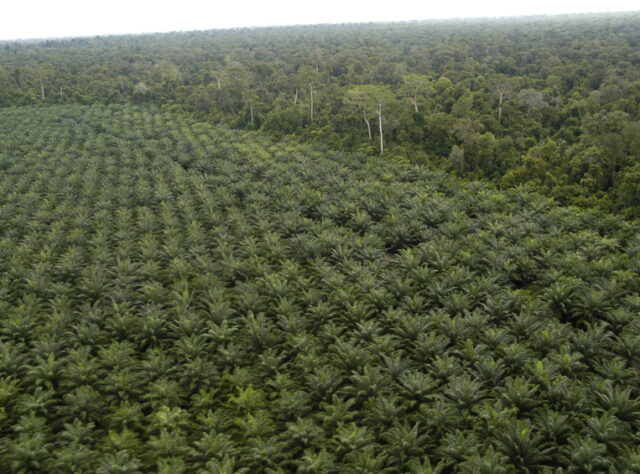
Borneo’s forests are being replaced with ranks upon ranks of Oil Palms. Credit: Kirsty Burgess
In the floodplain of Sabah’s Kinabatangan River, conservationists are testing a bold idea: can native forest and palm oil production thrive side by side? A project led by our partner HUTAN, a grassroots conservation organisation based in Malaysian Borneo, aims to demonstrate that biodiversity and agriculture need not be in conflict.
Why is palm oil a problem?
Palm oil is a product steeped in controversy but it is nearly impossible to go about life without using it in some way, as more than half of packaged products now rely on it as a key ingredient, from chocolate to toothpaste to deodorant. But most people are also now aware that palm oil production is one of the biggest drivers of deforestation, especially in Indonesia and Malaysia where 85% of the world’s supply comes from. Palm oil plantations are notorious for destroying swathes of some of highly biodiverse forest, driving numbers of iconic threatened species even further, and releasing millions of tonnes of carbon dioxide into the atmosphere every year.
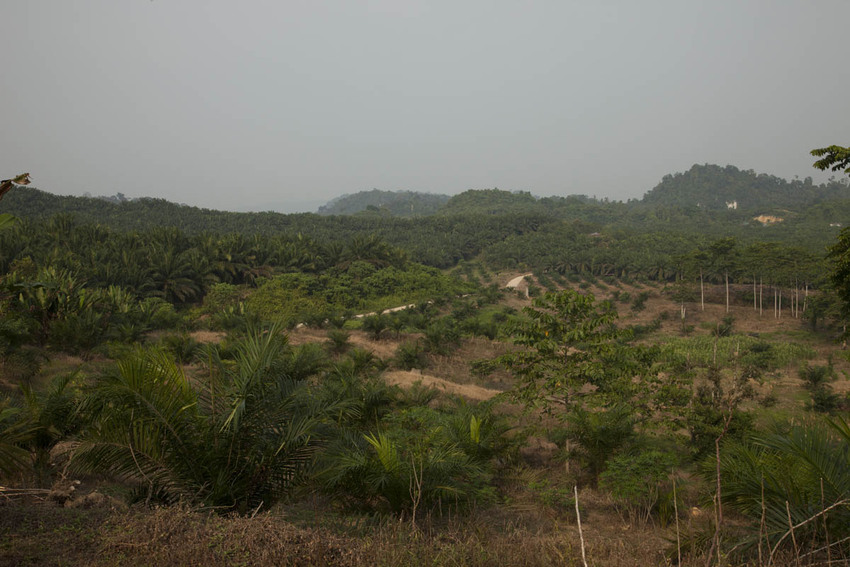
Malaysian Borneo’s rainforests are facing unrelenting destruction from the invasion of monoculture oil palm plantations. Credit: Astrid Munoz
The loss of Borneo’s rainforest to oil palm plantations has been relentless over the past decades, leaving forests clinging to existence in fragmented patches amid a sea of monoculture. Those fragments that were once thriving forests are still vital habitat for endangered species such as the Bornean Orangutan (Pongo pygmaeus), a species left Critically Endangered from habitat loss. Now, without ways to reconnect and restore these patches, wildlife populations can be left isolated and even vulnerable to local extinction. HUTAN, recognised globally for its innovative solutions to the problems nature faces, has been working with communities, government agencies, and landowners to find pathways toward peaceful coexistence between nature and industry.
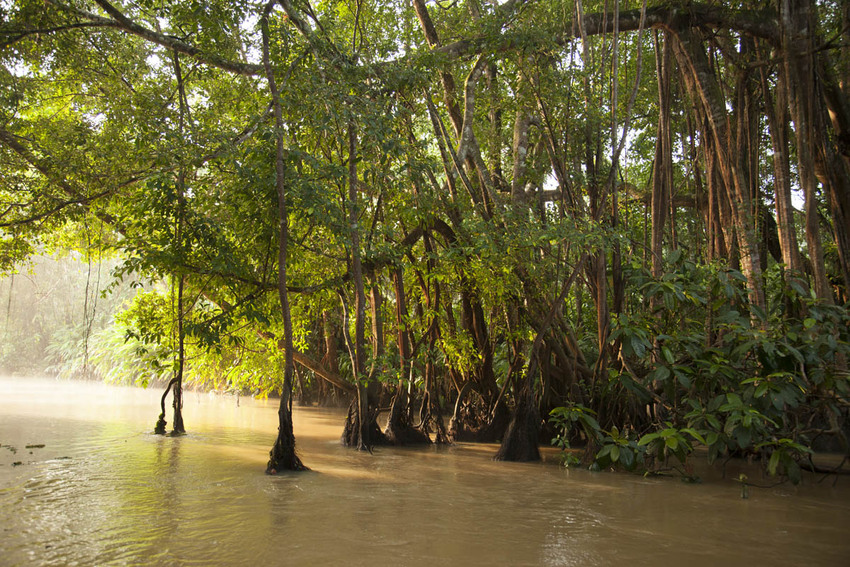
HUTAN is paving the way for oil palm farming to coexist sustainably with native tree species, with the aim of keeping this vital resource available at the same time as protecting Borneo’s incredible forests. Credit: Astrid Munoz
How is HUTAN finding a solution?
Among other ingenious ideas such as the famous Orangutan rope bridges, HUTAN’s dynamic current project is exploring agroforestry models that integrate native trees into oil palm landscapes, all without reducing the palm oil yields that many people rely on for income. Early trials suggest that mixing the planting of native forest species among palms does not harm palm productivity. In some cases, oil palms in mixed plots actually showed greater leaf growth than those in conventional monocultures. These findings could be game-changing as they offer hope that wildlife-friendly practices can in fact be compatible with commercial production.
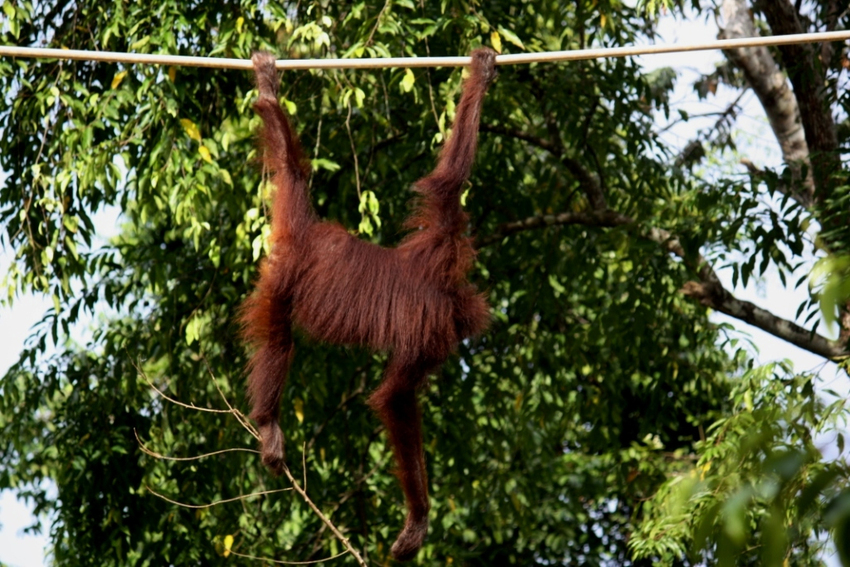
HUTAN’s work is a lifeline for species such as the Bornean Orangutan, already Critically Endangered, who rely on these forests as their home. Credit: Ajiran Osman @ Aji
For HUTAN, such approaches build on years of experience with strategic forest corridors through plantations. These corridors help orangutans and other wildlife move safely between isolated forest patches. They also support natural processes, from seed dispersal to predator-prey interactions, that maintain ecosystem health across working landscapes. This work in Sabah reflects a growing recognition among producers and conservationists that sustainable land use must balance economic needs with biodiversity protection if we are to have a sustainable future for the planet.
If success continues, HUTAN’s work could reshape how oil palm landscapes across Southeast Asia are managed, creating space for both nature and people to prosper together and there are many ways that you can support this work: make a regular donation to our Action Fund as a WLT Friend; support a core programme like Keepers of the Wild; balance your emissions through Carbon Balanced; or even Buy an Acre or Plant a Tree on behalf of a loved one.
What is WLT’s stance on palm oil?
Like many of you, WLT is deeply concerned by the destructive environmental impacts which result from the unsustainable production of palm oil. However, we recognise the importance of the role of the palm oil industry to the economies of developing countries and believe that a complete boycott of the product could have an even greater negative impact by increasing the demand for other less efficient oil. Therefore, we support the use of Certified Sustainable Palm Oil (CSPO) via accredited schemes administered by the Roundtable on Sustainable Palm Oil (RSPO). You can read more about our policy on palm oil here.