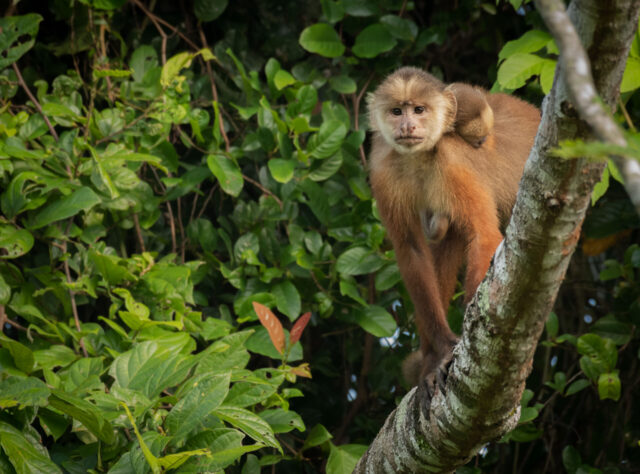
A Varied White-Fronted Capuchin and its baby in the trees of El Silencio. Credit: Santiago Rosado/FBC
In Colombia’s Middle Magdalena valley, the El Silencio reserve is a place of safety for the amazing species that make their homes among the trees and by the banks of the Magdalena River.
Let’s journey through El Silencio’s tropical forests and wetlands and see what wildlife you could spot along the way.
Hidden on the forest floor
We start our tour among the foliage of the forest floor. Nestled within the fallen leaves and vegetation, El Silencio’s smallest residents go about their business.
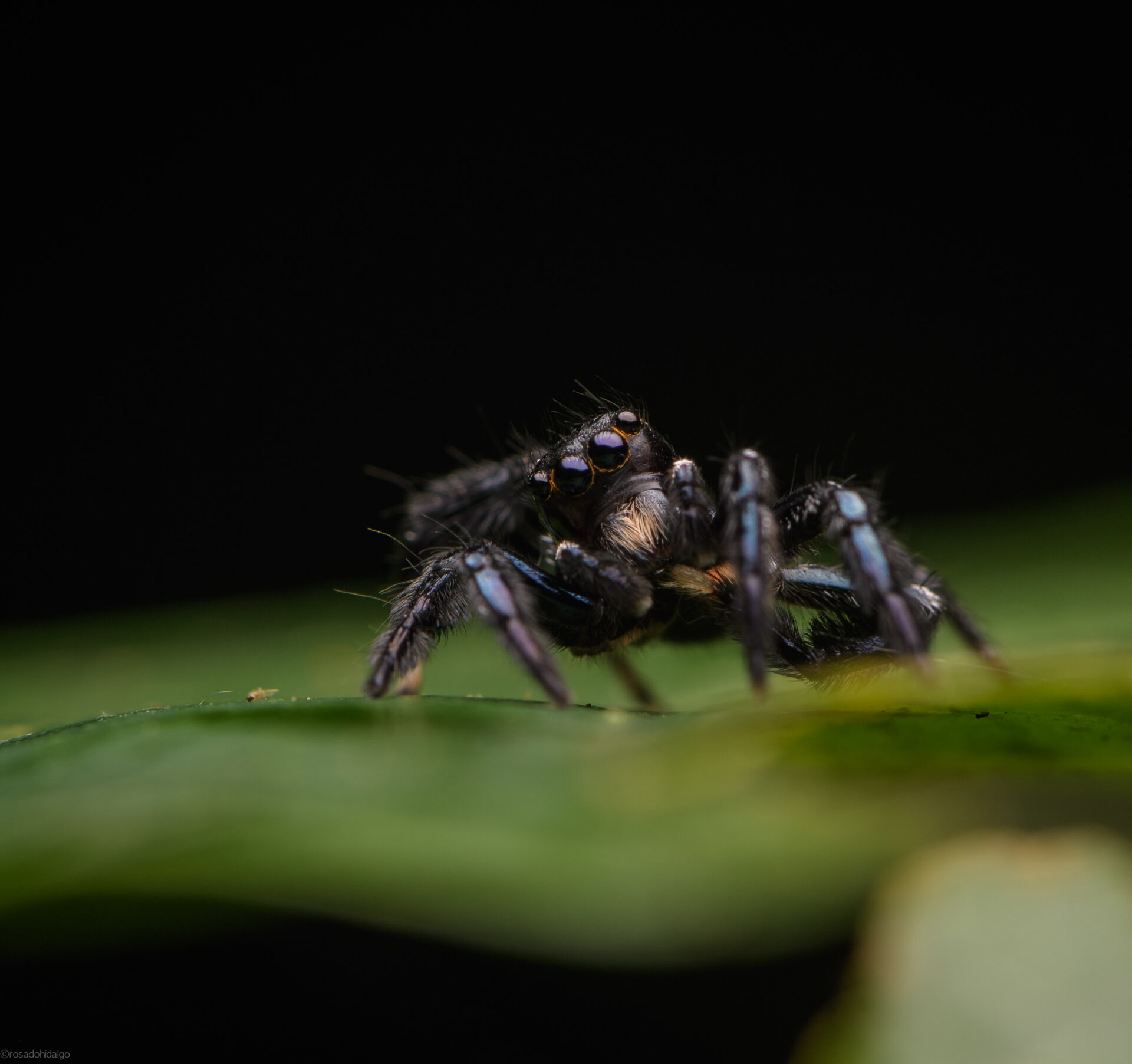
A tiny jumping spider looks on with curiosity. Credit: Santiago Rosado/FBC
Here, if you look very closely, you will discover an array of jumping spiders, mantids and beetles. Meanwhile, small frogs like the Colombian Plump Frog (Elachistocleis pearsei) and Yellow Striped Poison Frog (Dendrobates truncatus) lay their eggs on the ground or in temporary pools on the forest floor during the rainy season.
While the Yellow Striped Poison Frog is highly territorial and known to defend its space from intruders, the Colombian Plump Frog is harder to spot. This is due to its burrowing nature, spending significant time underground in the soil or hiding in termite nests.
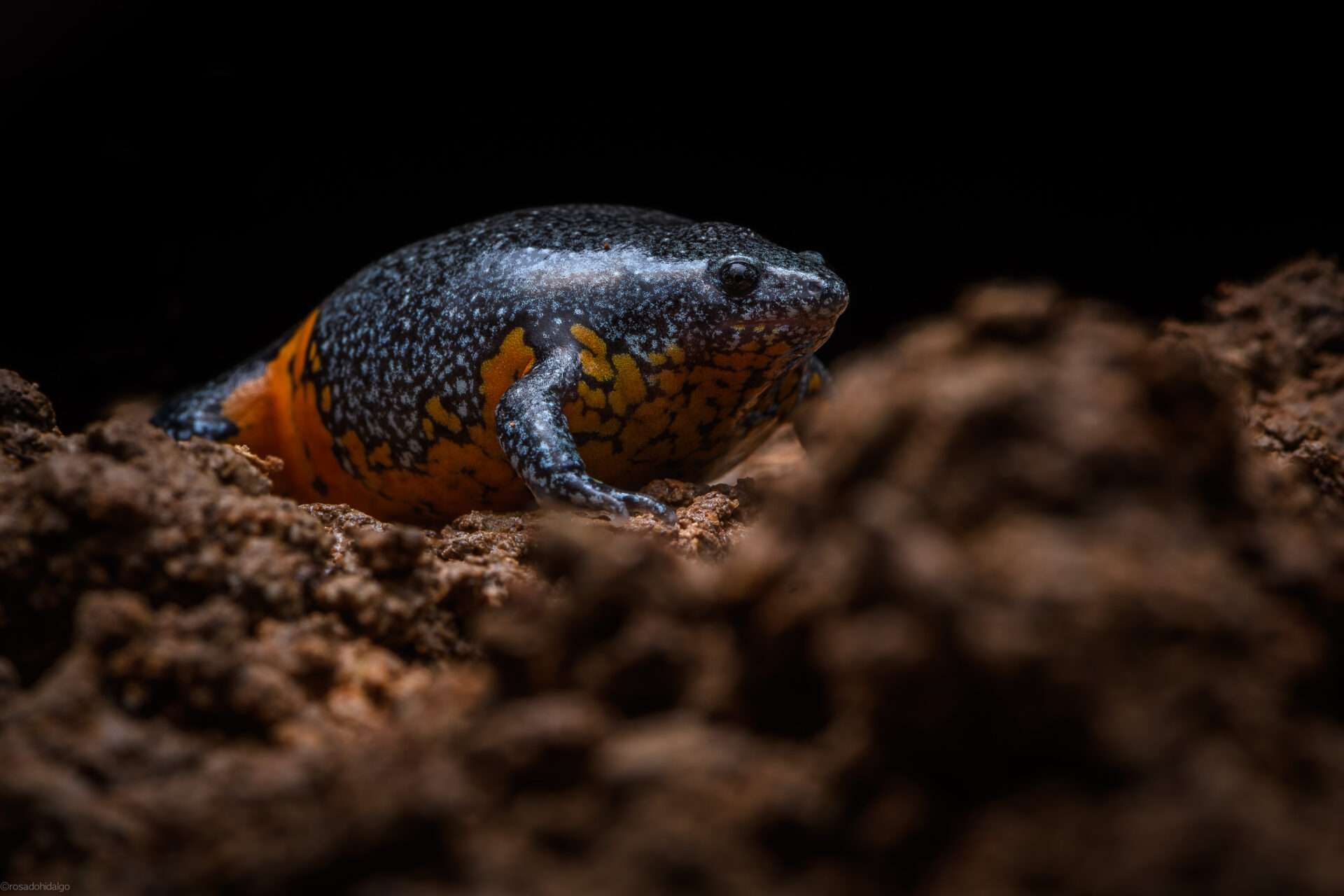
A Colombian Plump Frog hides in the soil. Credit: Santiago Rosado/FBC
These tiny residents are not the only ones roaming the forest floor. The elusive Blue-billed Curassow (Crax alberti) forages for food among the vegetation. This Critically Endangered bird is only found in Colombia. In fact, there are only 150-750 individuals left in the wild. Sightings of the Curassow are very rare, but if you’re lucky, you may hear its deep booming calls echoing through the trees.
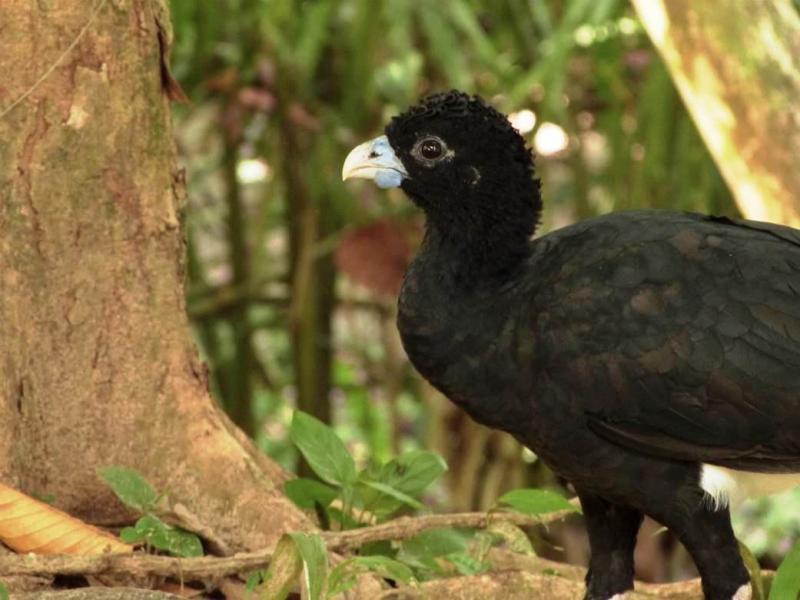
A rare glimpse of the Blue-billed Curassow. Credit: Susanne Cohen
On the ground and in the trees
Moving away from the Blue-billed Curassow, we find a particularly resourceful predator at work. The Tayra (Eira Barbara) has earned the nickname of the “South American honey badger” due to its fearless nature and similar hunting style to the wolverine. It has an opportunistic diet of fruit, honey, small animals like rodents and monkeys, and even bird nests.
Tayras are comfortable hunting on the ground and in trees, using their claws for grip and long heavy tail for balance. They can even descend trees headfirst. These mischievous mammals are common in El Silencio, frequently eating fruits from the gardens or raiding beehives.
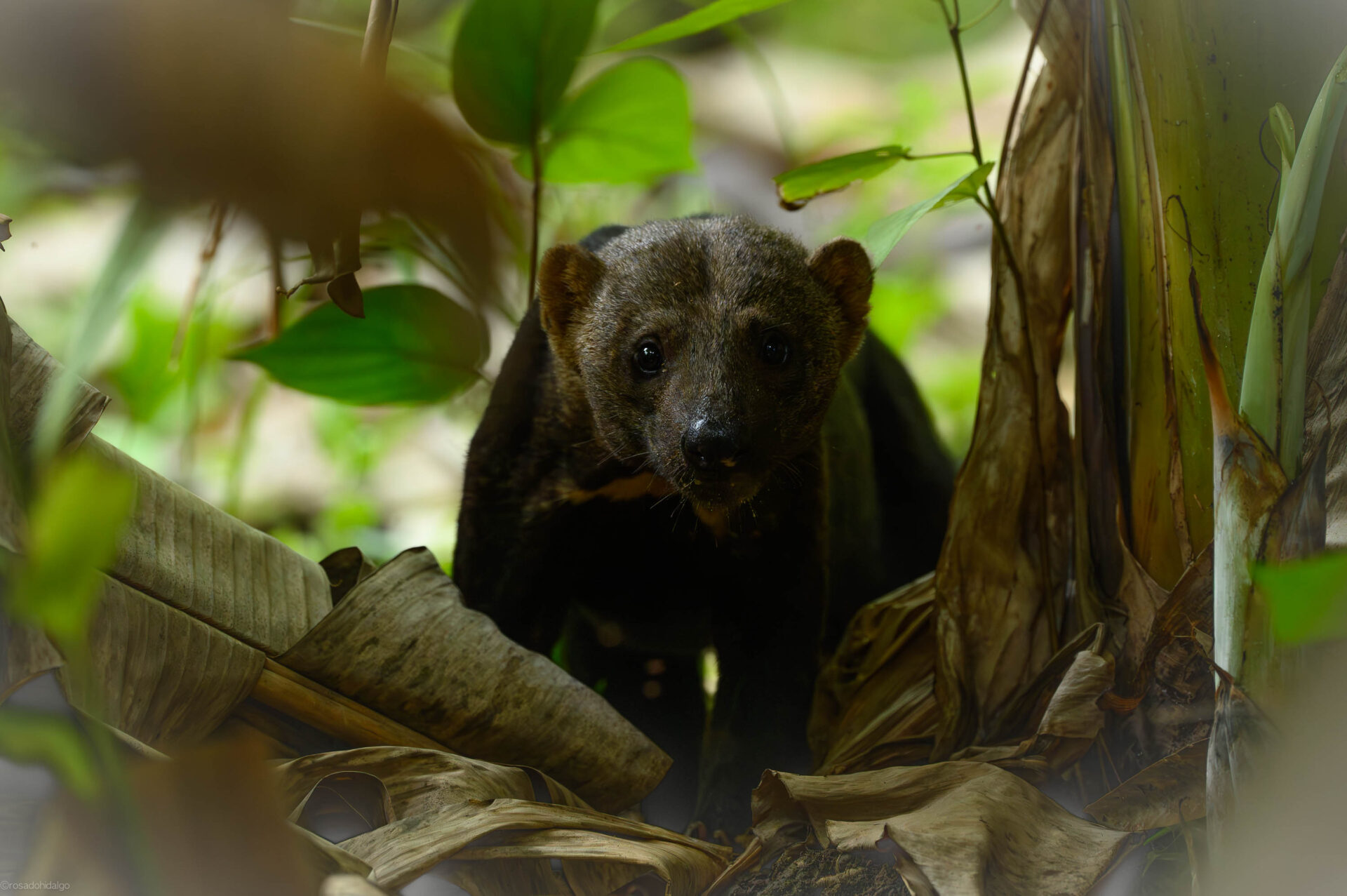
A Tayra hunts among the foliage of the forest floor. Credit: Santiago Rosado/FBC
Another interesting mammal in El Silencio is the Northern Tamandua (Tamandua mexicana). Much like the Tayra, this anteater lives both on the ground and in the trees. They are solitary animals that feed on ants and termites – often eating up to 9,000 ants a day!
Tamanduas have many predators, but they can emit a strong skunk-like smell if provoked, and prop themselves up on their hind legs and tails to lash out with their claws. As they’re most active at night, we may come across one during the day while it rests in a hollow tree trunk using its thick tail as a comfy pillow.
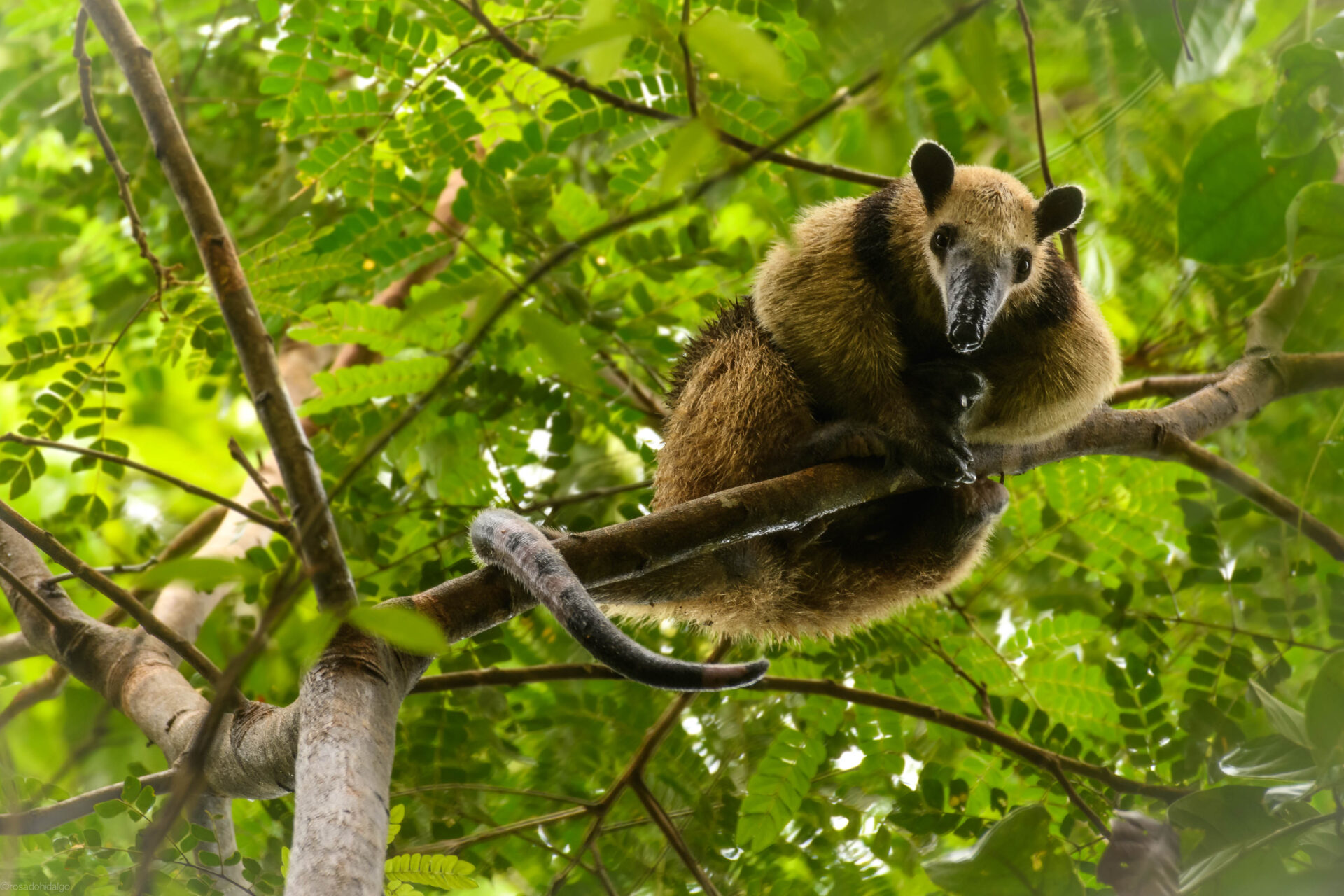
The Northern Tamandua looks down from its perch. Credit: Santiago Rosado/FBC
High in the canopy
Looking up higher into the branches of the valley’s tropical forest, a host of primates spend their time swinging from tree to tree.
Before you even see them, you might hear the hoarse howls of the Colombian Red Howler Monkey (Alouatta seniculus) as they communicate with other groups in the area to establish territory. Typically, these monkeys howl in a ‘dawn chorus’ but their roaring can carry on through the day and be heard up to 5km away.
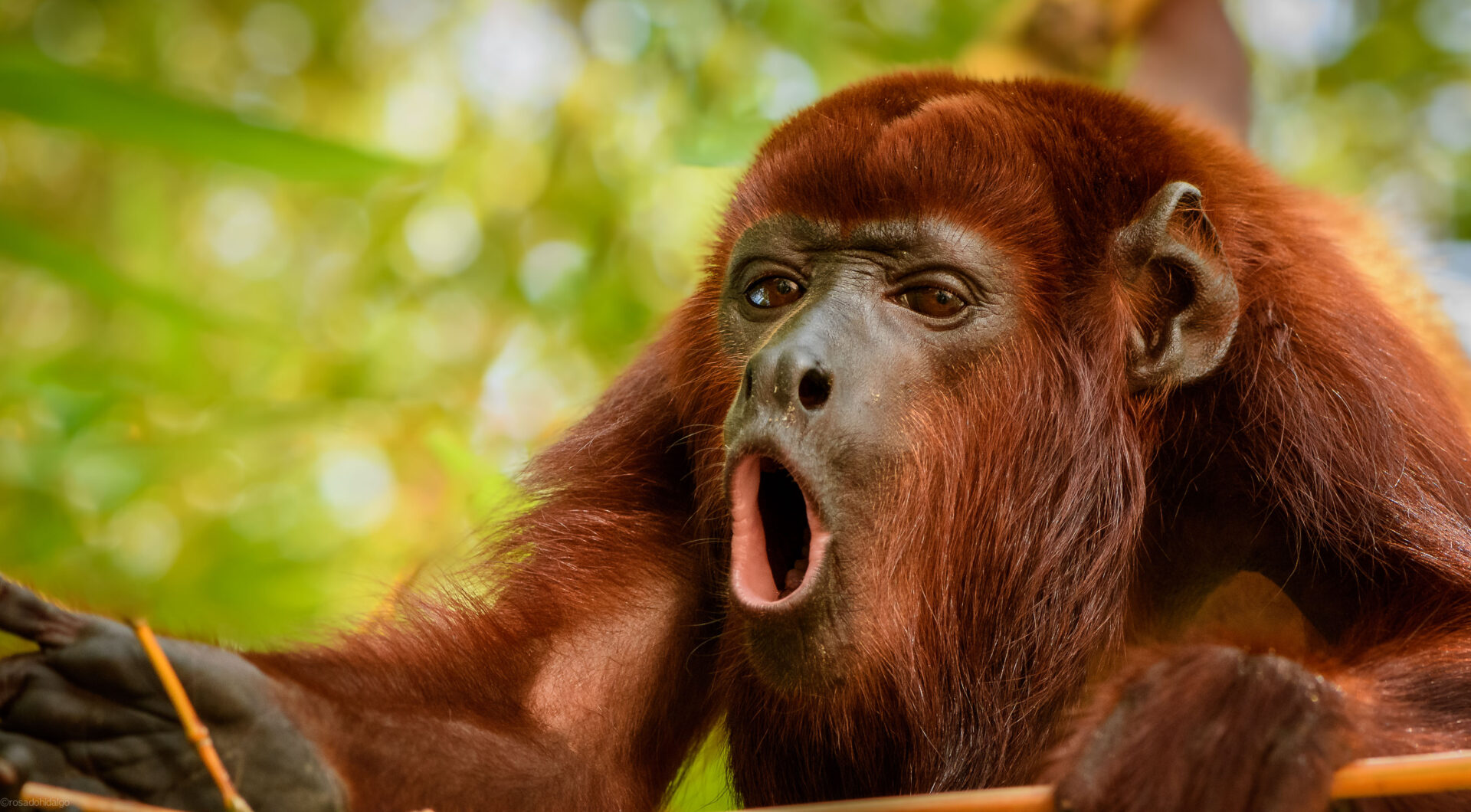
A Colombian Red Howler Monkey joins in with the dawn chorus. Credit: Santiago Rosado/FBC
While the howlers continue their song, other primates are busy with their own routines. Critically Endangered Brown Spider Monkeys (Ateles hybridus) traverse the reserve, using their long tails to move with ease between branches, and eating fruit and seeds as they go. Meanwhile, Varied White-fronted Capuchins (Cebus versicolor) perch in the branches grooming one another and snacking on fruits and flowers. Due to their diets, these species play an important role as seed dispersers. By spreading seeds across wide areas, they help to plant the forests of tomorrow in the Middle Magdalena Valley.
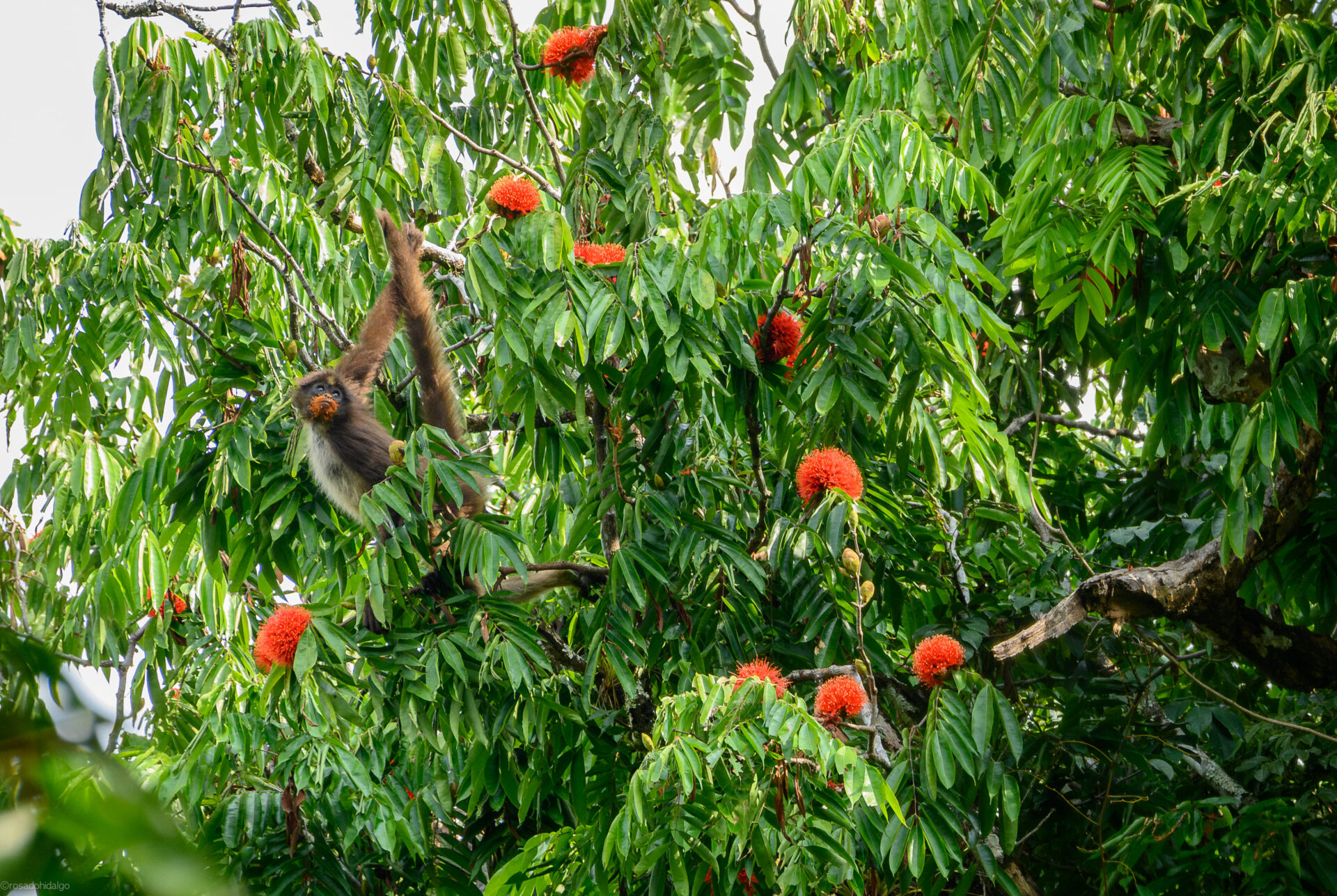
A juvenile Brown Spider Monkey swings from a branch feasting on flowers. Credit: Santiago Rosado/FBC
The banks of the wetlands
As we head out of the forest and towards the wetlands, we find the valley’s aquatic species. On the riverbanks, the Magdalena River Turtle (Podocnemis lewyana) basks in the sunlight. These Critically Endangered turtles congregate on logs along the river’s edge, sitting in groups of females, juveniles and males alike. Fascinatingly, the females are up to four times larger than males.
Also in the wetlands, the large nest mounds of the Northern Screamer (Chauna Chavaria) are built in marshy areas, sometimes floating in shallow water. If the timing is right, you might see one of these birds soaring over the reserve or participating in a duet with its mate.
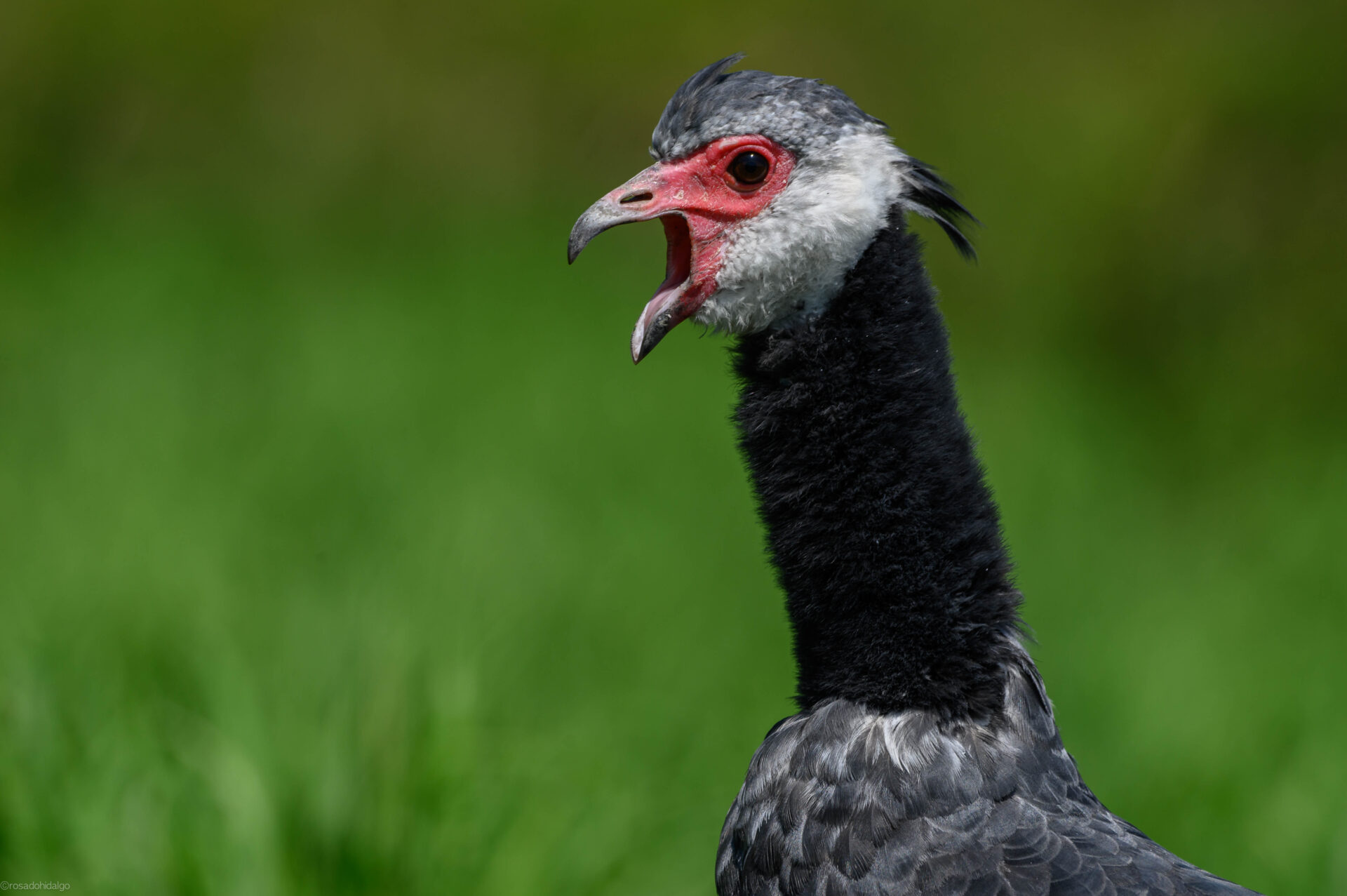
The Northern Screamer mid-song. Credit: Santiago Rosado/FBC
Though it’s difficult to peer into the water due to its darker colour, there’s sure to be plenty of wildlife hidden in its depths. The Antillean Manatee (Trichechus manatus manatus) glides unseen through the Magdalena’s tributaries. These gentle giants spend their whole life underwater, methodically grazing on aquatic plants. Also in search of food, Colombian Tapirs (Tapirus terrestris colombianus) swim by using their flexible trunks as snorkels. Tapirs often stay submerged to evade predators and even walk along the riverbed to feed.
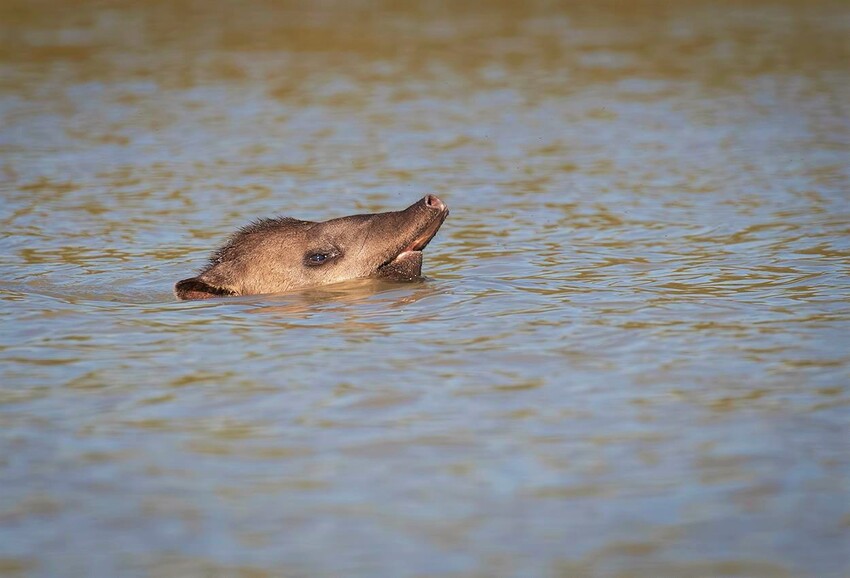
A Colombian Tapir takes a refreshing dip. Credit: Gerardo Cerón
Now, by the banks of the river, we reach the end of our tour. But your time with the Middle Magdalena Valley doesn’t have to stop there…

By supporting our autumn appeal, you can help us expand El Silencio. Together we can protect these incredible species and habitats before they are lost forever.