
Action Fund
By donating to World Land Trust’s Action Fund, we are able to act quickly, whenever and wherever urgent conservation action is needed.
High in the canopy of Brazil’s Atlantic Forest lives the Southern Muriqui (Brachyteles arachnoides). Known locally as the mono-carvoeiro, meaning the “charcoal monkey” for its dark grey face, this long-limbed acrobat was once abundant throughout South America, but is now only found in the diminishing forests of Brazil’s Atlantic coast.
With golden fur that catches the forest’s dappled sunlight, the Southern Muriqui is Brazil’s largest primate. Along with long arms and legs, it has a prehensile tail that curls and grips like an extra hand, allowing it to travel through the trees and rarely descend to the forest floor. A muriqui can hang its entire body weight from it while feeding, leaving both hands free. If you were to watch them move, their tail often leads, looping over branches before the rest of the body follows. Unlike many of their relatives, these monkeys do not have thumbs, a fascinating adaptation that makes their hands almost like hooks, perfectly suited to life swinging through the canopy.
Moving about in loose, sociable groups high above the ground, the muriquis feed on leaves, fruits, and flowers as as they go, they are surprisingly important gardeners of the forest. By feeding on a wide range of fruits and travelling long distances each day, they disperse seeds across large areas. Some plant species rely heavily on animals like muriquis to regenerate, which means their quiet movements through the canopy are shaping the forest beneath them.
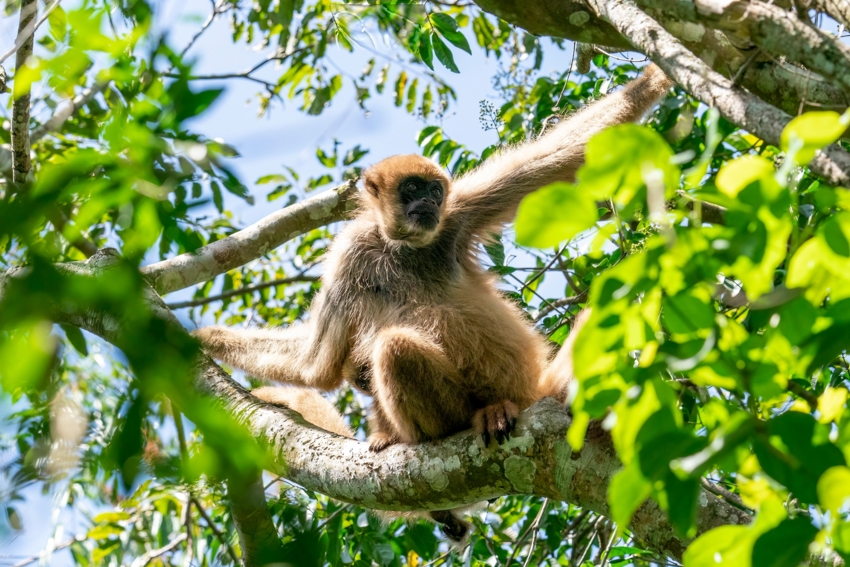
A Southern Muriqui perched in the canopy. Credit: ©Rob Jansen
A unique thing about the Southern Muriqui is how little they show conflict, their groups are thought to be very cooperative, with less of the competitive hierarchy seen in many other primate species. Studies of long-term populations have also found almost no serious aggression between males, something that is exceptionally rare among primates. Instead of fighting, they maintain bonds through staying close together and accepting newcomers, which has led some researchers to describe them as one of the most peaceful primate societies we know.
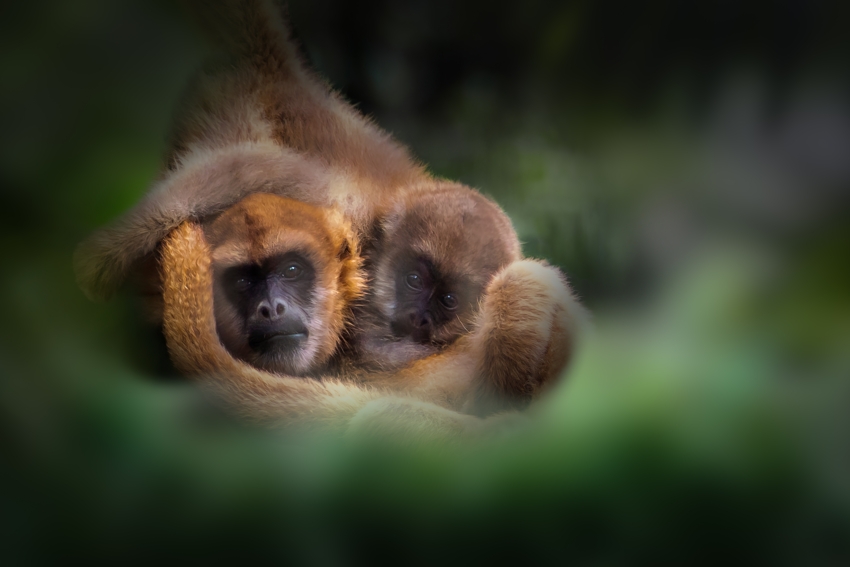
One of the favourite behaviours of the Southern Muriqui by those lucky enough to observe it is their practice of greeting each other with hugs. Upon meeting, they will reach out their long arms to embrace and briefly hold one another before moving on. Compared to many monkeys, muriquis are also relatively quiet. They do communicate, but often with soft vocalisations and body language rather than loud calls.
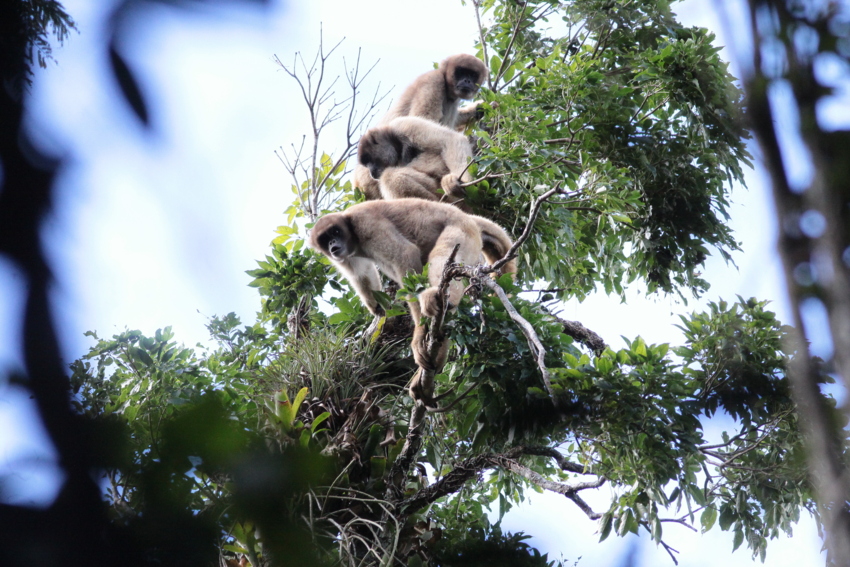
A group of Southern Muriquis. Credit: ©Adilei da Cunha
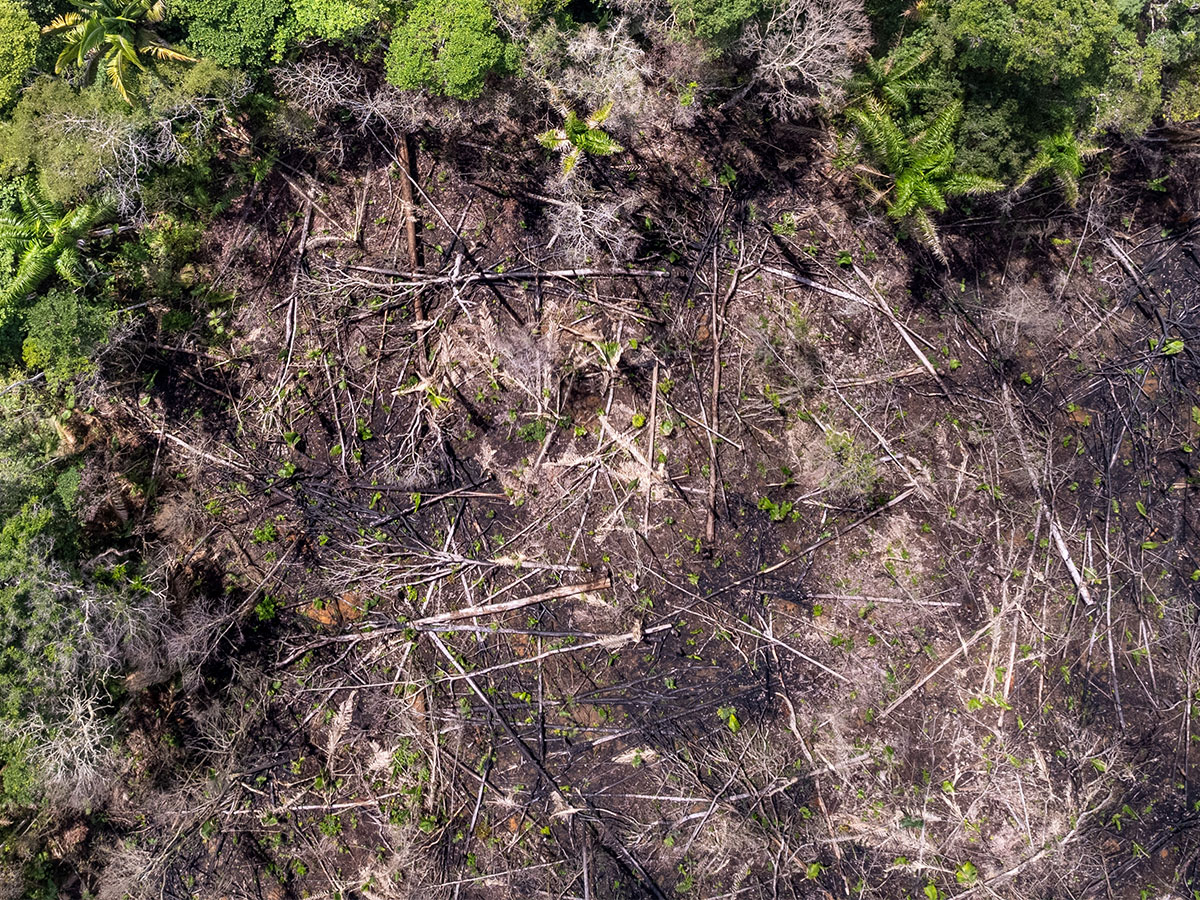
As for their home, the Southern Muriqui depends entirely on the Atlantic Forest, one of the most threatened ecosystems on Earth. Once stretching along much of Brazil’s coastline, today only a fraction remains, scattered in fragments between cities, farms, and roads. For a species that rarely comes down from the trees, gaps in the canopy are barriers that can isolate groups and limit access to food and mates. For the Critically Endangered and slow-reproducing muriquis, who have only one single offspring at a time every two to three years, this fragmentation is especially damaging.
This is why WLT partner Reserva Ecológica de Guapiaçu (REGUA) has spent more than 25 years protecting and restoring some of the last remnants of this extraordinarily biodiverse habitat. Supported by our Spring Appeal: Connecting Brazil’s Atlantic Forest and our Plant a Tree programme, REGUA is leading the way in helping the Atlantic Forest recover so that the people and wildlife who call it home can thrive alongside it.
By donating to World Land Trust’s Action Fund, we are able to act quickly, whenever and wherever urgent conservation action is needed.
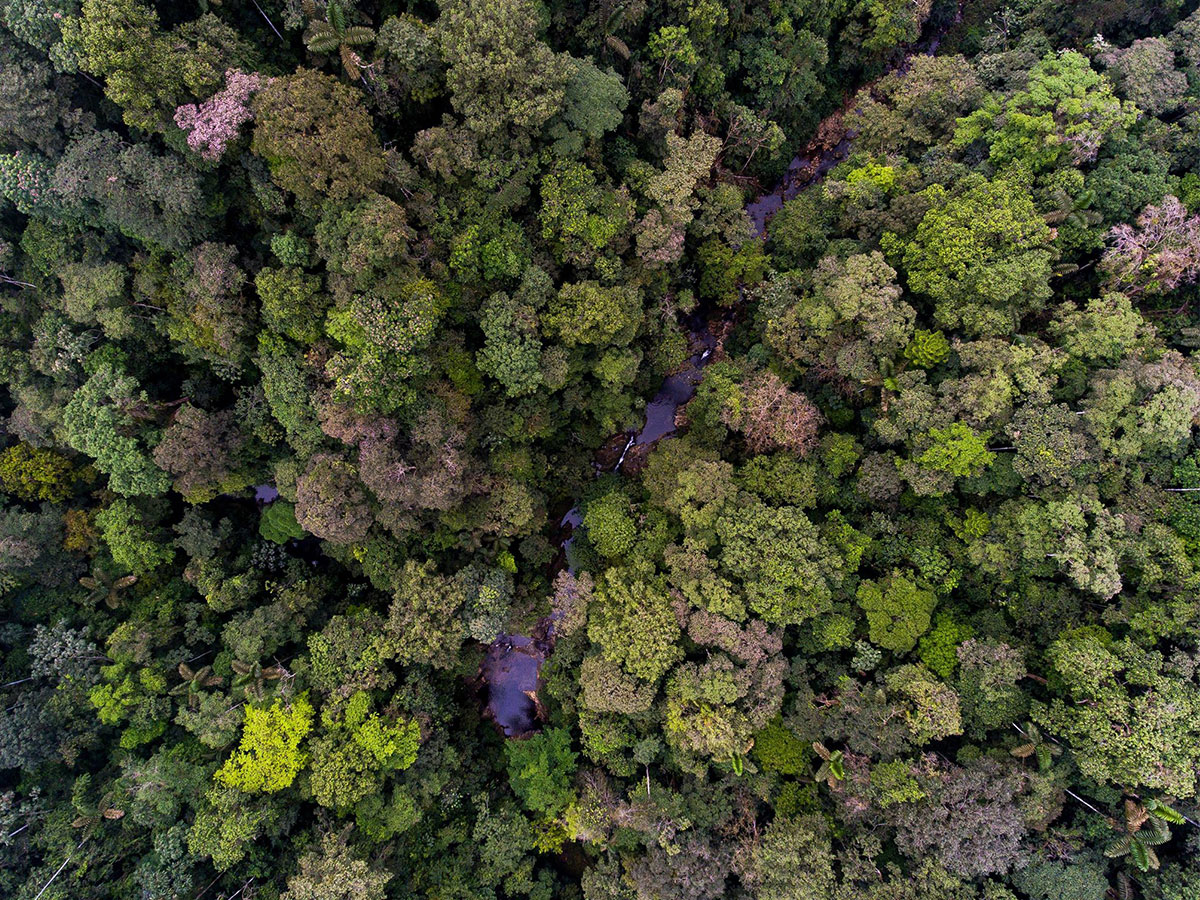

Habitat loss is the greatest threat facing wildlife worldwide. We believe that by protecting land, acre by acre, we are taking the best action to ensure a future for wildlife.
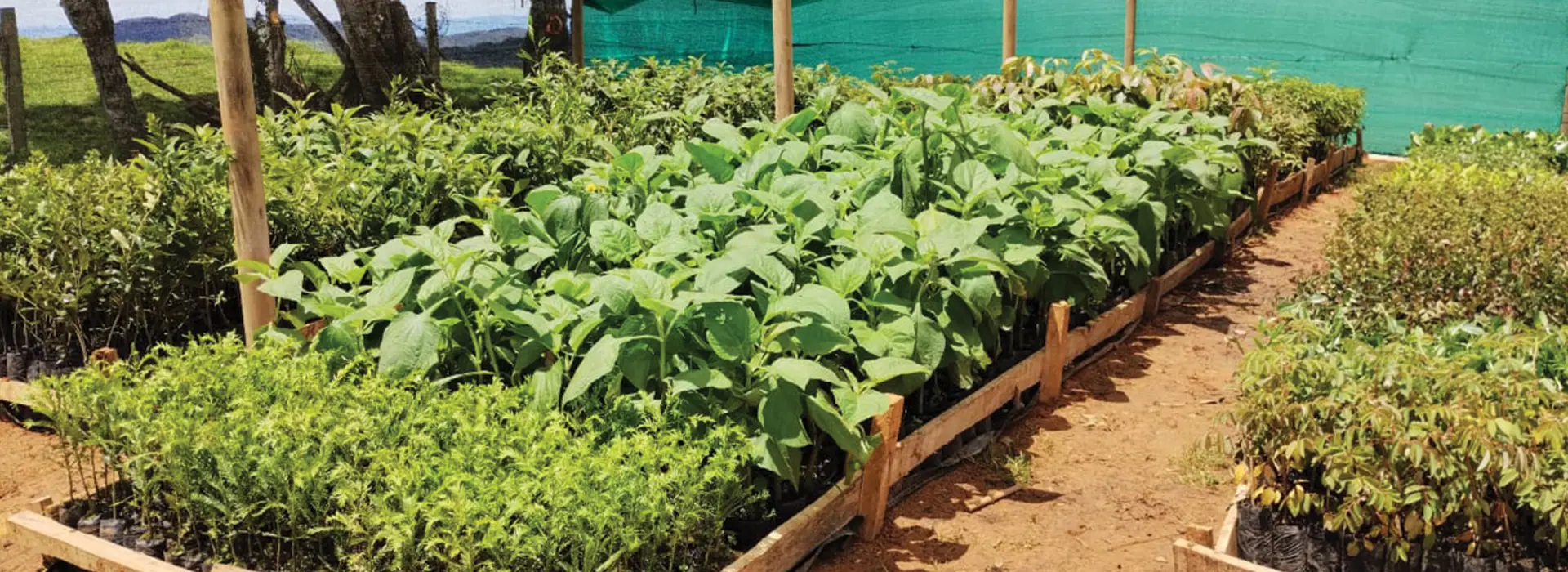

Reforestation is one of the main methods of restoring many damaged ecosystems, with Plant a Tree, you can bring vital forest habitats back to life.