
Vulnerable
In accordance with IUCN criteria, a species is considered to be Vulnerable if it is facing a high risk of extinction in the wild.
Species data
Class
Mammalia
Order
Primates
Family
Indriidae
Scientific Name
Avahi ramanantsoavanai
Reserve locations
MADAGASCAR
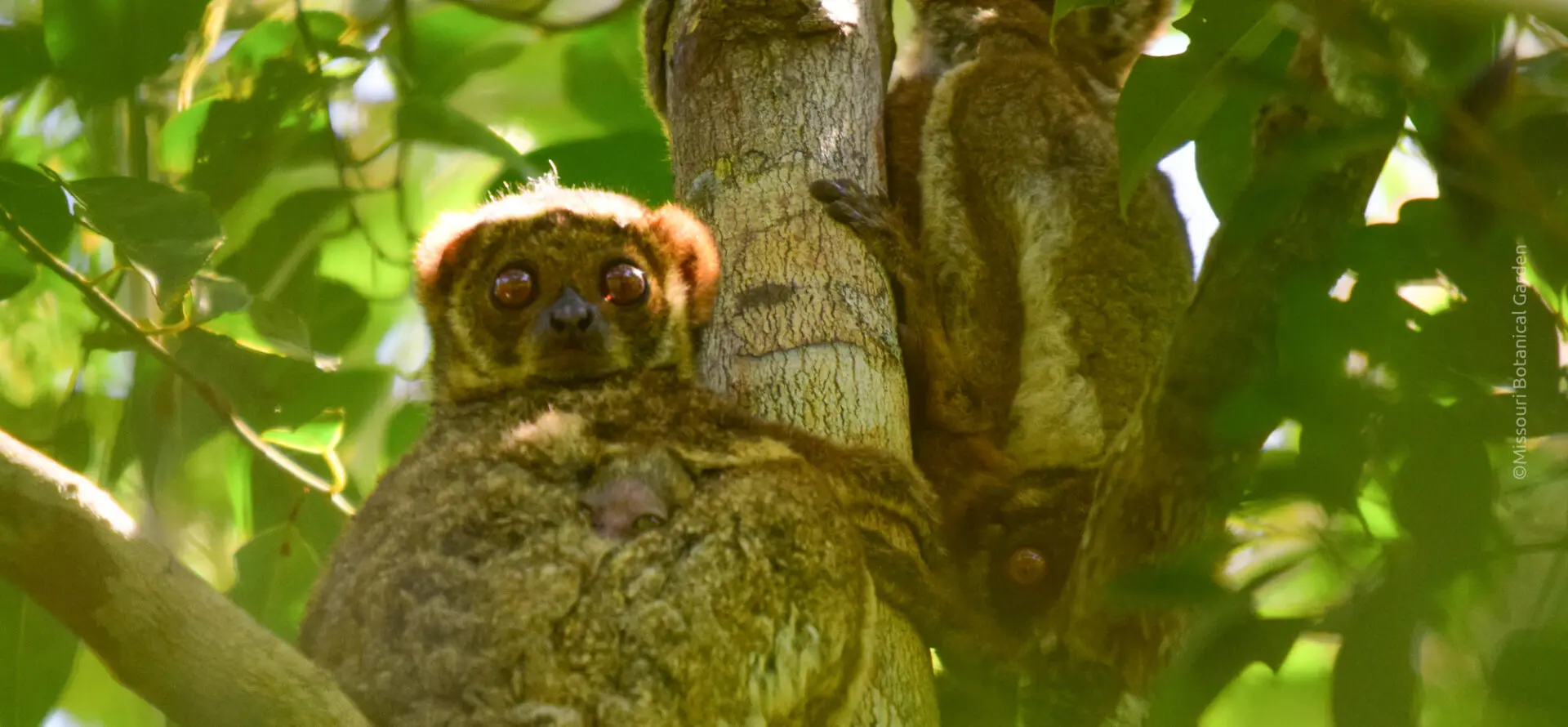
Ramantsoavana’s Southern Woolly Lemur is a species of indriid lemur first discovered in 2006. Prior to this, it was considered a subspecies of the closely related Southern Woolly Lemur (Avahi meridionalis). Though it looks almost identical, Ramantsoavana’s Southern Woolly Lemur is now considered a separate species based on its genetics.
Woolly lemurs get their name from the curly fur on their backs, which has a wool-like appearance. Their small ears are nearly fully concealed by a covering of fur. Many woolly lemurs also have a characteristic white stripe on their lower thigh.
BEHAVIOUR
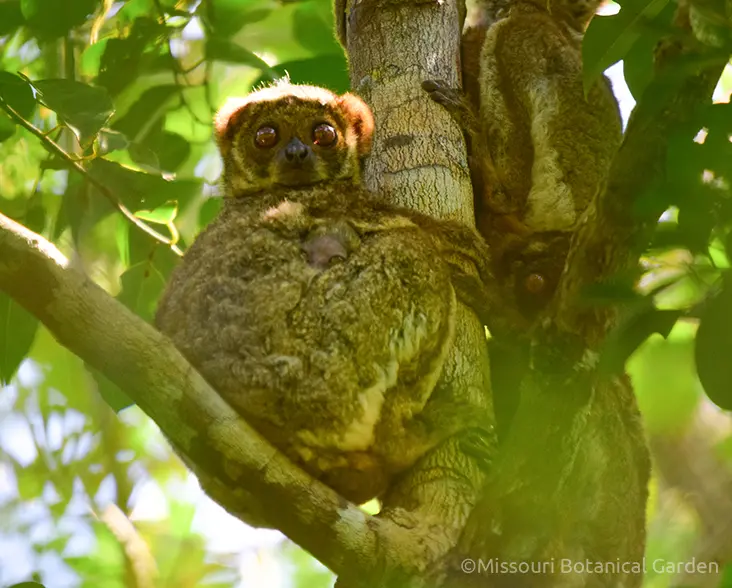
Though very little has been recorded on the ecology of Ramantsoavana’s Southern Woolly Lemur, it is known to be nocturnal. Much like the majority of lemurs, this species is arboreal; spending all its time in the trees.
All woolly lemurs are herbivorous, and feed exclusively on leaves and buds. Woolly lemur offspring are most often born between August and October, and usually cling to their mother like a belt for the first few months, before moving to the mother’s back until they are weaned at six months old.
HABITAT
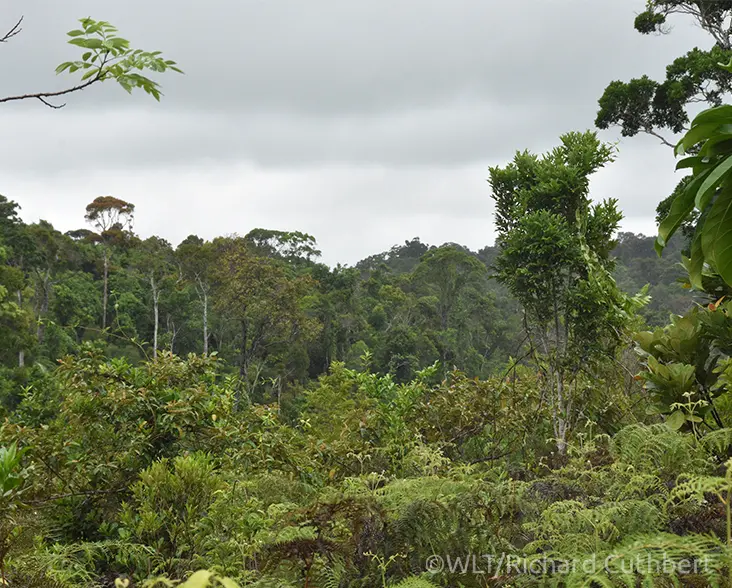
Like all lemurs, Ramantsoavana’s Southern Woolly Lemur is endemic to Madagascar, meaning it is found nowhere else in the world. In particular, this species is found in the humid forests of the south-eastern regions of the island, although the complete extent of its distribution is unknown.
THREATS AND CONSERVATION
Deforestation, as a result of land clearance for agriculture, is a common threat faced by forest species in Madagascar, and Ramantsoavana’s Southern Woolly Lemur is no exception. Little is known about the exact impact deforestation has had on the species, but it is expected that habitat fragmentation has made it vulnerable to extinction, and the species is likely undergoing population decline similar to most lemurs.