
Vulnerable
In accordance with IUCN criteria, a species is considered to be Vulnerable if it is facing a high risk of extinction in the wild.
Species data
Class
Mammalia
Order
Artiodactyla
Family
Cervidae
Scientific Name
Marsh Deer
Reserve locations
Bolivia
Description
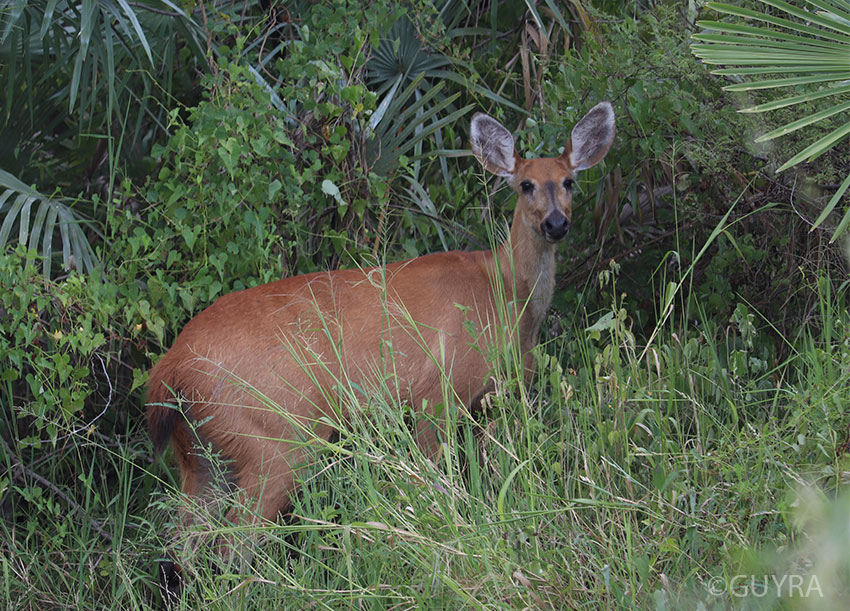
The Marsh Deer is the largest deer species in South America. They have very large ears lined with white hairs, red-gold to tawny brown fur, blackish eyes and long dark legs. Their coat turns darker during winter and there are also white marks on the hips and around the eyes. Marsh deer have large hooves with specialised membranes that are useful for swimming and walking on marshy surfaces.
Behaviour
Marsh Deer are generally solitary animals; however, they may form small groups of less than six deer with only an adult male when they gather around water sources in dry periods. Marsh deer are usually active at dawn and dusk, although they may also feed during the day and at night. They have a small migratory pattern, following the water levels between the dry season and flooding season, and they are also swift swimmers.
Habitat
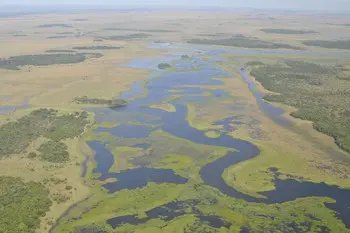
The Marsh Deer lives exclusively in wetland ecosystems and seasonally flooded savannas across central and eastern South America, where the water level is less than 70 cm deep. The marshes with their high vegetation density protect them from predators and provide them with food.
Threats and conservation
Marsh Deer have suffered from uncontrolled hunting and habitat loss, leaving populations small and highly fragmented. The widespread draining of wetlands for cattle poses a particular severe threat, reducing available habitat and increasing exposure to livestock diseases. In Brazil and Paraguay, they are also increasingly affected by water pollution linked to gold mining.