Endangered
In accordance with IUCN criteria, a species is considered to be Endangered if it is facing a very high risk of extinction in the wild.
Species data
Class
Reptilia
Order
Testudines
Family
Geoemydidae
Scientific Name
Cuora mouhotii
Reserve locations
Vietnam
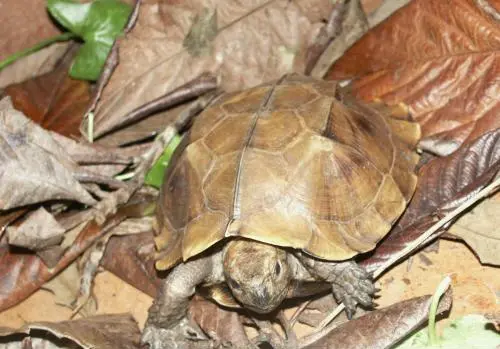
The Keeled Box Turtle has three pronounced ridges on its upper shell, which give it its name. At the rear the shell, which is usually a rich brown in colour, has a serrated or scalloped edging. Like all box turtles, it has the ability to shut the front of the lower shell upwards like a box when it withdraws its head, giving extra protection from predators. It lives largely on land and its toes are only partly webbed.
The males and females are best told apart by the colour of the iris, which is usually brown or black in the male but a bright red or orange in females.
These turtles are quite small, reaching up to 18cm long.
Behaviour
Keeled box turtles live on land. and have a largely plant based diet, though they do also eat worms and snails.
They breed twice a year, and lay one to five eggs each time. Males can be very aggressive when courting and will often even chase and bite the female. When the young hatch, they are left to fend for themselves, which is usual in turtles.
Much of this behaviour has only been observed in captivity and may not exactly reflect what takes place in the wild.
Habitat
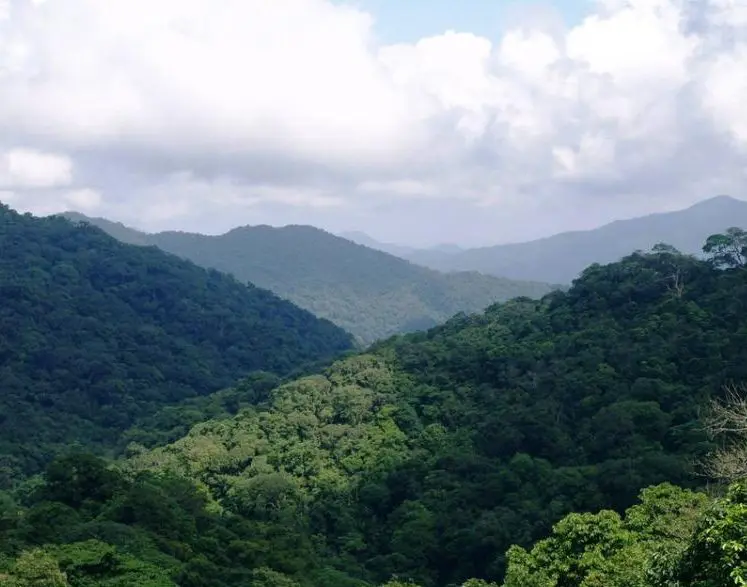
Rather than living in water, the keeled box turtle is one of a group of turtle species that live in the deep leaf litter of tropical Asian forests. It occurs in China, North-East India, Vietnam, Lao PDR, Myanmar and Thailand, often in mountain areas.
Threats and Conservation