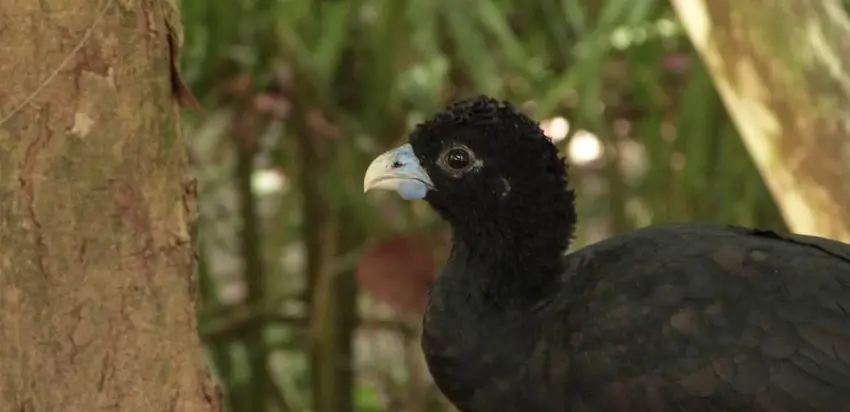
Blue-billed Curassow is a medium sized, ground dwelling bird. Males are primarily blue/black with white feathers on the under body; the upper leg is reddish brown. The bill is light grey with a fleshy blue cere (the waxy structures at the base of its bill); only females grow a knob on the bill. It has a curly black crest and a hanging wattle. Females are smaller with black-and-white crest feathers and white barring on their wings and tail. They are threatened by severe loss of habitat and a number of other factors.

Critically Endangered
In accordance with IUCN criteria, a species is considered to be Critically Endangered if it is facing an extremely high risk of extinction in the wild.
Species data
Class
Aves
Order
Galliformes
Family
Cracidae
Scientific Name
Crax alberti
Reserve locations
Colombia

Behaviour
Blue-billed Curassow usually breed in the dry season. But in at least one site, two breeding seasons are known, one between December and March, the other from July to September.
The diet of Blue-billed Curassow is mostly plant based, primarily shoots and seeds as well as invertebrates and carrion, which they collect from the forest floor.
Habitat
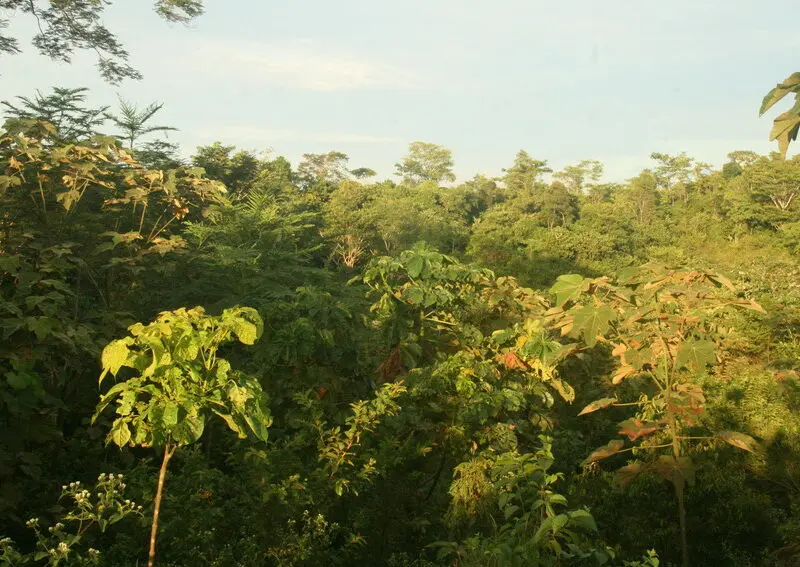
The Blue-billed Curassow once occurred throughout much of northern Colombia, but is now restricted to five small sites. They occur in lowland forest, below 1.2km elevation and evidence suggests they may also be able to survive in secondary and degraded forests.
Threats and Conservation
Estimates are that fewer than 2,500 individuals survive in the wild, with possibly as few as 1,000. Their main threat comes from loss of habitat (at a rate of 2-7 per cent annually), for timber, conversion to farm land (particularly cocoa, coffee and marijuana plantations) and urban spread. They are hunted for their meat and eggs and taken illegally for the pet trade. Gold mining in the east of their range has also contributed to loss of habitat.
The region in which they survive has suffered from a poor economic situation for many years. Conservation of this species in the future will need to focus on improving the lives of local people, as well putting stringent conservation measures in place to protect the remaining forest fragments on which they depend.