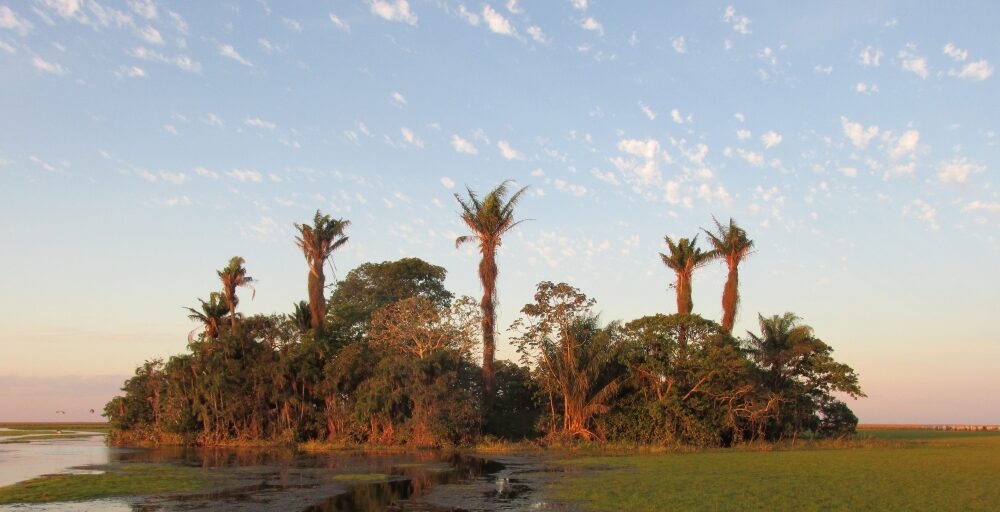
This autumn, WLT is supporting the protection of two critical landscapes. In Bolivia, part of that effort will help secure La Curva Ranch, a 636-ha property bordering the Laney Rickman Reserve in the Beni Savannah.
Once acquired, La Curva will become part of the reserve, safeguarding vital habitat for the Critically Endangered Blue-throated Macaw (Ara glaucogularis). But for Asociación Armonía, the acquisition represents an opportunity to shape the next phase of Blue-throated Macaw conservation.
Expanding the nest box programme
One immediate opportunity is the expansion of Armonía’s highly successful nest box programme. Since Armonía’s nest box programme began in 2005, over 160 Blue-throated Macaws have fledged successfully, and the population is recovering well.
If current trends continue, Armonía believes the species could be downlisted from Critically Endangered to Endangered within the next decade. This will be a huge conservation win for a species once feared extinct in the 1990s.
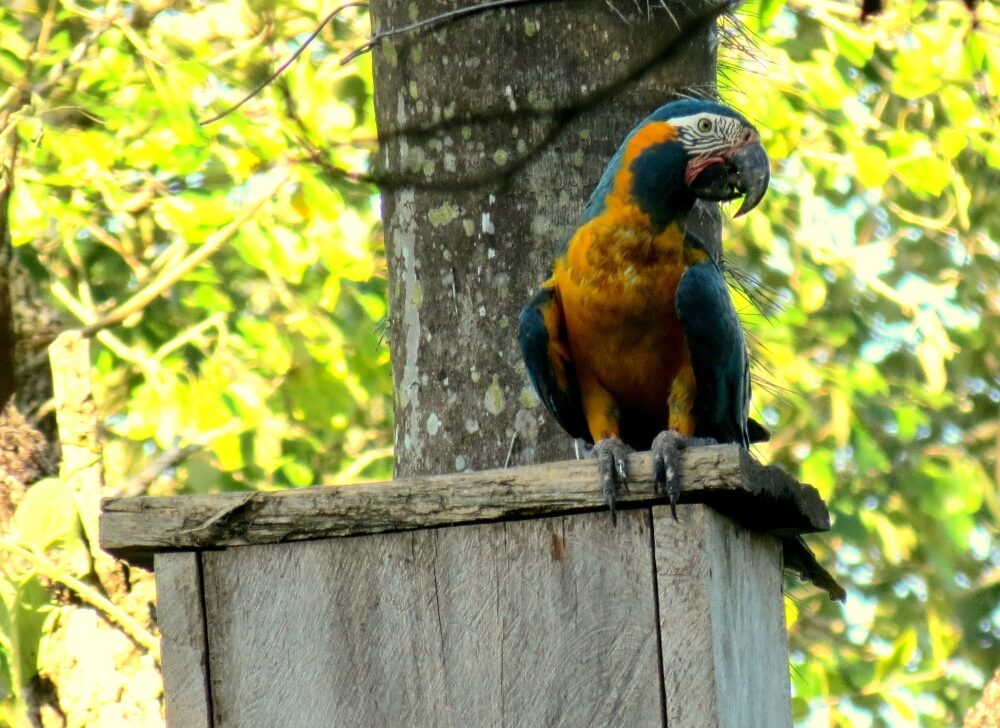
La Curva Ranch provides Armonía with the opportunity to further expand their nest box programme. Credit: ©Picasa
Gardening for the macaw
La Curva will also provide space for habitat restoration, with saplings from Armonía’s tree nursery planted across degraded areas of the land. Yet restoration is also providing an opportunity to answer some of the biggest remaining questions about the Blue-throated Macaw.
Today, the macaws inhabit a landscape altered by centuries of human activity. While researchers know they depend heavily on Motacú Palm (Attalea phalerata) fruits, it is unclear whether this is through preference or simply because these palms are all that remains.
La Curva will allow researchers to plant and monitor a wider variety of tree species that may prove important to the species’ continued recovery.
“We can now have a project where we’re growing trees that won’t mature for another 150 years,” he says. “That’s one of the benefits of land purchase. It allows long-term conservation.”
Bringing conservation closer to people
Unlike Armonía’s other reserves, La Curva lies beside a main road near the town of Loreto.
“Before all our reserves were way off,” Bennett says. “No one could ever visit. But now with La Curva, you’ll be able to just get out of your vehicle and within minutes learn about our work and the macaws.”
The site will host a small interpretation area, which may even include demonstration nest boxes and habitat restoration projects, offering visitors a chance to see Blue-throated Macaw conservation in action.
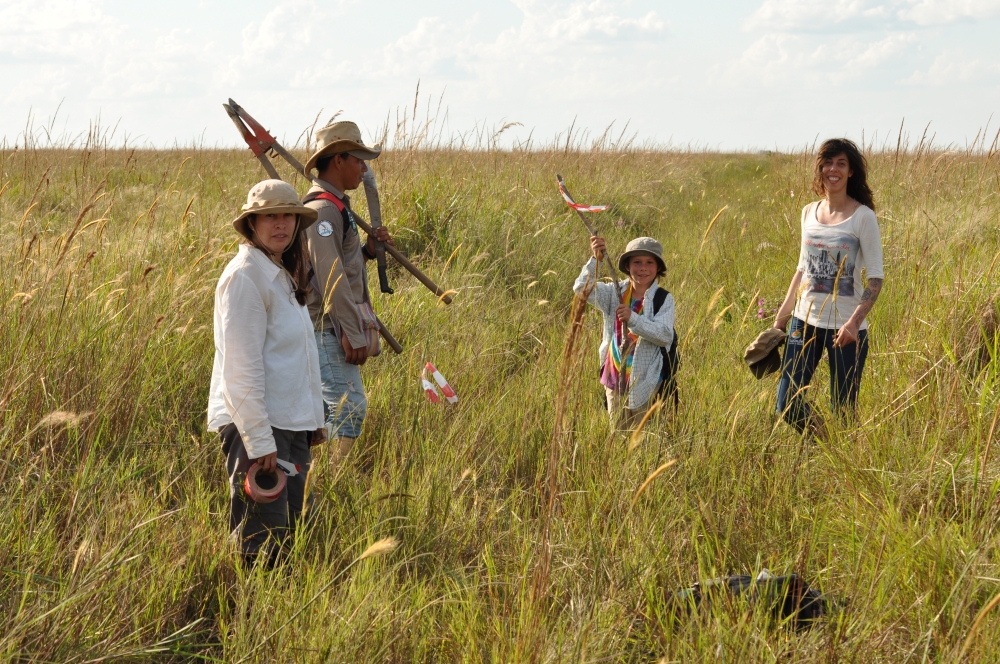
If successful, this appeal will enable the building of an interpretation centre, strengthening Armonia's conservation outreach work. Credit: ©Armonia
Beyond the reserve boundaries
Armonía’s ambitions extend beyond the reserve itself. While protected areas provide an important refuge for the Blue-throated Macaw, the long-term future of the species will also depend on improving habitat across the wider Beni Savanna.
One priority is restoring the region’s distinctive forest islands, where cattle often prevent young Motacú Palms from regenerating naturally. To tackle this, Armonía will experiment with transplanting young saplings that are sufficiently developed to withstand cattle pressure.
“The long-term vision is that we can use what we’ve learned from La Curva across the wider Beni,” Bennett explains.
By restoring the wider ecosystem, a wealth of other species will also benefit, including Jaguar (Panthera onca), Puma (Puma concolor) and Lowland Tapir (Tapirus terrestris), thus helping safeguard one of South America’s most unique and threatened landscapes.
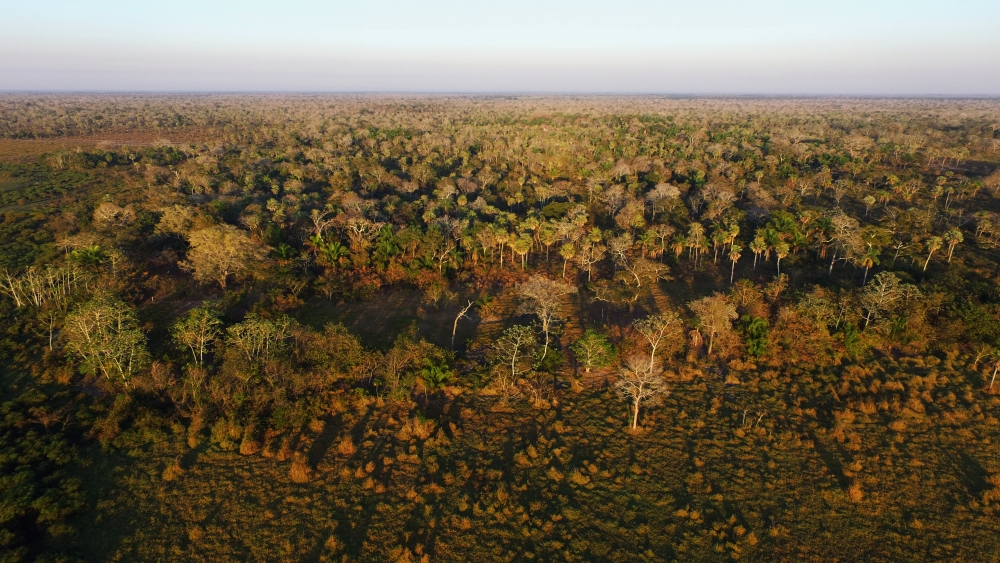
The purchase of La Curva Ranch will enhance Armonia's conservation efforts across the wider Beni Savanna. Credit: ©Tjalle Boorsma
Two Threatened Landscapes. One Urgent Mission
In Bolivia, agricultural expansion is threatening to destroy vital habitat. We have a small window to save one of last strongholds for the Blue-throated Macaw – currently only 700 remain in the wild.