From a macaw once feared extinct in the wild to an antelope small enough to hide among the forest undergrowth, the landscapes at the heart of World Land Trust’s Autumn Appeal are home to some extraordinary wildlife.
Across Bolivia’s Beni Savanna and South Africa’s Elephant Coast, more than 1,600 species stand to benefit from the protection of threatened habitats. Some are instantly recognisable, while others are so elusive that even scientists don’t yet know much about them.
As our partners Asociación Armonía and Wild Tomorrow work to secure vital land in these two landscapes, we’re taking a closer look at ten remarkable species that depend on them.
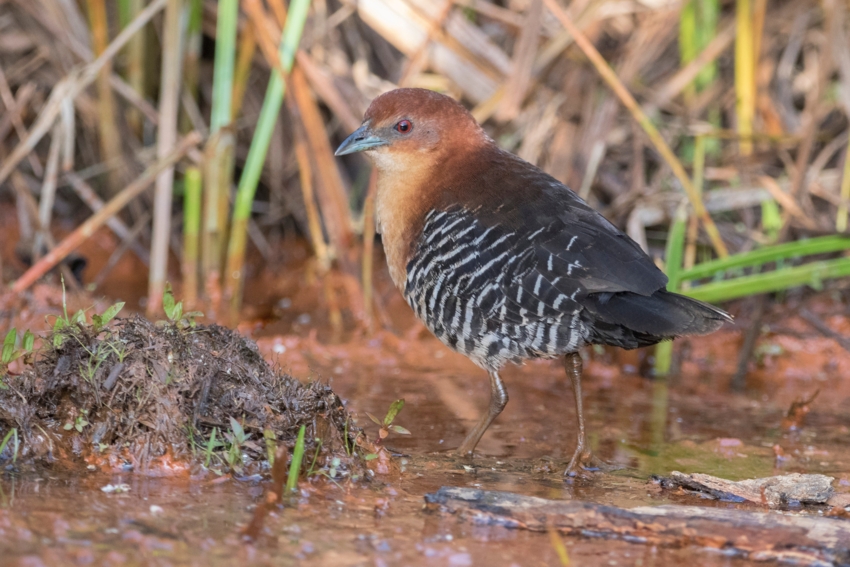
Rufous-faced Crake. Credit: Luiz Fernando Matos
1. Rufous-faced Crake (Laterallus xenopterus), Vulnerable
A bird that is heard far more often than seen
Measuring just 14 cm long, the Rufous-faced Crake is one of South America’s most mysterious birds. It spends much of its life concealed among dense wetland grasses, making sightings exceptionally rare.
Scientists know surprisingly little about its behaviour, and its distinctive trilling call is often the best clue to its presence. With wetlands and natural grasslands increasingly threatened by agricultural expansion, protecting the Beni Savanna could also help safeguard this elusive species.
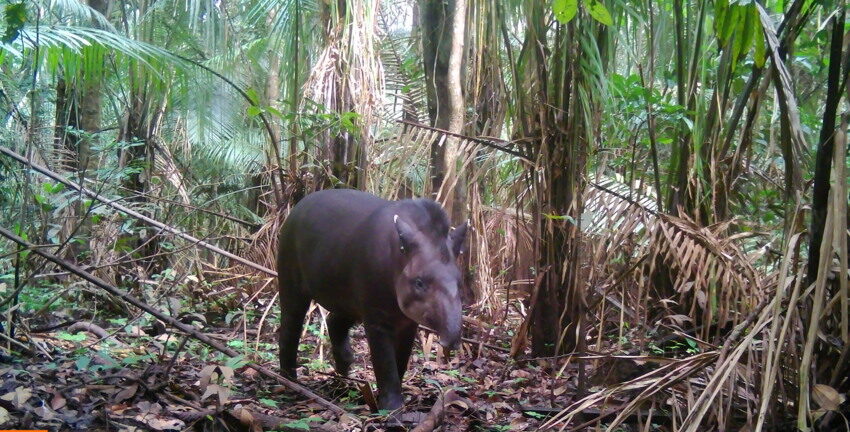
Lowland Tapir. Credit: AMPA
2. Lowland Tapir (Tapirus terrestris), Vulnerable
A rainforest gardener with a built-in snorkel
With its rounded body and short, flexible trunk, the Lowland Tapir is one of South America’s most distinctive mammals. That unusual nose is so useful because it can grasp leaves and fruit, and even act as a snorkel when the animal swims.
Tapirs are also important seed dispersers. As they travel through forests and wetlands, they eat fruit and deposit seeds in new locations, helping plants spread and regenerate. Protecting their habitat helps preserve the ecological processes that keep these landscapes healthy.
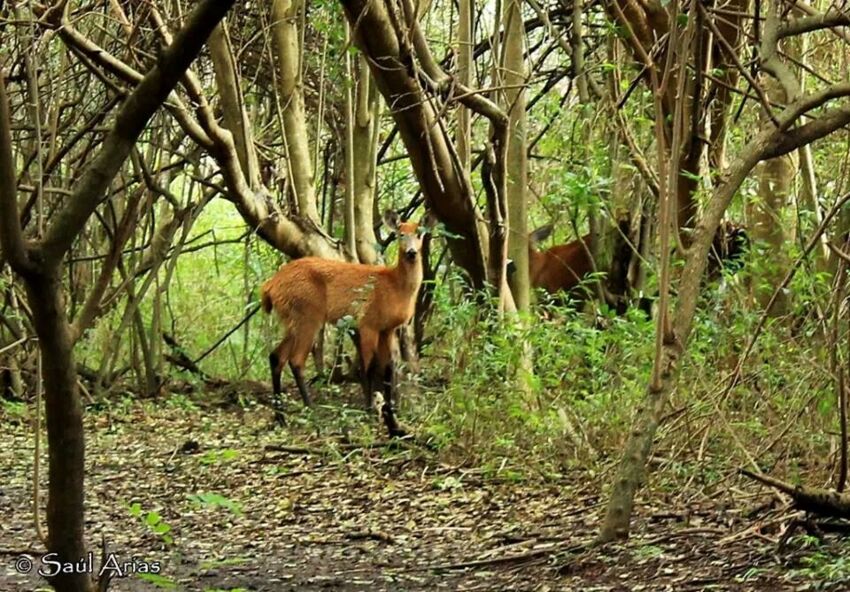
Marsh Deer. Credit: Saul Arias/Guyra Paraguay
3. Marsh Deer (Blastocerus dichotomus), Vulnerable
Built for life in flooded grasslands
South America’s largest deer is perfectly adapted to the wetlands of the Beni Savanna. Its long legs and widely spread hooves help it move through marshes and waterlogged ground where many other large mammals would struggle.
Marsh Deer depend on healthy wetlands for food and shelter, making them particularly vulnerable to drainage, agricultural expansion and changes to natural flooding patterns. Their survival is closely tied to the future of these increasingly threatened habitats.
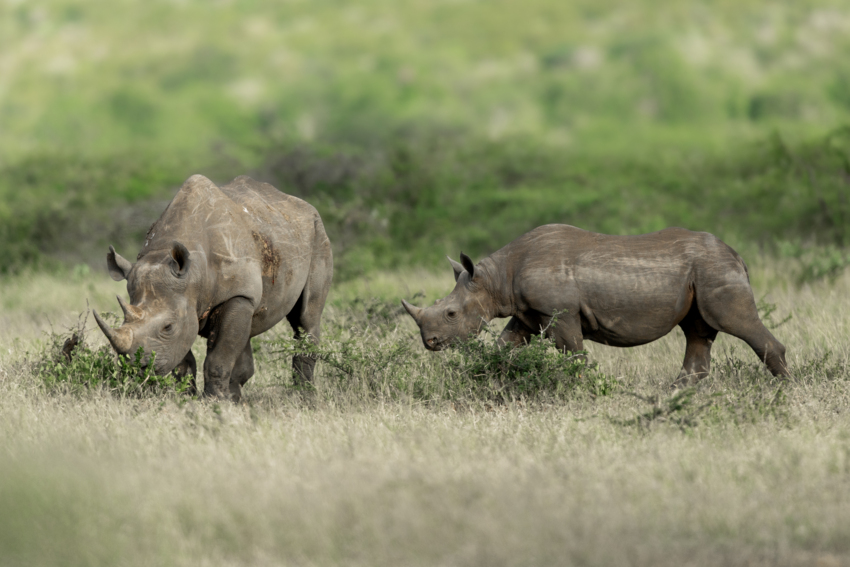
Black Rhino. Credit: Chantelle Melzer
4. Black Rhino (Diceros bicornis), Critically Endangered
A surprisingly delicate way of eating
Despite weighing more than a tonne, the Black Rhino has a remarkably precise way of feeding. Its pointed, flexible upper lip acts almost like a finger, grasping leaves and twigs from shrubs and trees.
Unlike the grass-eating White Rhino, Black Rhinos are browsers, and their specialised lips allow them to select individual shoots. Having suffered devastating population declines from poaching, they remain among Africa’s most threatened large mammals.
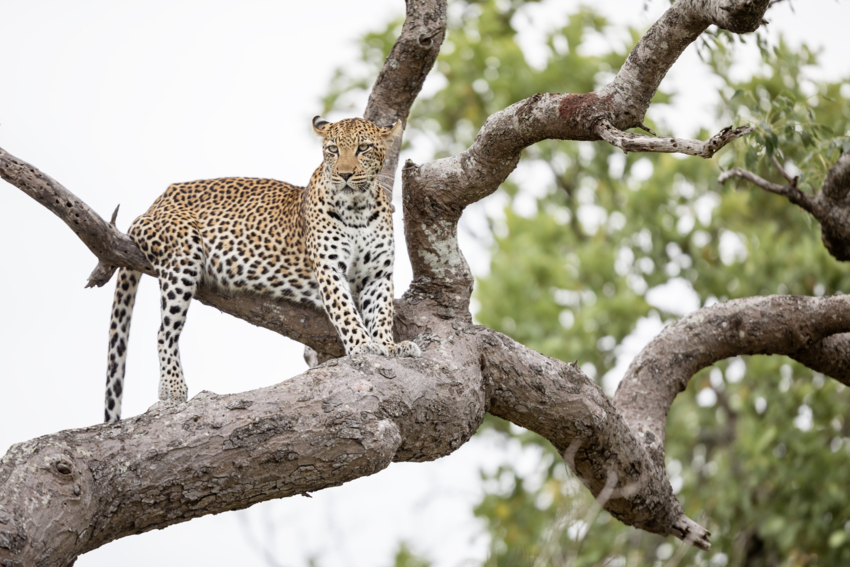
Leopard. Credit: Chantelle Melzer
5. Leopard (Panthera pardus), Vulnerable
A big cat that takes its dinner into the trees
Few predators are as adaptable as the Leopard. Found across a remarkable variety of habitats, these solitary cats are powerful climbers, capable of carrying their prey into trees to keep it away from competing predators and scavengers.
Their spotted coats provide excellent camouflage, while their ability to hunt many different prey species helps them survive in changing environments. Yet even these adaptable hunters are increasingly threatened by habitat fragmentation. Reconnecting the Elephant Coast’s remaining wild spaces offers them a better chance of moving safely through the landscape.
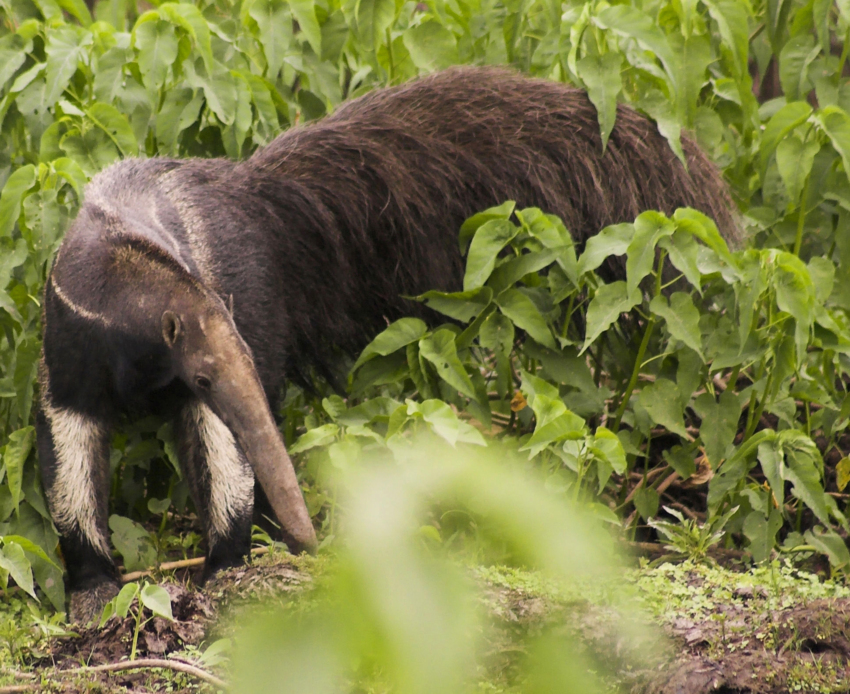
Giant Anteater. Credit: Deiter Turk
6. Giant Anteater (Myrmecophaga tridactyla), Vulnerable
A tongue that moves 150 times a minute
The Giant Anteater has no teeth, but it has a remarkable adaptation for catching its favourite food. Its long, sticky tongue can extend around 60 cm and flick in and out of its mouth up to 150 times a minute, gathering ants and termites from their nests.
Powerful front claws help it break into insect colonies, while an exceptional sense of smell allows it to locate prey. Despite its impressive size, this unusual mammal is threatened by habitat loss, fires and collisions with vehicles.
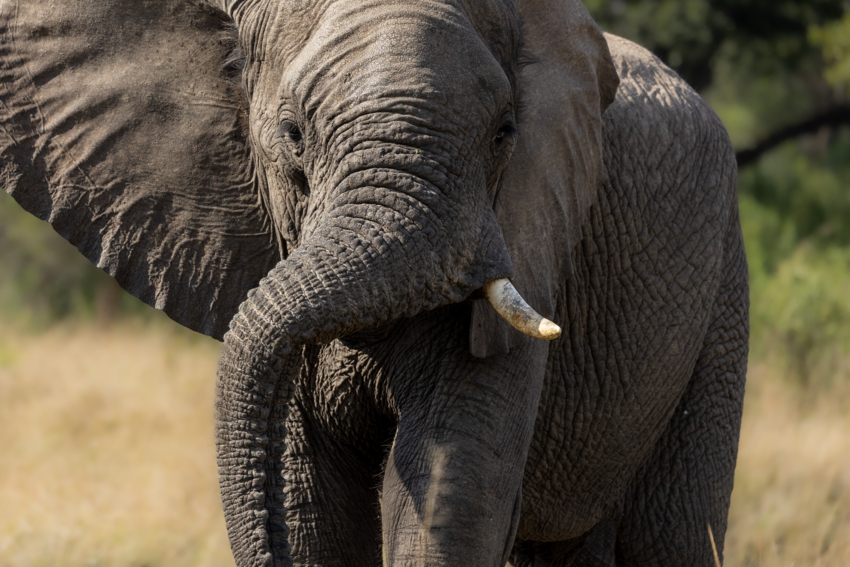
African Savanna Elephant. Credit: Chantelle Melzer
7. African Savanna Elephant (Loxodonta africana), Endangered
Nature’s landscape architects
As the world’s largest land mammal, the African Savanna Elephant has an enormous influence on its surroundings. By pushing over trees, opening pathways through vegetation and digging for water in dry riverbeds, elephants create opportunities for countless other species.
Their movements help shape entire ecosystems, but roads, fences and agricultural development increasingly restrict their ability to roam. Wild Tomorrow’s work to reconnect protected areas along the Elephant Coast will help provide the space these wide-ranging giants need.
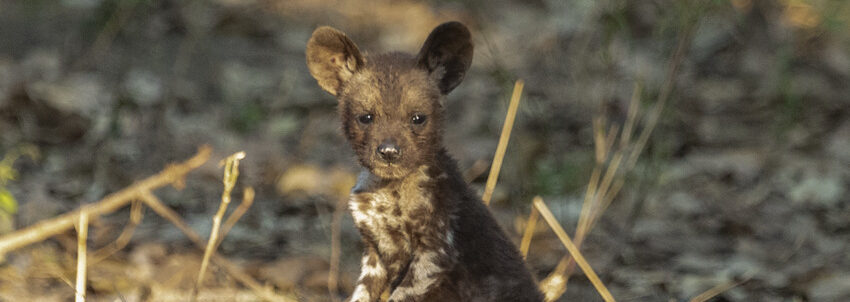
African Wild Dog. Credit: Chantelle Melzer
8. African Wild Dog (Lycaon pictus), Endangered
Every painted coat is unique
Also known as the Painted Dog, the African Wild Dog is instantly recognisable by its striking patchwork of black, brown, white and yellow fur. Just like human fingerprints, no two individuals have exactly the same coat pattern.
These highly social predators live and hunt cooperatively, travelling enormous distances in search of food. Their need for extensive, connected habitats makes wildlife corridors especially important. Wild Tomorrow has previously recorded African Wild Dogs moving through land it is working to protect, offering an encouraging glimpse of what a connected landscape can achieve.
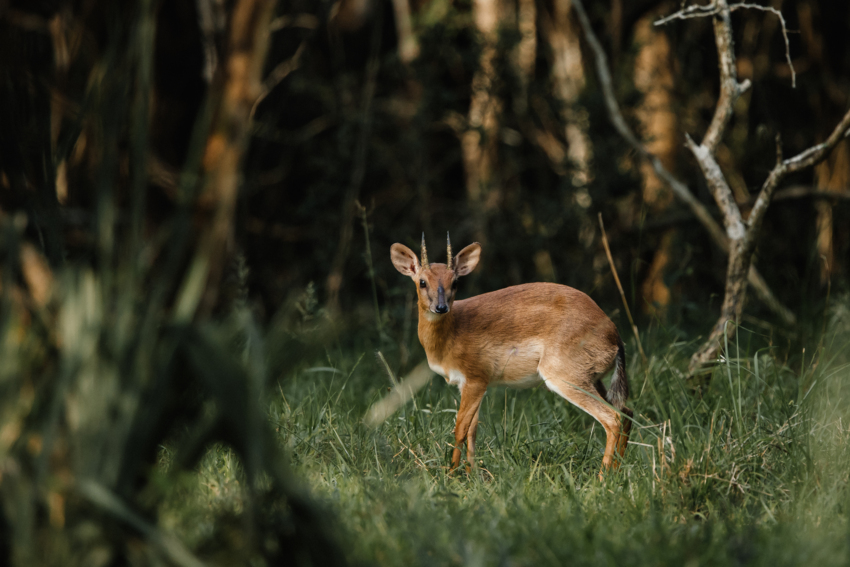
Suni Antelope. Credit: Chantelle Melzer
9. Suni Antelope (Nesotragus moschatus), Least Concern globally, Endangered in South Africa
One of Africa’s smallest antelopes
Standing just 35 cm tall at the shoulder and weighing around 5 kg, the Suni is small enough to disappear almost completely into dense forest vegetation.
These shy antelopes spend much of their time hidden in the undergrowth, emerging to feed on leaves, shoots and fallen fruit. Unlike many larger mammals, they can obtain the moisture they need from their food without relying on regular visits to drinking water. In South Africa, habitat loss has made the protection of their remaining forest strongholds particularly important.
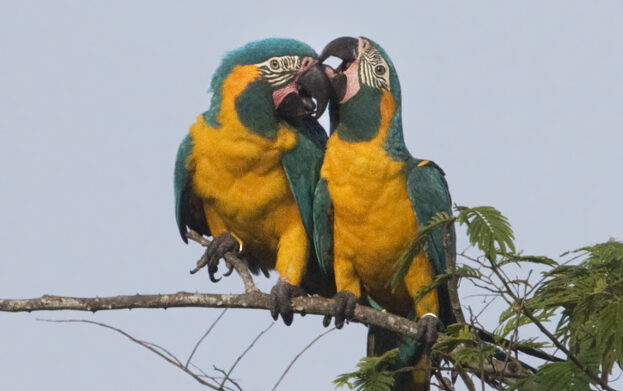
Blue-throated Macaw. Credit: Daniel Alarcon/Asociación Armonia
10. Blue-throated Macaw (Ara glaucogularis), Critically Endangered
Once feared extinct in the wild
With its brilliant turquoise feathers and golden-yellow chest, the Blue-throated Macaw is one of Bolivia’s most spectacular birds. But for decades, its future was uncertain. The species was once feared extinct in the wild until a surviving population was documented in 1992.
Found nowhere else on Earth, these macaws depend on the Beni Savanna’s forest islands and palm groves for food and nesting sites. Thanks to dedicated conservation work, including Asociación Armonía’s successful nest box programme, their numbers are recovering. Protecting more habitat will give future generations of macaws room to thrive.
Protecting the places they call home
From the smallest wetland bird to the largest land mammal, each of these species has a part to play in the rich ecosystems of Bolivia and South Africa.
Through our Autumn Appeal, WLT is working with Asociación Armonía to secure 636 ha beside the Laney Rickman Reserve in Bolivia, while Wild Tomorrow aims to protect another 66.3 ha on South Africa’s Elephant Coast.
Together, these pieces of land will help expand protected habitat, reconnect fragmented landscapes, and safeguard the wildlife that depends on them.
Protect Wildlife Today
Support our Autumn Appeal and help protect these landscapes and the animals that live there