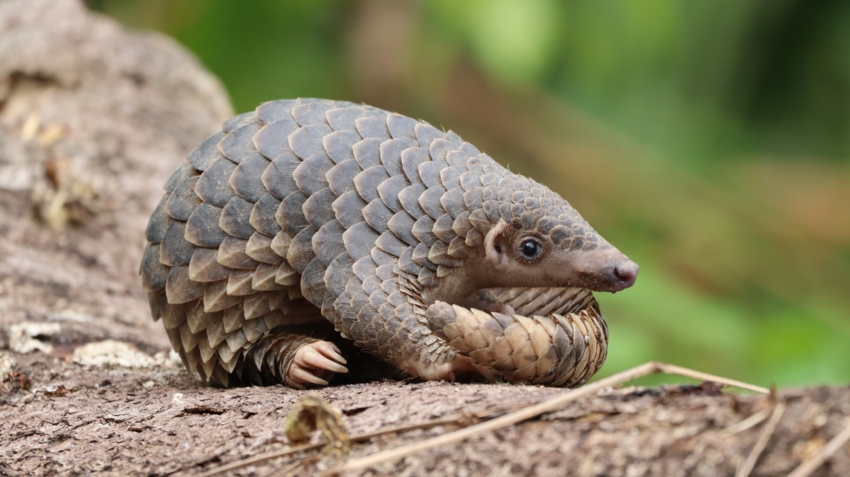
Can you picture a mammal covered head to toe in keratin scales? It may sound like a work of fiction, but pangolins prove otherwise. These unique creatures are much loved by wildlife fans, but also incredibly threatened by poaching and illegal trafficking. Let’s discover more about pangolins and what can be done to protect them.
The scaly anteater with an important role
Pangolins are the only mammals on earth to have scales. Their overlapping armour is made of keratin, the same material as human fingernails and hair. This full-body armour, along with their diet of ants and termites, has earned pangolins the nickname of ‘scaly anteaters’.
Using their curved claws, pangolins dig through soil and rip open insect nests, then use their long sticky tongues to search through tunnels and pick up food. A single pangolin eats as many as 70 million insects per year. This hearty appetite gives pangolins an important role in keeping their ecosystems healthy as natural pest controllers, preventing overpopulation of insects which in turn protects crops and trees.
Pangolins’ eating habits aren’t the only way they help their environment. The burrows that most species of pangolin dig and shelter in during the day are also particularly useful for other small animals like reptiles and birds, which use abandoned burrows for refuge. Plus, the aeration of the soil from digging these burrows improves water absorption and encourages future plant growth.
While pangolin behaviours play an important role in helping ecosystems thrive, their habits don’t always protect the pangolin itself. Sadly, pangolins are often smoked out of their burrows by poachers. This act can be made even easier by another distinctive pangolin behaviour… rolling into a ball.
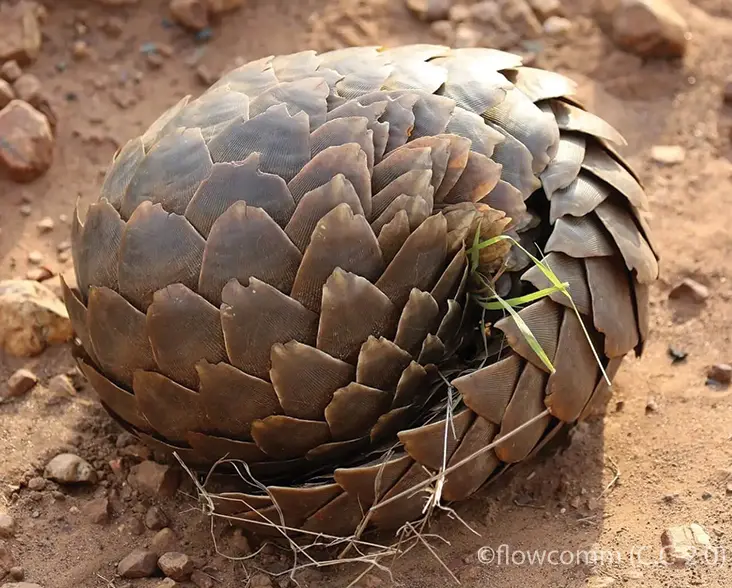
A pangolin rolled into a tight ball, presenting its scales
A tight armoured ball
When threatened, pangolins curl up into a protective ball, exposing their hard scales to any potential predator. This behaviour gives them their official name, pangolin, which is derived from the Malay word “penggulung” meaning “roller.”
Pangolins are reclusive and nocturnal by nature which can help them to avoid encounters with common predators such as leopards, lions and hyenas. But if they do have a run in with a predator, their ball of scales creates a strong barrier against teeth and claws. This armour, paired with a strong unpleasant spray that pangolins emit from their anal glands, is often enough to keep these shy creatures safe from other animals in the wild.
However, their rolling behaviour makes them easier targets to human threats. When a pangolin is lying stationary in its protective ball, poachers can simply pick up the ‘ball’ and carry the pangolin away to be traded for its meat and scales. In times like these, their natural defences can leave pangolins much more vulnerable.
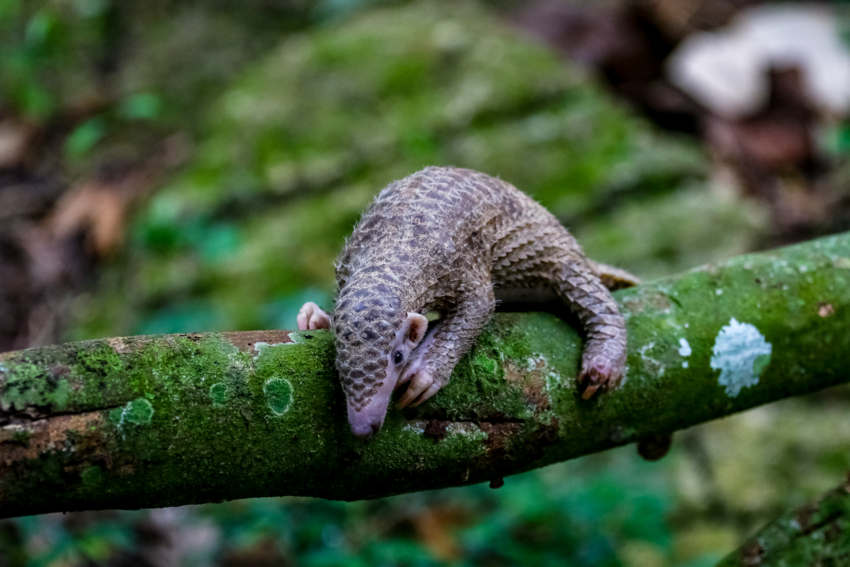
Endangered White-bellied Pangolin (Phataginus tricuspis). Credit: ©Samareen
The threat of extinction
There are eight known species of pangolin living across the world, from Africa to Nepal to Malaysian Borneo. All these species are under serious threat from poaching, trafficking and habitat loss, with each one ranging from Vulnerable to Critically Endangered on the IUCN Red List.
In fact, recent figures show that a pangolin is poached every three minutes, and over a million have been stolen from the wild in the last decade alone. After being taken, pangolins are illegally traded for either their meat or their scales which are wrongly believed to cure ailments in some traditional medicinal practices.
Despite ongoing attempts to stop this illegal trade, pangolins remain the world’s most trafficked mammal. We must act now if pangolins are to have a future.
How you can help to protect pangolins
Project Pangolin aims to raise as much as possible for WLT projects around the world that support pangolin conservation. This week you can make double the difference with the Big Give’s Earth Raise campaign.
We’re excited to be taking part in Earth Raise, a seven-day online match funding initiative helping charities tackle pressing environmental issues. As part of this, all donations made to Project Pangolin through the Earth Raise website until midday on 29 April will be doubled in value.*
*All donations will be doubled until we reach our £30,000 Earth Raise target