
Action Fund
By donating to World Land Trust’s Action Fund, we are able to act quickly, whenever and wherever urgent conservation action is needed.
In accordance with IUCN criteria, a species is considered to be Near Threatened if it does not qualify for Critically Endangered, Endangered or Vulnerable now, but is close to qualifying for or is likely to qualify for a threatened category in the near future.
Class
Aves
Order
Accipitriformes
Family
Accipitridae
Scientific Name
Buteogallus lacernulatus
Reserve locations
Brazil
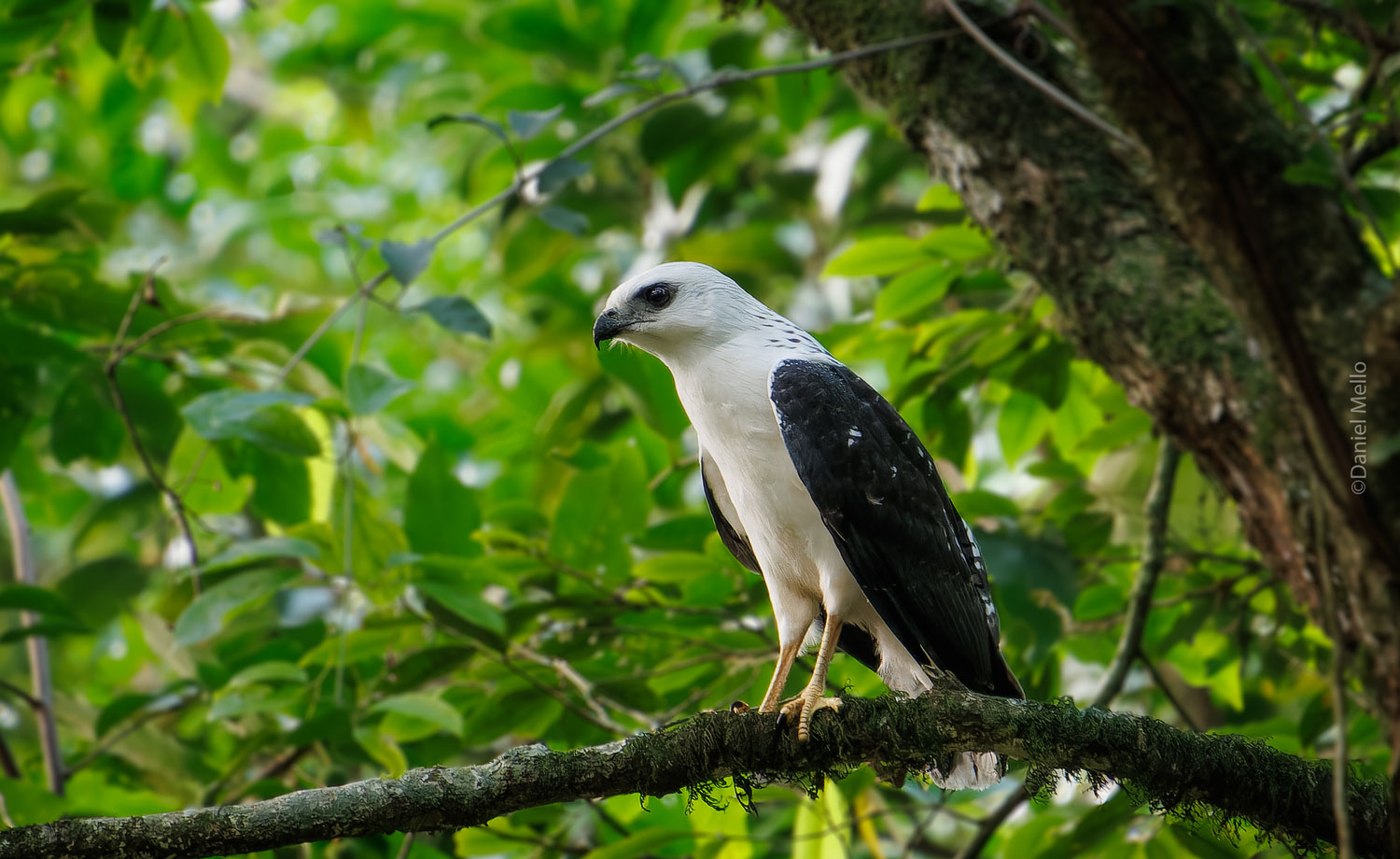
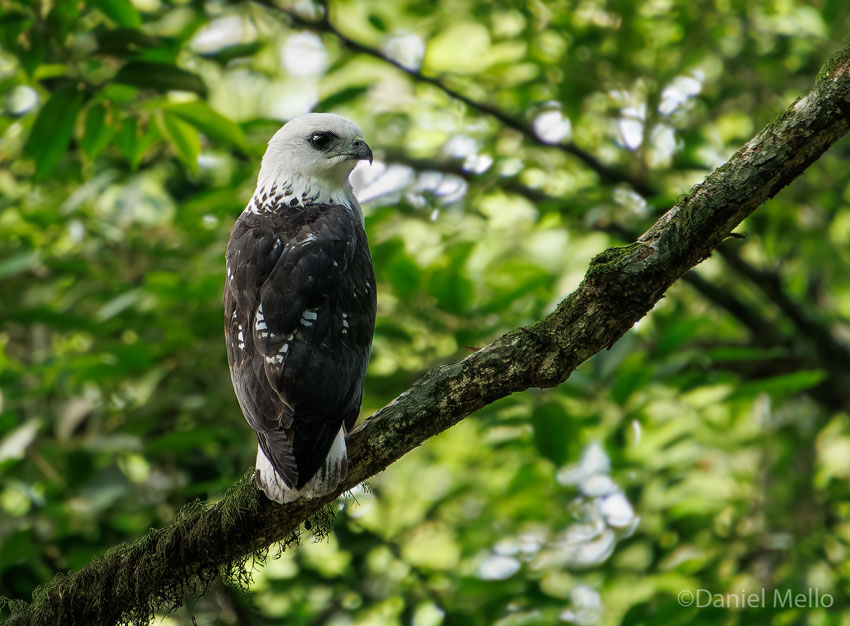
The White-necked Hawk is a medium-sized raptor in the family Accipitridae. The species is distinctive for the strong contrast between its dark body and the pale or white feathers around the neck and upper breast that give the species its common name. It belongs to the genus Buteogallus; a group of Neotropical hawks associated with forest and woodland habitats.
White-necked Hawk. Credit: ©Daniel Mello
The White-necked Hawk spends much of its time perched within the canopy or along forest edges from which it hunts. Like other hawks in its genus, it spends much of its time waiting patiently and still, before diving to capture prey on or near the ground, feeding on a range of small animals including arthropods, reptiles, amphibians, mammals, birds, and snails. It has even been observed to follow army ants or monkeys to cleverly prey on animals that they may flush out of hiding.
Although its detailed ecology is not fully documented, available observations indicate that the species occurs at very low densities and is rarely recorded, which contributes to the limited information available on its breeding behaviour and life history.
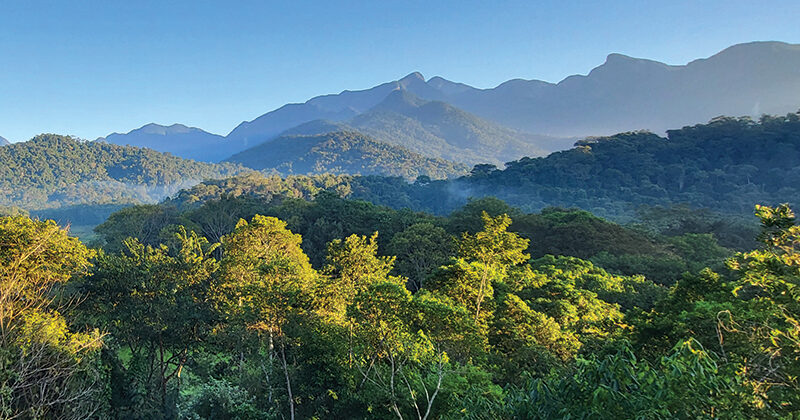
A view of Atlantic Forest canopy, REGUA. Credit: ©Dan Bradbury/WLT.
The White-necked Hawk is endemic to Brazil and occurs in the Atlantic Forest biome of eastern and south-eastern Brazil.
Its distribution extends from the north-eastern portion of the Atlantic Forest southwards through several Brazilian states. The species inhabits humid lowland and montane forest, including primary forest and mature secondary forest, generally below around 1,300 metres in elevation. But because the Atlantic Forest is heavily fragmented, the species now occurs in a patchy distribution across the remaining patches of forest.
The White-necked Hawk is listed as Near Threatened on the IUCN Red List as today it unfortunately has a small and declining population.
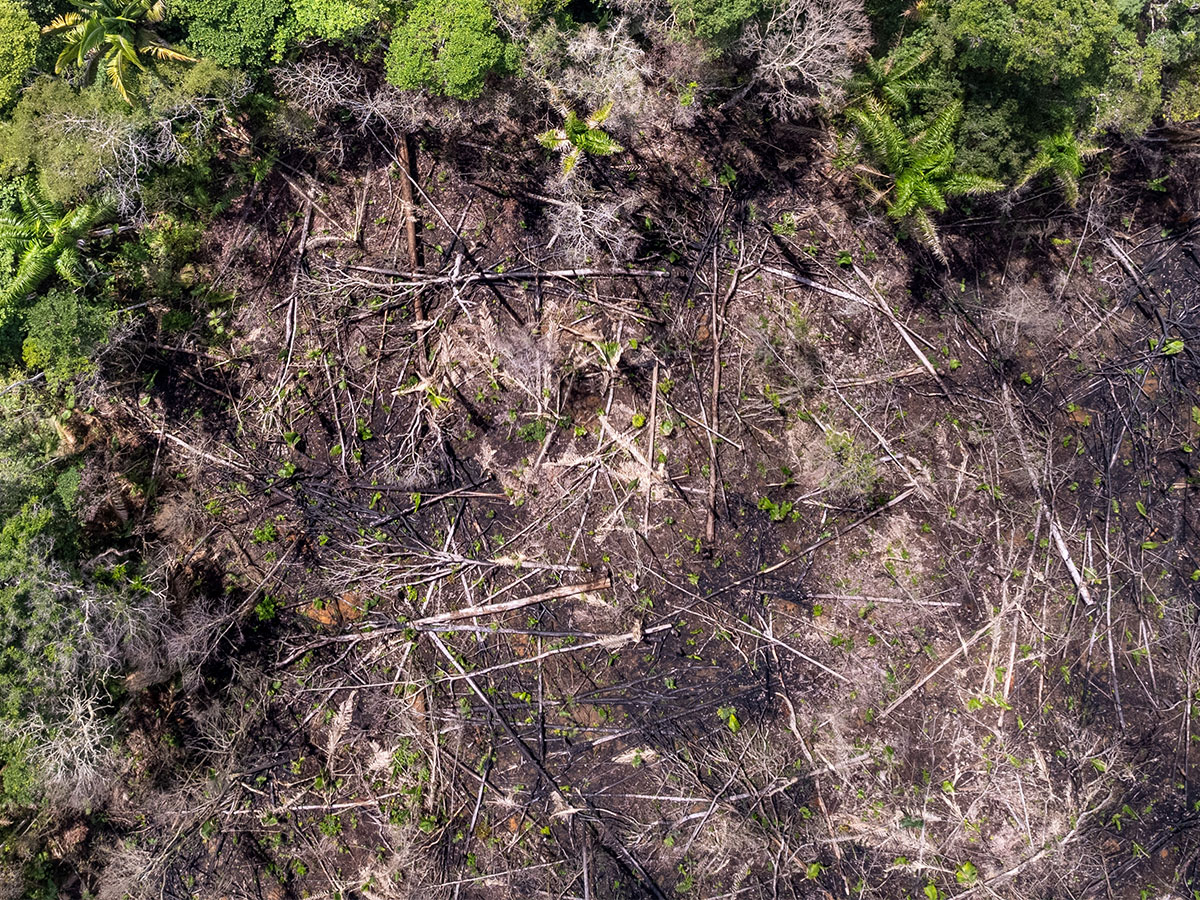
The most critical threat to this species is the ongoing loss and fragmentation of its Atlantic Forest habitat. Much of this biome has been deforested for agriculture, urban expansion and infrastructure development, leaving only around 12% of the original forest still intact, and even that is still under continuous threat.
This habitat fragmentation isolates populations and reduces the amount of suitable territory available for species such as this one that depend on the forest and cannot hunt outside of it. Conservation efforts like that of WLT partner Reserva Ecológica de Guapiaçu (REGUA) therefore focus on protecting remaining forest areas and maintaining habitat connectivity across the Atlantic Forest landscape.
By donating to World Land Trust’s Action Fund, we are able to act quickly, whenever and wherever urgent conservation action is needed.
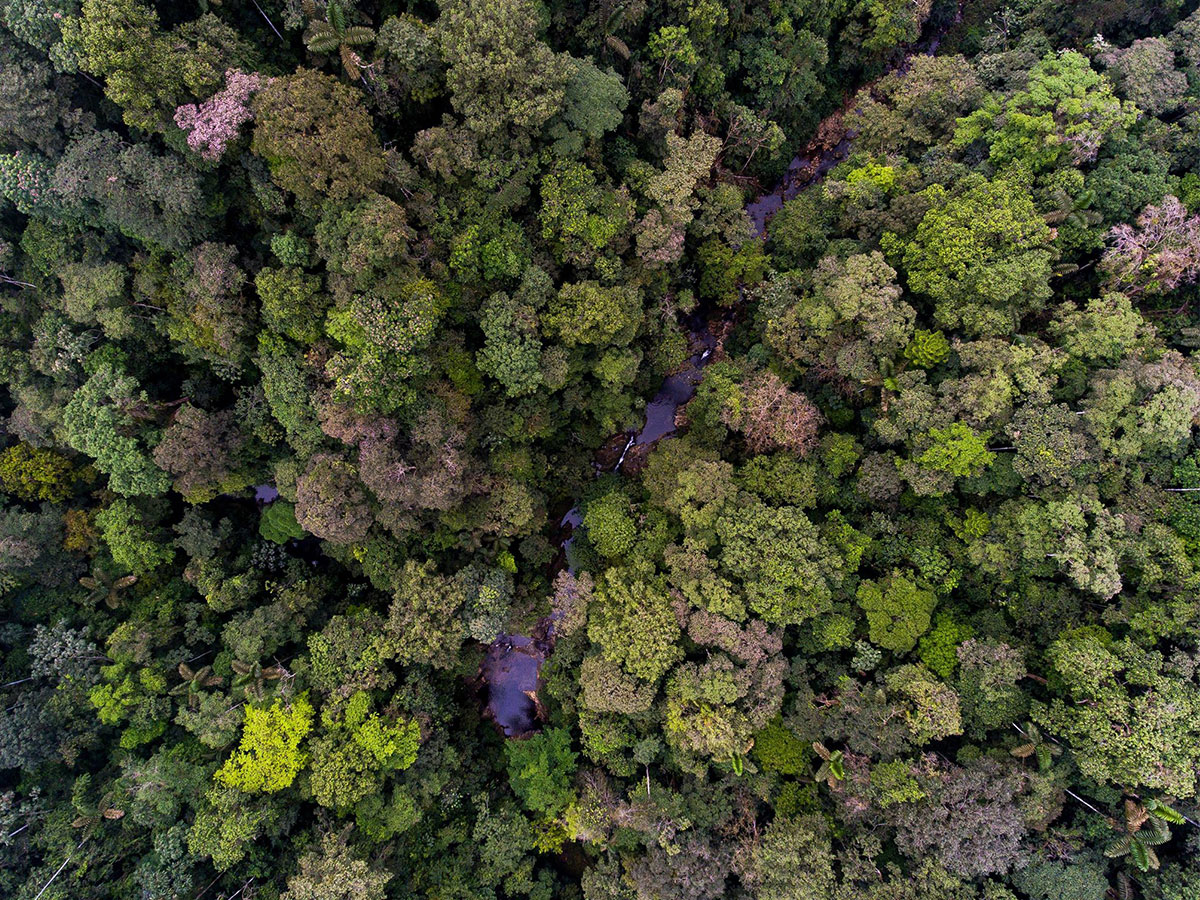

Habitat loss is the greatest threat facing wildlife worldwide. We believe that by protecting land, acre by acre, we are taking the best action to ensure a future for wildlife.


Reforestation is one of the main methods of restoring many damaged ecosystems, with Plant a Tree, you can bring vital forest habitats back to life.