
Endangered
In accordance with IUCN criteria, a species is considered to be Endangered if it is facing a very high risk of extinction in the wild.
Species data
Class
Aves
Order
Strigiformes
Family
Strigidae
Scientific Name
Otus ireneae
Reserve locations
Kenya
Description
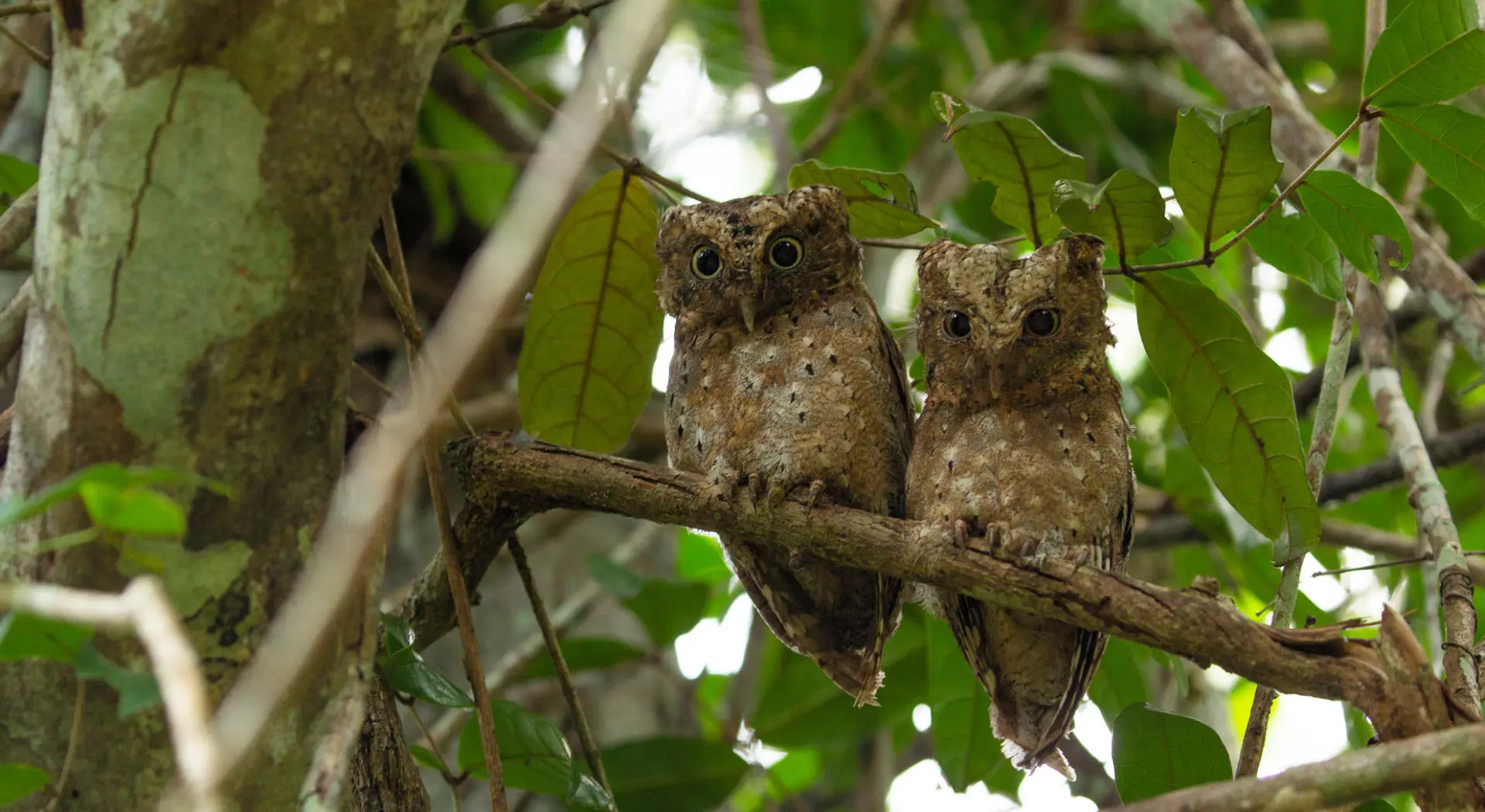
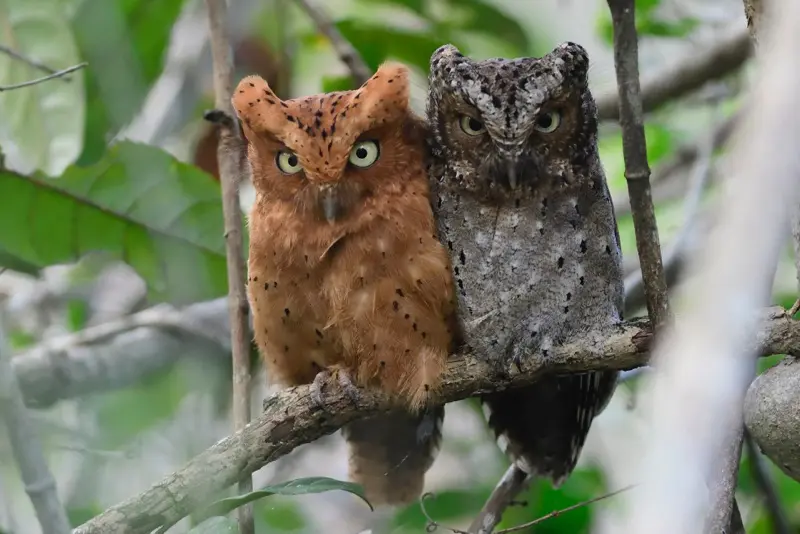
The smallest of the scops owls and one of the smallest owls in the world, Sokoke Scops Owl are just 17cm tall and weigh up to 60g. Like most other owls in the genus, they are polymorphic with grey or reddish brown morphs, with plumage marked with wavy lines. They are small, agile owls with small ears and large yellow eyes.
Behaviour
Sokoke Scops Owl is a territorial bird that roost in pairs in the lower half of the canopy. They are insectivorous, foraging in the dense thickets of coastal woodland. Little is known about their breeding habits beyond their preference for nesting in the natural cavities of large and old Brachylaena trees, found throughout the Kenyan coastal forests, including Dakatcha.
Habitat
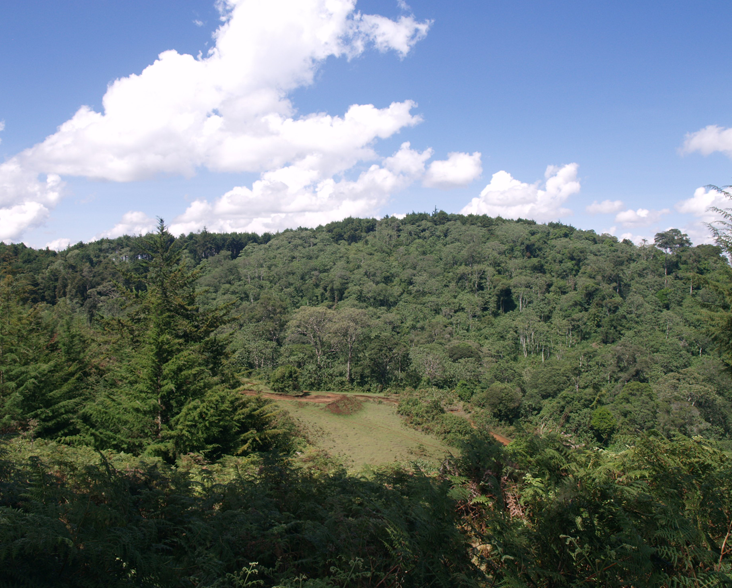
Once believed to occur only in Kenya, in 1992 a small population of Sokoke Scops Owl was discovered in north-eastern Tanzania. They live in tropical coastal woodland and forest, preferring dense woodland and thick tangles of brush.
Threats & Conservation
Sokoke Scops Owl is one of several endangered species living in Kenya’s vulnerable coastal forest. Their decline can be attributed to loss of suitable habitat and the effects of climate change.
For endangered species of Kenya’s coastal forests, such as the Sokoke Scops Owl, Dakatcha provides a safe. World Land Trust (WLT) supports Nature Kenya to protect this extraordinary African woodland.