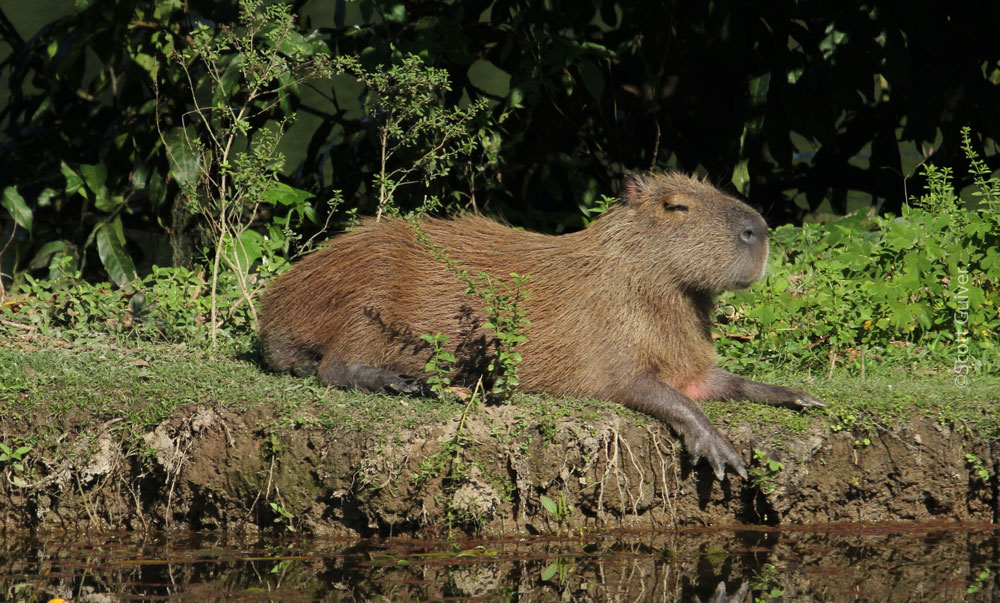
Capybara (Hydrochoerus hydrochaeris) might be one of the world’s most popular animals, and for good reason. An extremely social species that enjoys basking on the banks of rivers and soaking up the sun, they are often seen surrounded by fellow residents of the ecosystem. They have even famously been photographed coexisting with species that predate upon them such as Broad-snouted caiman (Caiman latirostris).
At Reserva Ecológica de Guapiaçu (REGUA), these gentle giants have become a familiar sight, with whole families grazing quietly among the reeds of the wetlands. Here, they are also a sign that the restored landscapes are coming back to life. Where Capybara thrive, it is often a good indicator that wetlands are healthy, water is clean, and ecosystems are intact. Read on to get to know them better.
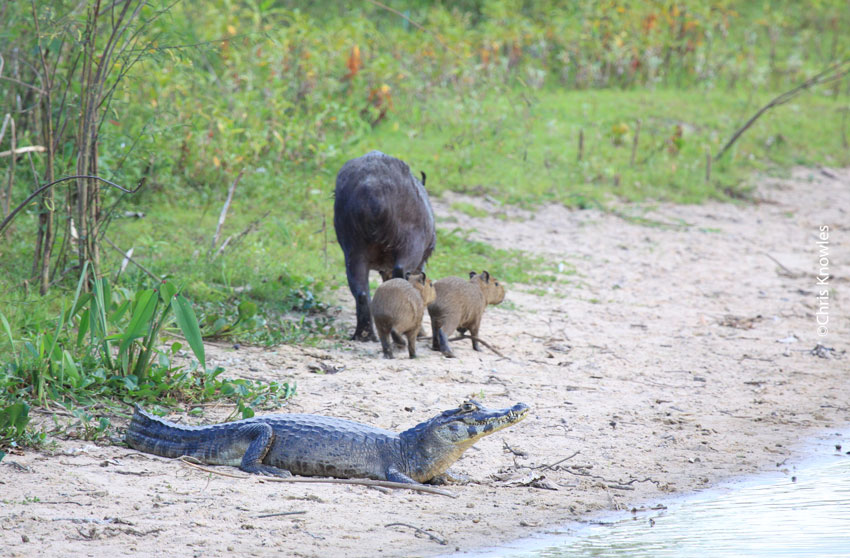
Capybara family wandering along the riverbank near a Caiman. Credit:©Chris Knowles.
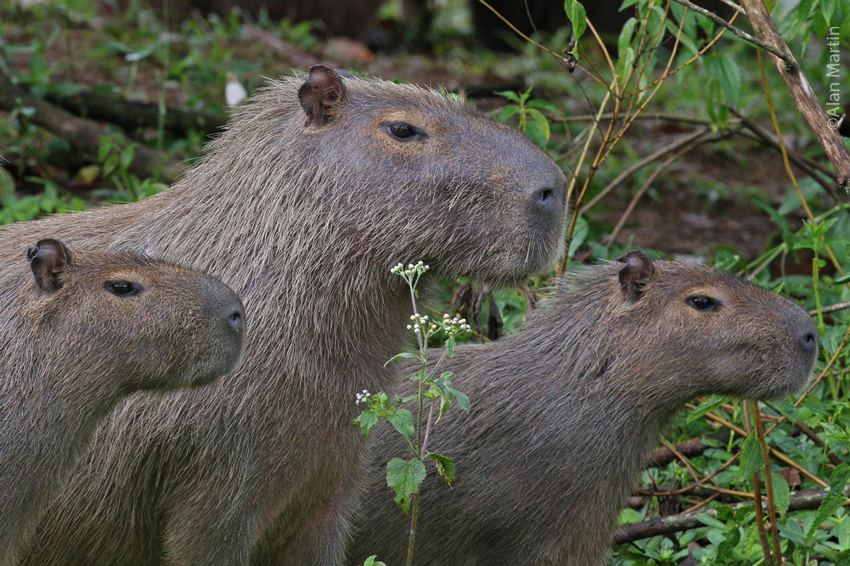
Curious and cooperative, Capybara thrive in large family groups. Credit: ©Alan Martin
The world's largest rodent
Adult Capybaras can weigh up to 66kg and are more than a metre long from nose to tail, roughly the size of a large Labrador. Despite their size, they are excellent swimmers who can hold their breath for up to five minutes, easily gliding across wide rivers.
Highly social animals
Capybaras typically live in harmonious family groups of 10 to 20 individuals, although in the dry-season groups of over 100 of them have been recorded around shrinking water sources. They maintain their complex social bonds through grooming, vocalisation, and shared lookouts against predators.
Built for the water
Their eyes, ears, and nostrils are positioned high on their heads which lets them stay almost fully submerged while still keeping a keen sense of their surroundings. Their slightly webbed toes propel them through the water, and once they are out, their dense, coarse fur dries quickly in the sun after a swim. In the video below, Capybaras take a leisurely dip at our partner reserve in REGUA, Brazil. Credit: ©Scott Guiver/WLT.
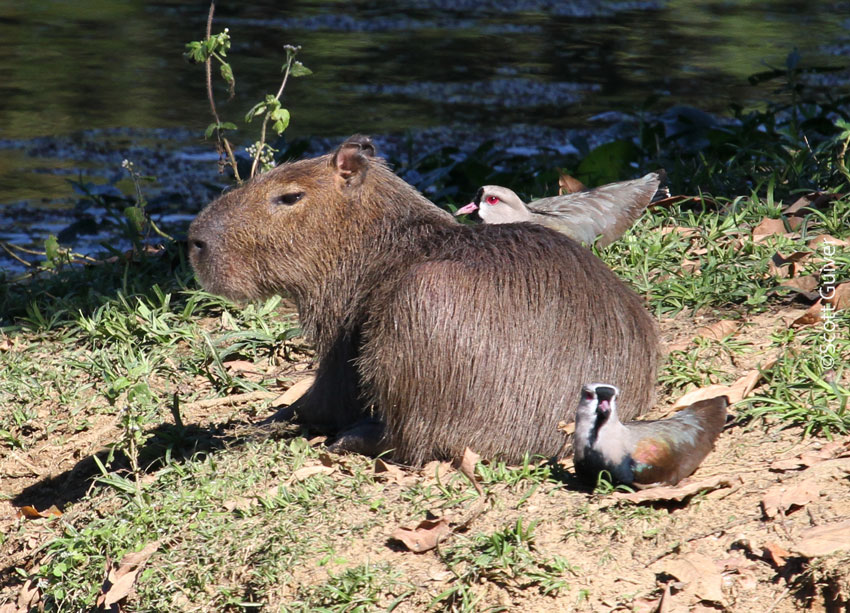
A Capybara relaxing with two Southern Lapwings for company at REGUA. Credit: ©Scott Guiver.
A rich vocabulary
Speaking of vocalisation, Capybara are far from silent and communicate with a range of sounds. In friendly contact they will purr, click, and grunt, and when something alarming is noticed, they will whistle and bark. Mothers and the young maintain near-constant vocal contact, and the alarm bark of one individual will send the entire group sprinting for the water within seconds.
Coprophages
Just like rabbits and other herbivores with specialised digestive systems, capybaras practise coprophagy which means they will actually eat their own droppings first thing each morning. This behaviour is not unusual and its purpose is to provide vitamins produced by gut bacteria during the first pass through the digestive system.
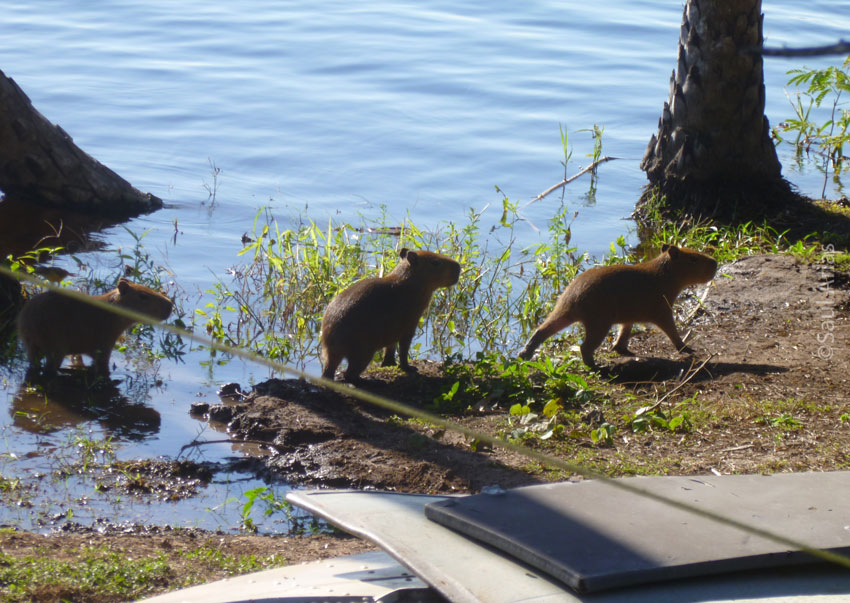
Baby Capybara are not shy around humans and are a welcome site to tourists and rangers alike. Credit: ©Saul Arias
Herbivores with a big appetite
Capybaras are strict herbivores, consuming grasses, aquatic plants, fruit, and bark. An adult can eat over 4kg of vegetation per day. Their continuously growing, tough incisor teeth make short work of chewy plant matter.
Surprisingly fast on land
Despite their barrel-shaped bodies, capybaras can run up to 35 km per hour in short bursts, this is faster than most humans. Their long hind legs let them gallop to the safety of the water when a predator chased them. This is a last resort however, and more often, they rely on their senses and group vigilance to detect danger early.
Capybara depend on wetlands like those at REGUA in Brazil’s Atlantic Forest, and you can help support the expansion of the reserve through donating to WLT’s Spring Appeal.

 Help us raise £197,260 for our partner Reserva Ecológica de Guapiaçu (REGUA) to save 180 ha (444 acres) of vitally important land in Brazil’s Guapiaçu valley and protect the wildlife of the Guapiaçu watershed.
A generous private donor has provided funds which will match donations up to £197,260. This means gifts to the appeal will be doubled in value, and a £25 donation from you could be matched to make a £50 contribution overall. By donating, your support will go twice as far towards our fundraising target.