Plant a Tree
Reforestation is one of the main methods of restoring many damaged ecosystems, with Plant a Tree, you can bring vital forest habitats back to life.
In this feature, we’d like to share a month-by-month account of the work of our conservation partner Foundation for the Preservation of Wildlife and Cultural Assets (FPWC) in 2025.
With support from World Land Trust’s (WLT’s) Plant a Tree programme, FPWC have made huge progress bringing thriving forests back to Armenia’s Caucasus Mountains – restoring habitat for a wealth of species, including the highly elusive and Critically Endangered Caucasian Lynx (Lynx lynx dinniki).
Credit to ©FPWC for all photos included in this article.
“Support from Plant a Tree has allowed us to invest in learning-based restoration rather than quick results, strengthening the ecological integrity and long-term success of our forest restoration."Sona Kalantaryan, FPWC’s Reforestation Projects Coordinator
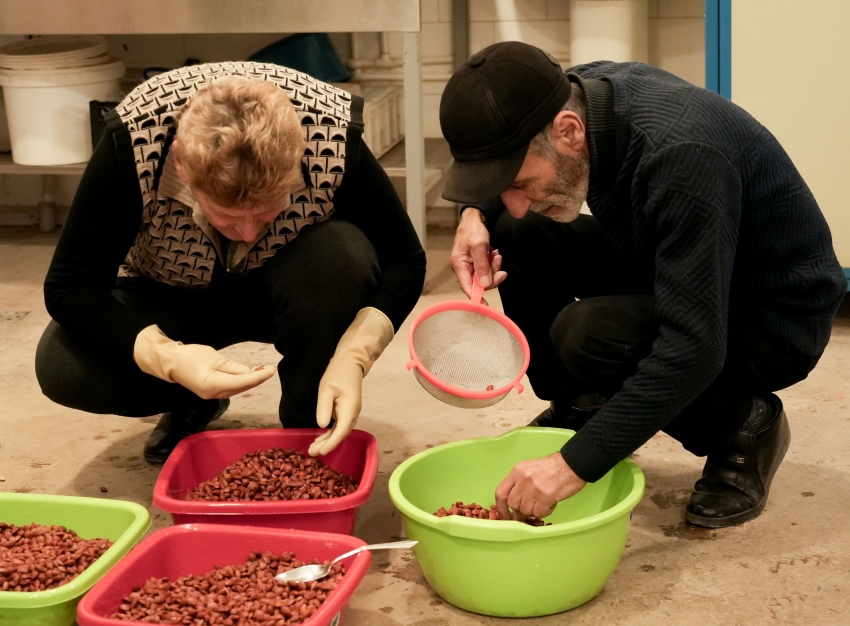
All FPWC's saplings are grown from native seeds collected the previous autumn.
Before these seeds can be sown, they have to be carefully checked with the best and healthiest selected for planting.
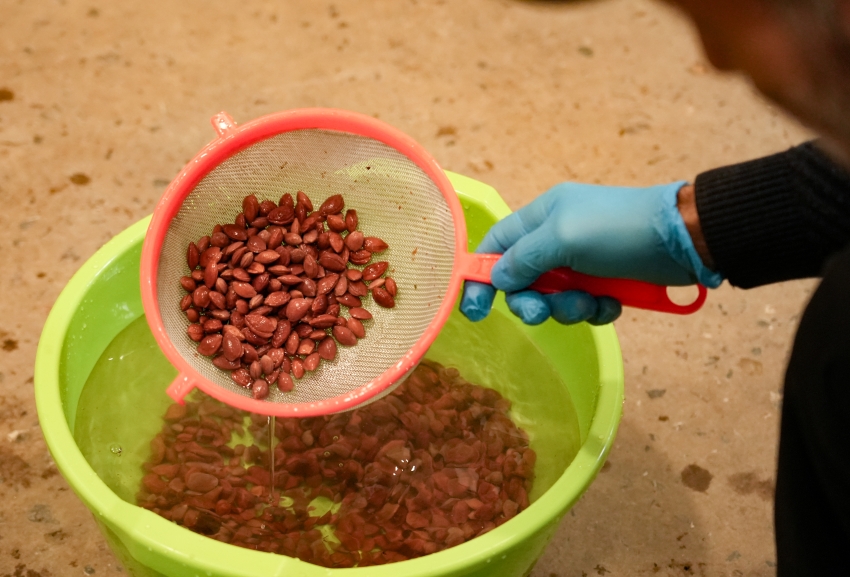
The next step to break the seeds' dormancy, which involves exposing seeds to cold for at least 30 days, thereby mimicking natural winter conditions. This helps to break a seed’s dormancy and trigger successful germination.
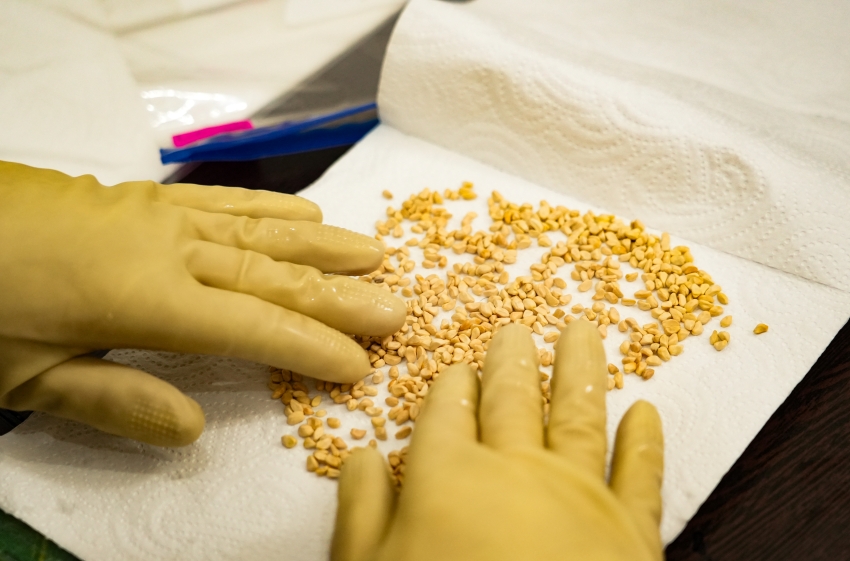
In January, seed stratification begins for Wild Apple, Wild Almond, and Cherry Plum.
Others, like Caucasian Oak and Oriental Hawthorn, require more time. For these, cold exposure began last autumn and continued into the New Year.
In mid-February, FPWC began preparing the nursery beds using a locally available peat-free soil mixture.
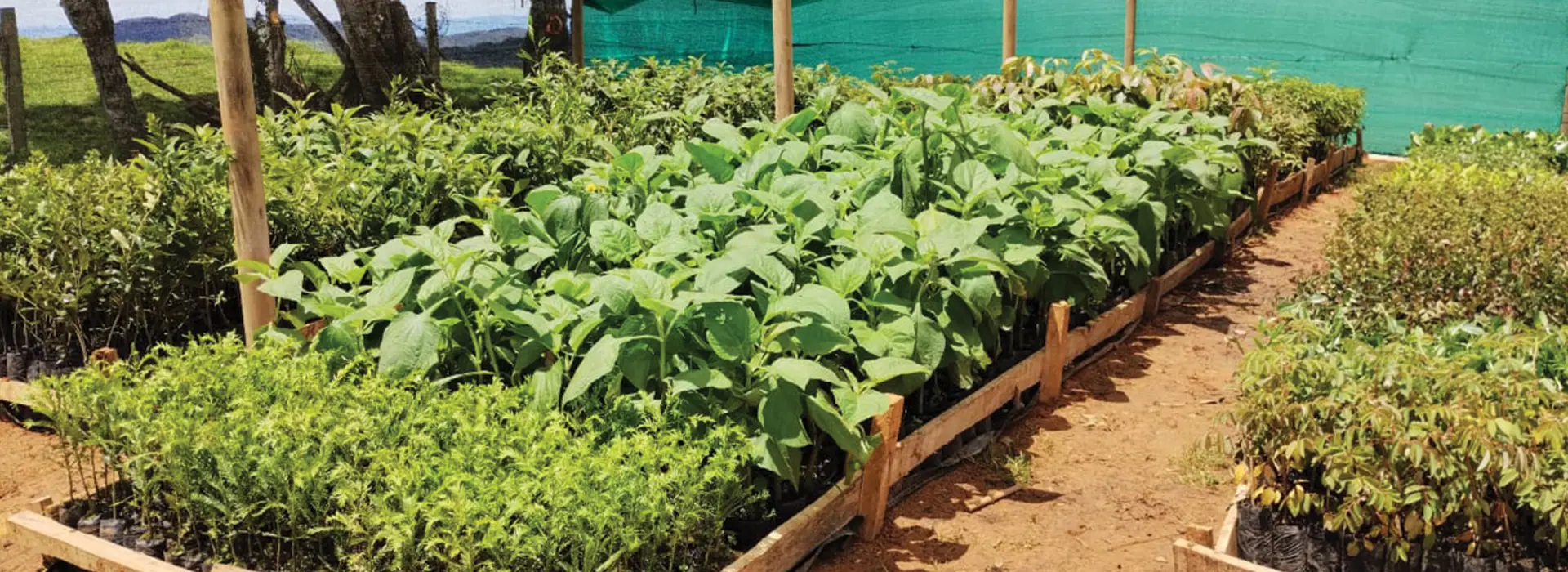
With temperatures increasing into March, the seeds began to germinate and FPWC started sowing the young saplings in greenhouses in the Armenian towns of Urtsadzor and Ushi. This is a fragile stage and requires daily watering, monitoring, and protection from sudden temperature drops and pests.
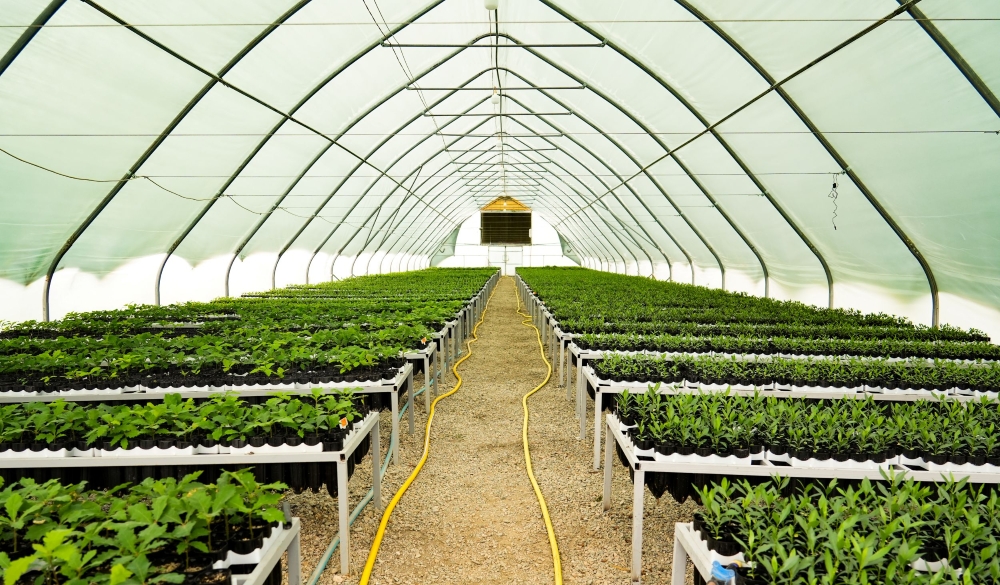
In April, the FPWC team took the opportunity to renovate their older greenhouses in Urtsadzor.
Originally assembled over five years ago, these had suffered significant wear and tear due to prolonged exposure to Armenia’s extreme weather conditions: varying from high heat in the summer to snow and ice over winter.
The renovation included repairing structural elements, replacing the worn-out plastic covers, and improving ventilation to ensure optimal conditions for seedling growth.
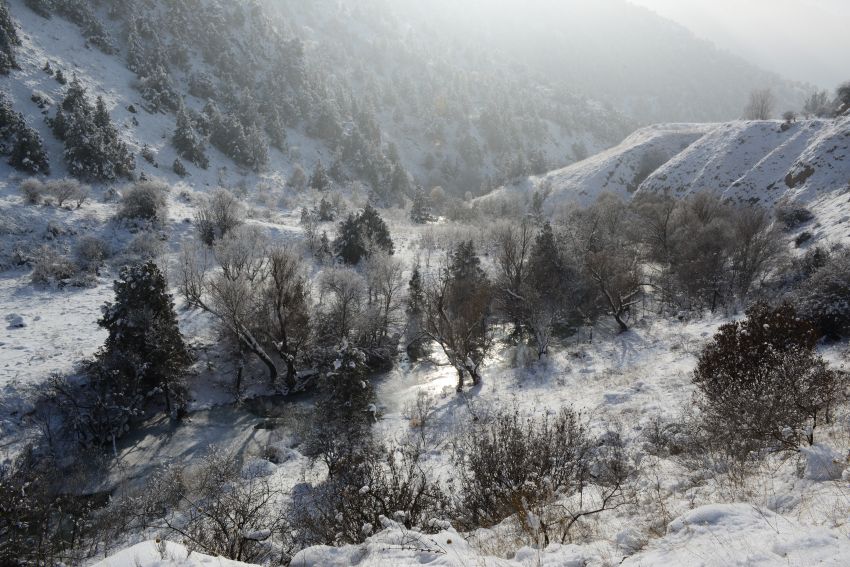
A snowstorm delayed the spring planting initially planned for April. In some areas, snow still hadn’t melted by late April while in others, continuous rainfall delayed the beginning of work.
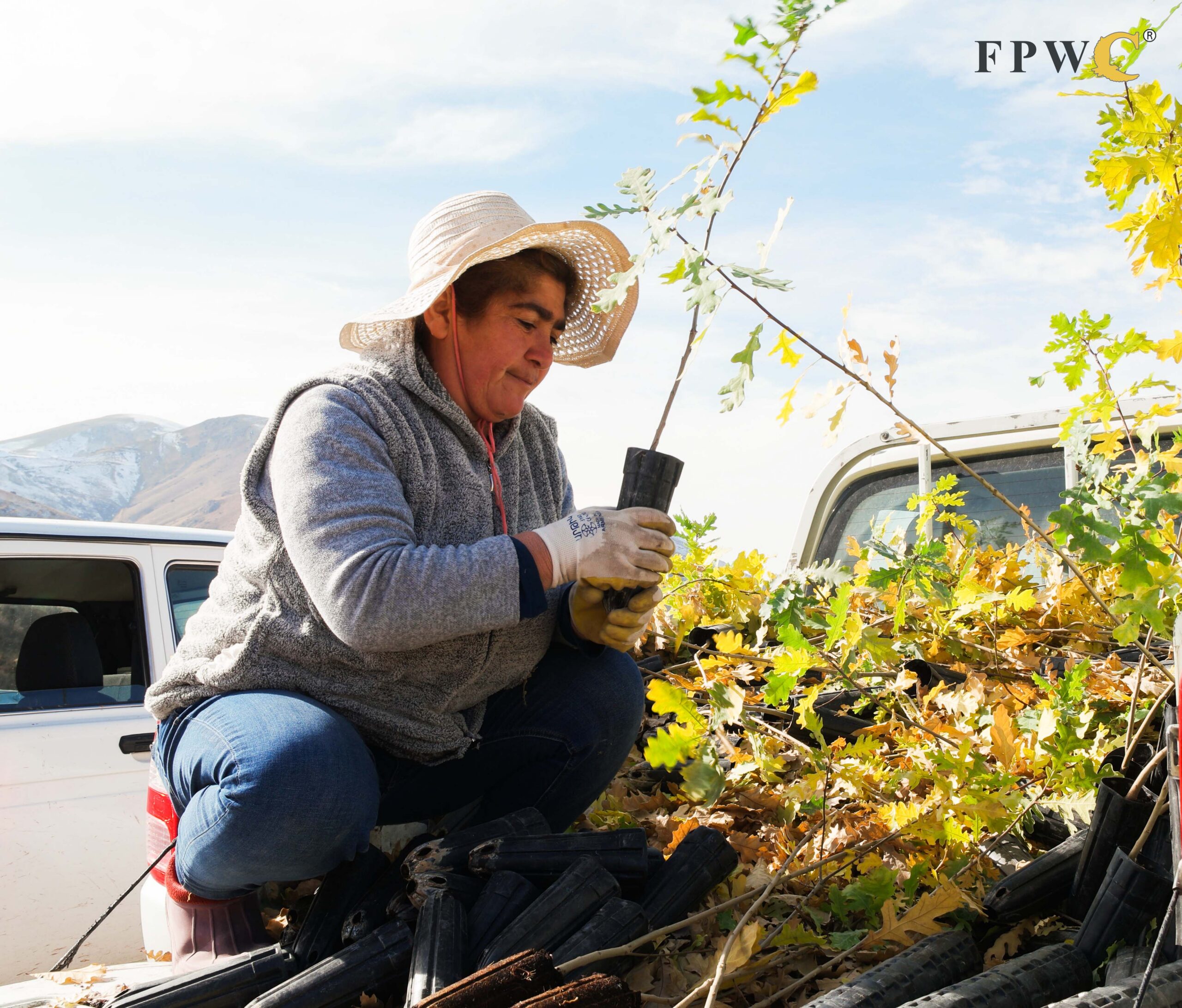
Fortunately, the weather finally improved and planting began over May and June, with 30 people involved in total, many employed from the local community. A fantastic 30,000 saplings were planted in this time.
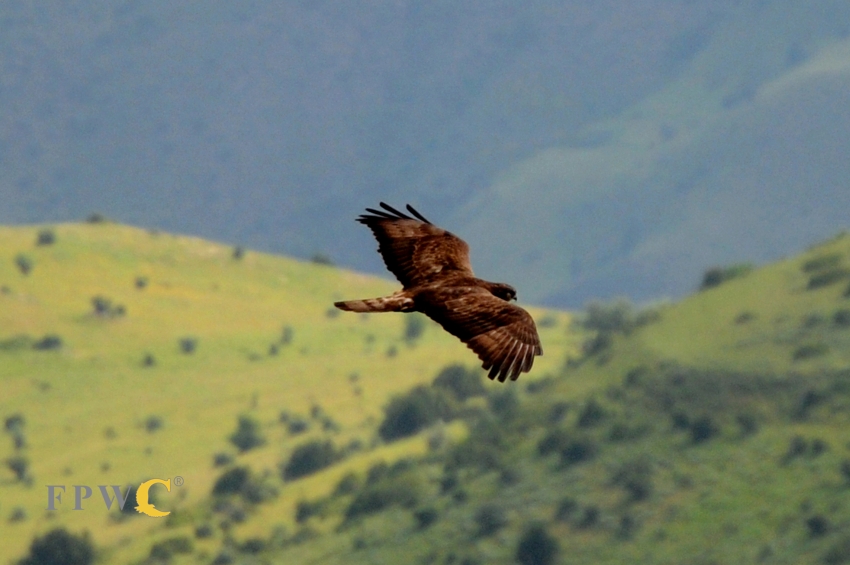
During the planting, FPWC noticed minor rodent damage the planted sites, affecting the roots of Wild Almond and Wild Apple saplings. To address this, FPWC has begun trialling the use of peppermint oil as a natural rodent repellent, together with raptor perches to encourage natural predation.
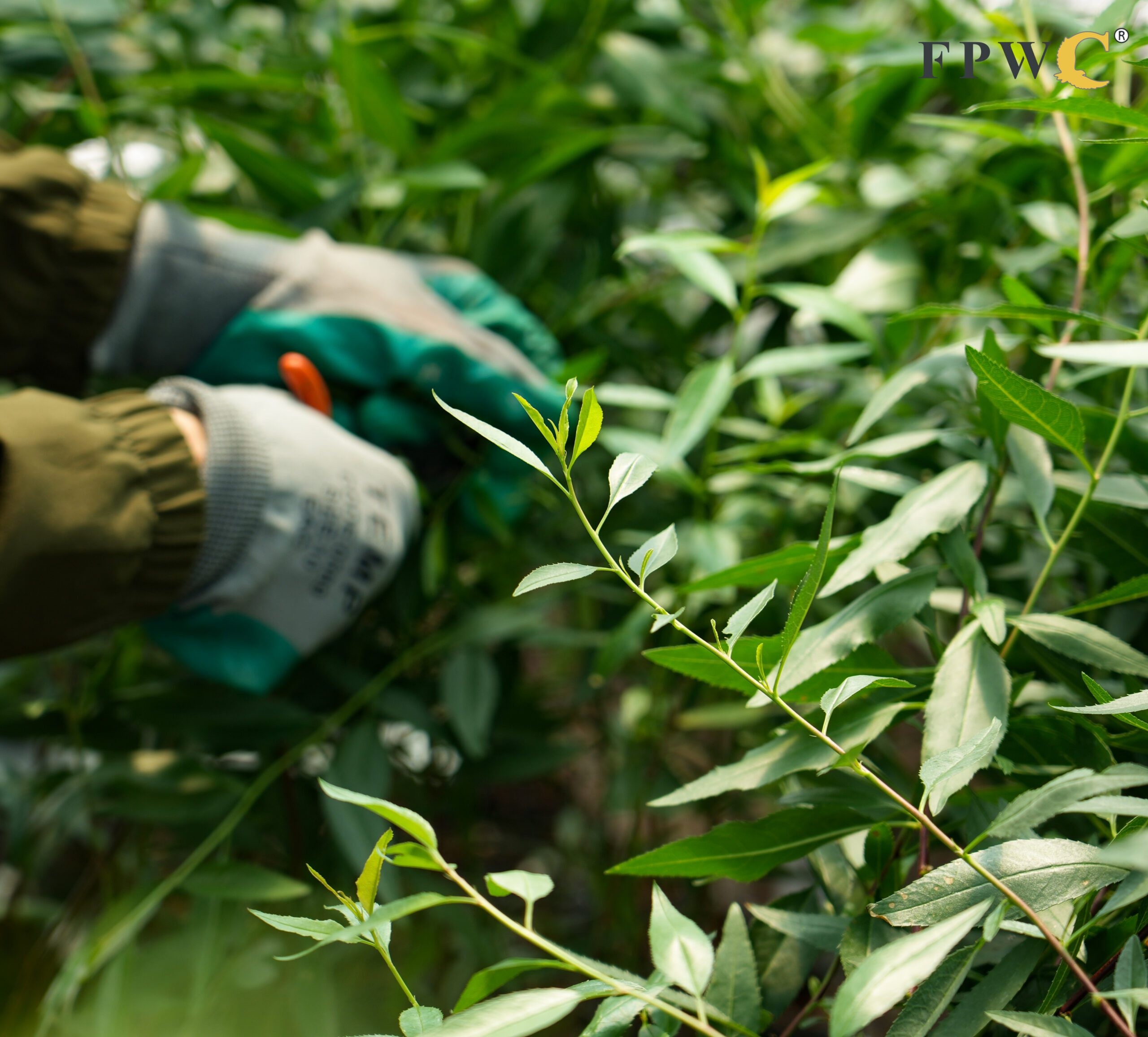
From July onwards, FPWC began collecting native seeds ready for future planting. Since stratification can be a long process, time is of the essence and the Juniper (Juniperus polycarpos) seedlings were already placed under stratification. Seed collection continues all the way through to October.
Meanwhile, in the Urtsadzor nurseries, extreme heat increased the susceptibility of Wild Apple seedlings to fungal diseases. The spread of this – seen as yellow rust-like spots on the leaves – was quickly stopped, thanks to FPWC’s comprehensive preventative measures.
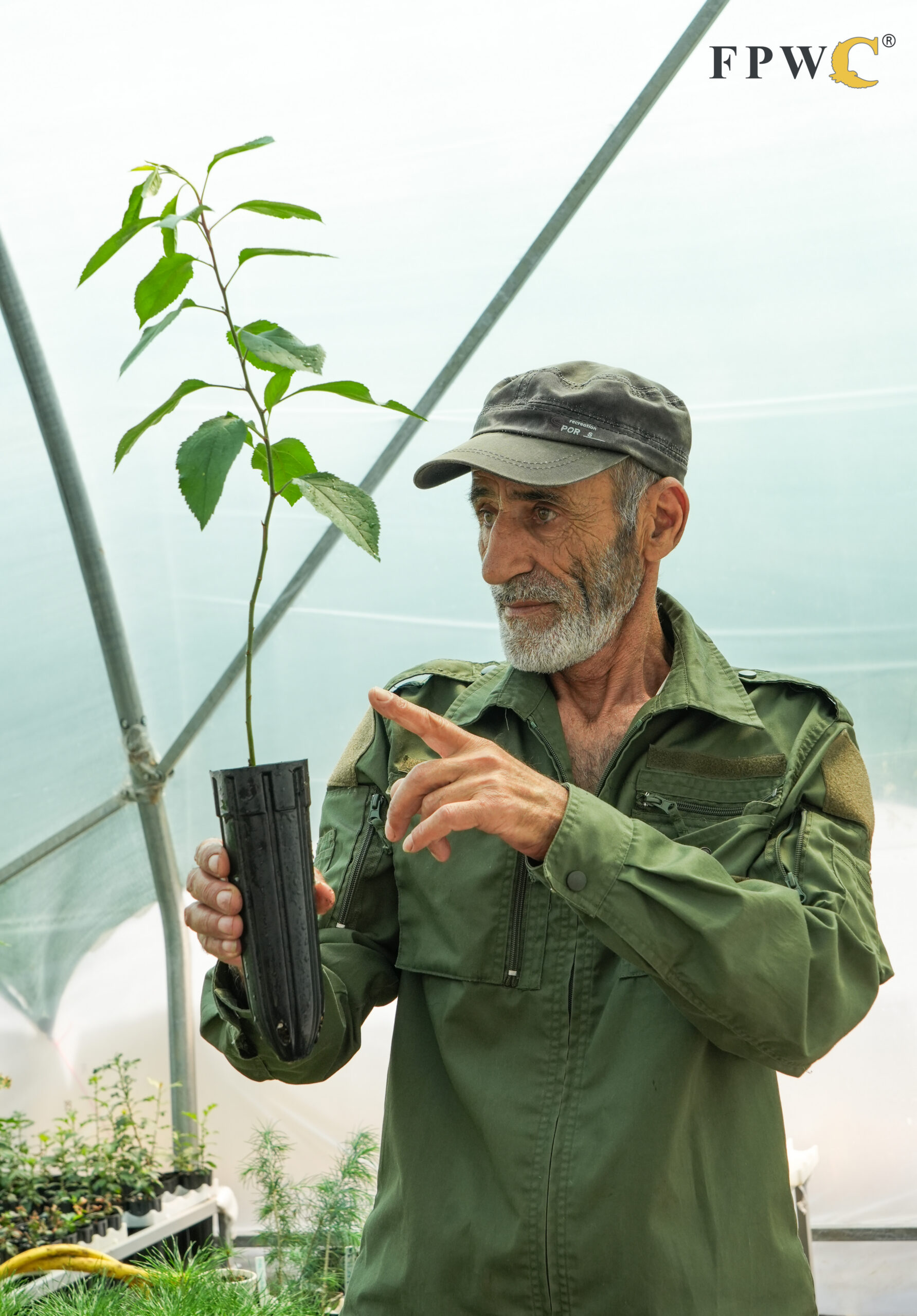
In Urtsadzor, starting from the second half of August, and in Ushi from early September, FPWC rolled open their greenhouse doors and gradually reduced watering. By late September, no more nutrients were added. This helps toughen the seedlings, improving their chances of survival in the field.
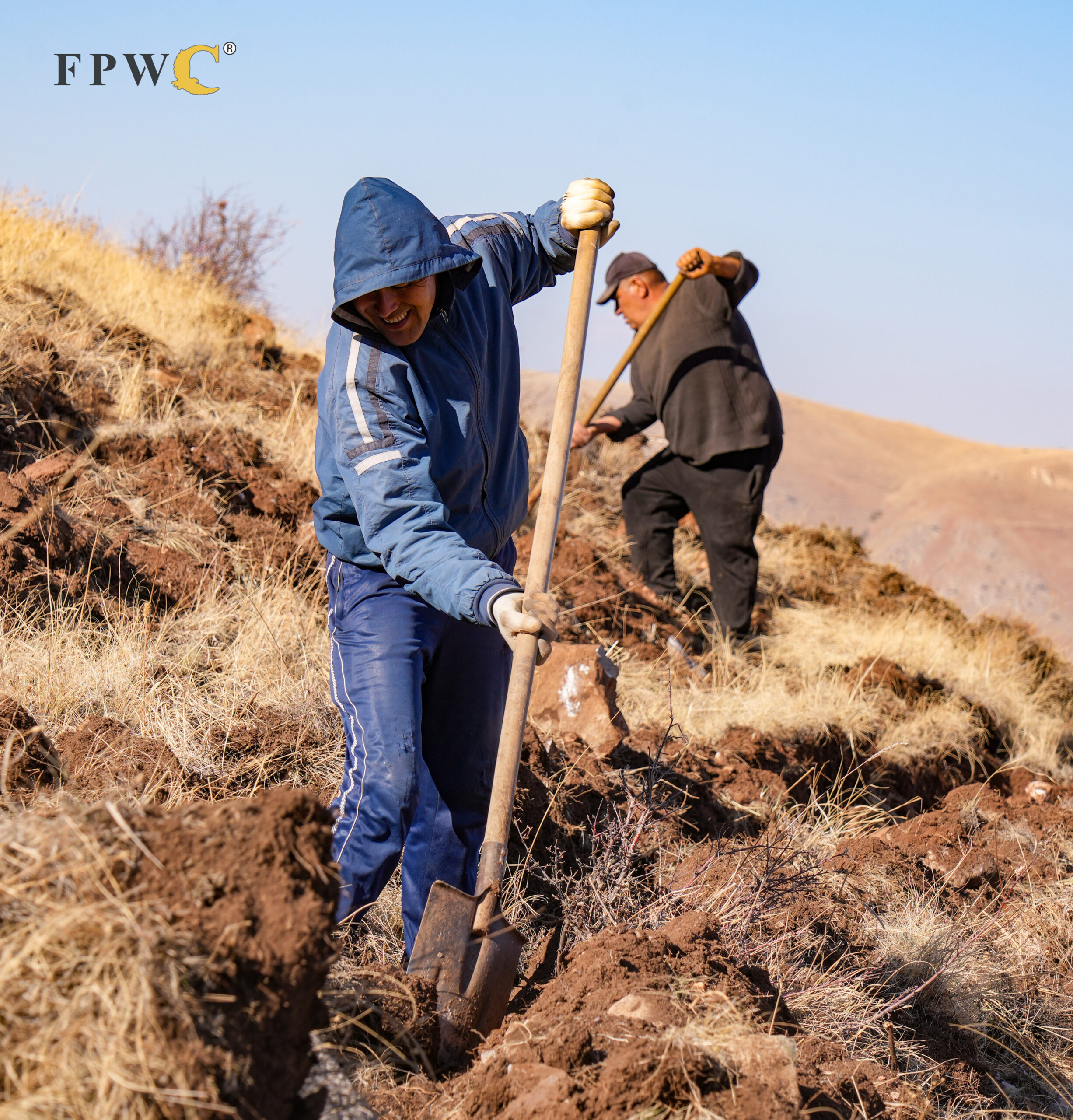
By September, preparations for the autumn tree planting season were well underway. FPWC were busy drawing up the plans, taking into account lessons learned from previous years and the unique geography of each planting site.
They also began getting each planting site ready, removing debris, preparing the soil, and marking out planting sites to ensure consistent spacing and planting density.
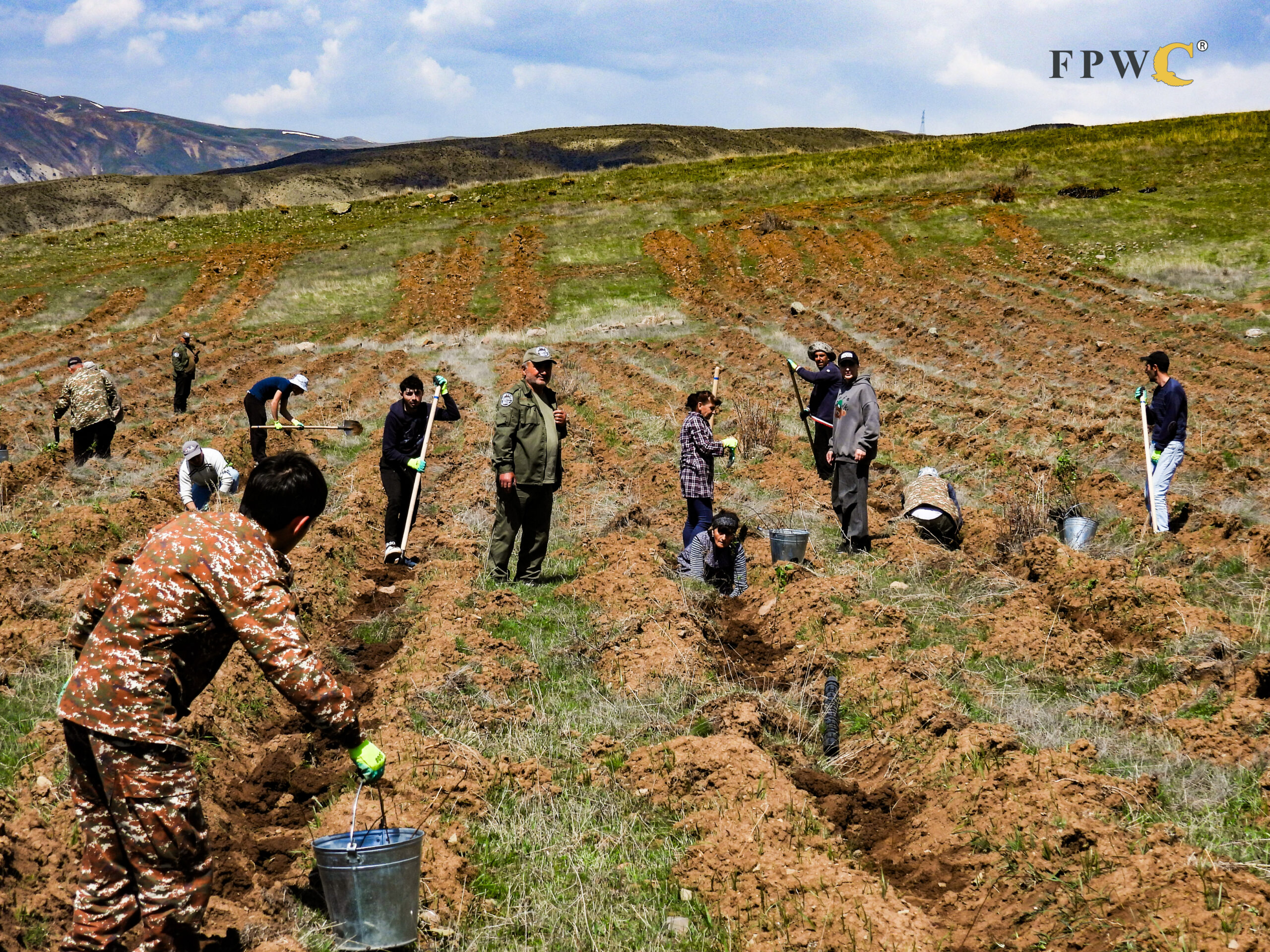
In mid-October, FPWC’s autumn planting began, with seedlings carefully transported from the nurseries to the planting sites in small batches to minimize root stress and dehydration. Then, over the following weeks and with the support of 89 community members, over 120,000 saplings were planted out.
Planting followed established technical guidelines, including correct planting depth, soil compaction, and immediate stabilization of seedlings, to support successful establishment.
In November, FPWC travelled to Armenia’s capital, Yerevan, to take part in the latest meeting of the Forest Alliance of Armenia, bringing together government authorities, international partners and civil‑society groups.
This was a very important opportunity for FPWC to contribute to discussions on the critical policy issues shaping forest restoration in Armenia today – and how to make it easier for landowners to take part in reforestation efforts.
In December, construction on a brand-new greenhouse was completed. With automatic irrigation and space for 160,000 extra seedlings, this will allow them to grow an impressive 350,000 trees each year – a huge leap forward for forest restoration in the Caucasus. FPWC spent December getting this ready for the new spring planting season.
Reforestation is one of the main methods of restoring many damaged ecosystems, with Plant a Tree, you can bring vital forest habitats back to life.
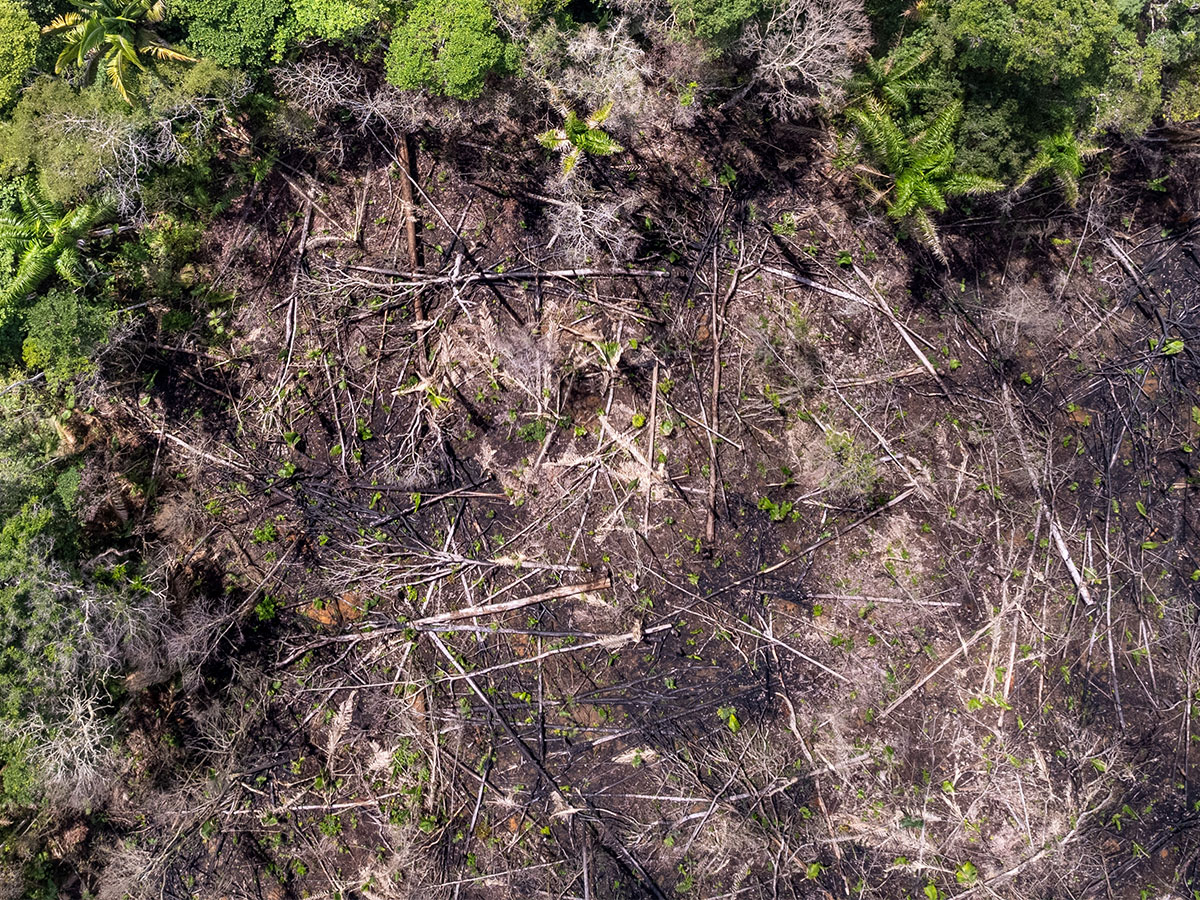

By donating to World Land Trust’s Action Fund, we are able to act quickly, whenever and wherever urgent conservation action is needed.
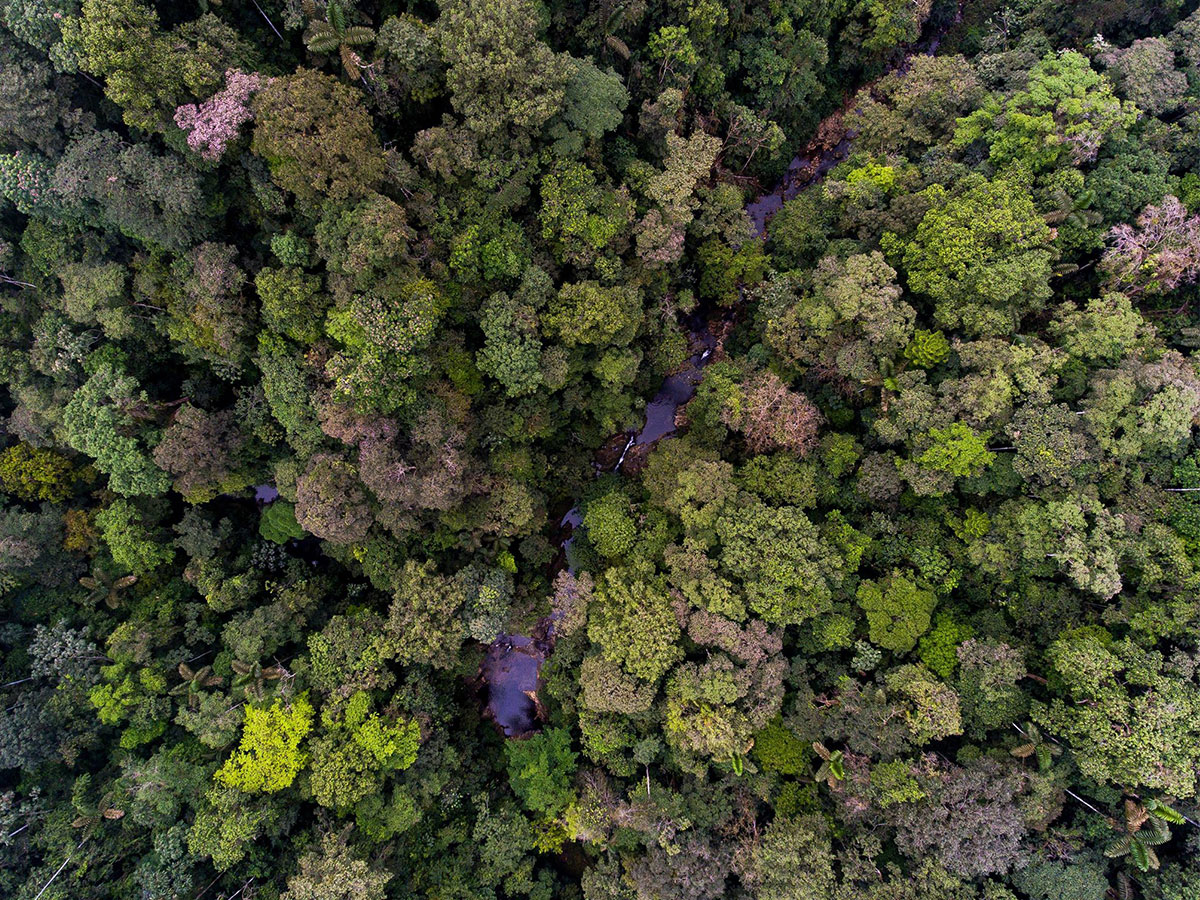

Habitat loss is the greatest threat facing wildlife worldwide. We believe that by protecting land, acre by acre, we are taking the best action to ensure a future for wildlife.