This document sets out the policy of World Land Trust covering all forms of financial misconduct, corruption, bribery and other forms of dishonesty.

This document sets out the policy of World Land Trust covering all forms of financial misconduct, corruption, bribery and other forms of dishonesty.
This document sets out the policy of World Land Trust code of conduct for WLT staff and all those who work on behalf of WLT

World Land Trust aims to be a friendly, efficient organisation that communicates openly in a welcoming, responsive manner with its supporters, other members of the public and the media.

This document sets out World Land Trust’s policy and approaches on managing conflicts of interest.

WLT treats all personal data in our care with respect and in compliance with all relevant regulations. We are committed to ensuring that your personal data is:

World Land Trust recognises that some of our activities (such as international air travel) have adverse effects on the environment, but we are committed to minimising our impacts as far as possible while continuing our work of preserving threatened habitats.
This policy confirms World Land Trust’s commitment to safeguarding the welfare and interests of all children and vulnerable persons with whom it interacts in any capacity. The policy applies to all staff, volunteers, members of WLT’s governing structures, ambassadors, and any others who work on behalf of WLT.

The activities that WLT funds with our international partners would, in general, not give rise to safeguarding concerns. We are, however, aware that our international partners do undertake programmes of work such as community engagement and educational activities with children, using either WLT funding or resources from other donors. In order to follow the requirements of the Charity Commission and the enhanced guidance of DFID we must ensure that we observe our legal safeguarding responsibilities in the UK and in those countries where we are working, and that we have a duty of care to ensure that our partners are working towards and implementing best practice in undertaking these activities.
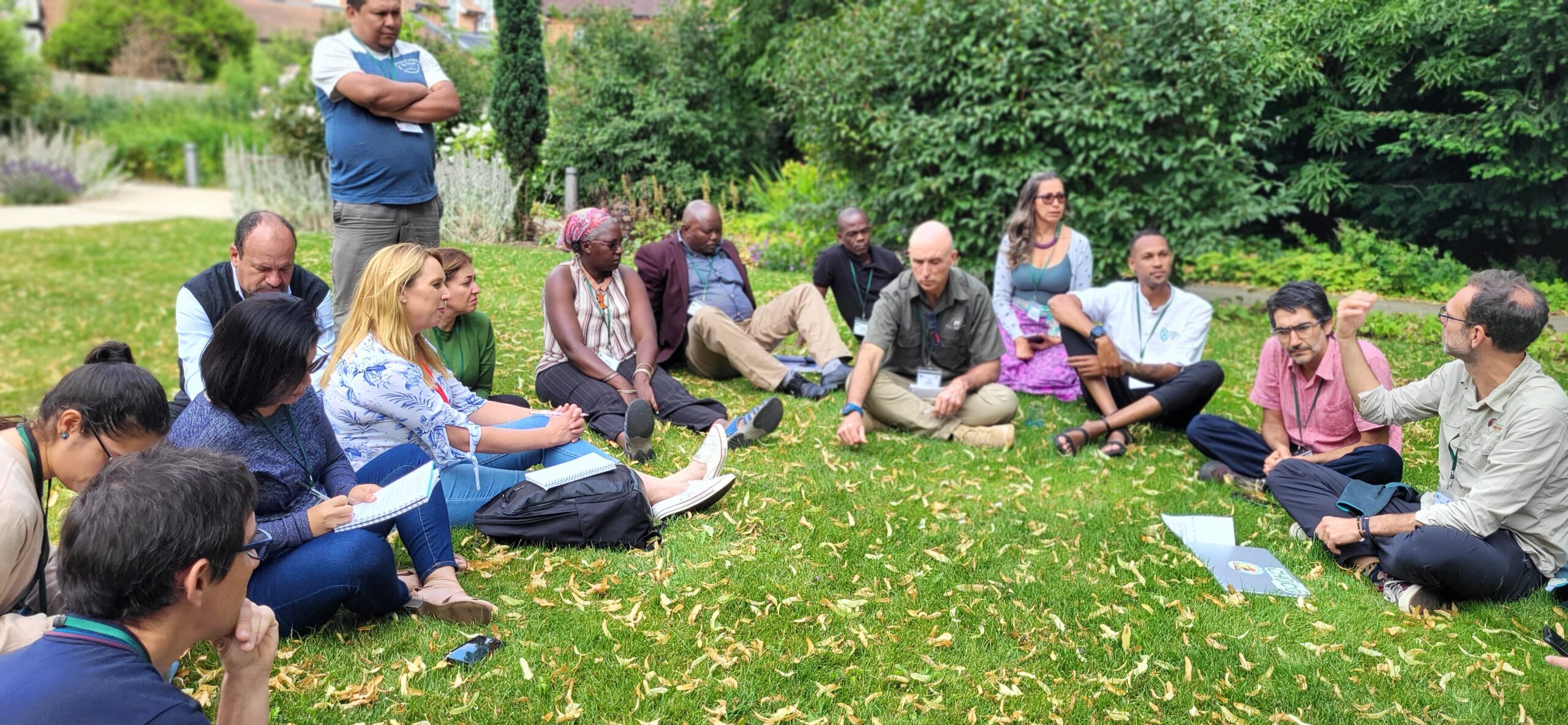
WLT partners and staff sharing ideas. Credit: ©WLT
At World Land Trust we are committed to inclusion and respect to our employees, those who support us, and those whom we support.
We treat everyone with respect and have particular regard for the ‘protected characteristics’ under the Equality Act 2010: age, disability, gender reassignment, marriage and civil partnership, pregnancy and maternity, race, religion or belief, sex or sexual orientation.
We have a zero-tolerance policy towards discriminatory language or actions that could create a hostile environment and we do not accept behaviour that amounts to harassment or exclusion of any individual.

World Land Trust (WLT) is concerned with the deforestation, biodiversity loss, social and climatic impacts which result from the unsustainable production of palm oil.

WLT recognises that its financial providers should align with our organisational purpose and values. The Trustees took the decision to cease banking with Barclays due to the scale of their investments in fossil fuels. Following a review of alternative providers, we have begun transitioning our banking to Lloyds. The majority of our banking arrangements will have transferred by the end of June, at which point Barclays will no longer be our main banker. However, it will take several further months to complete the transition fully, with a full move away from Barclays expected by the end of 2026.
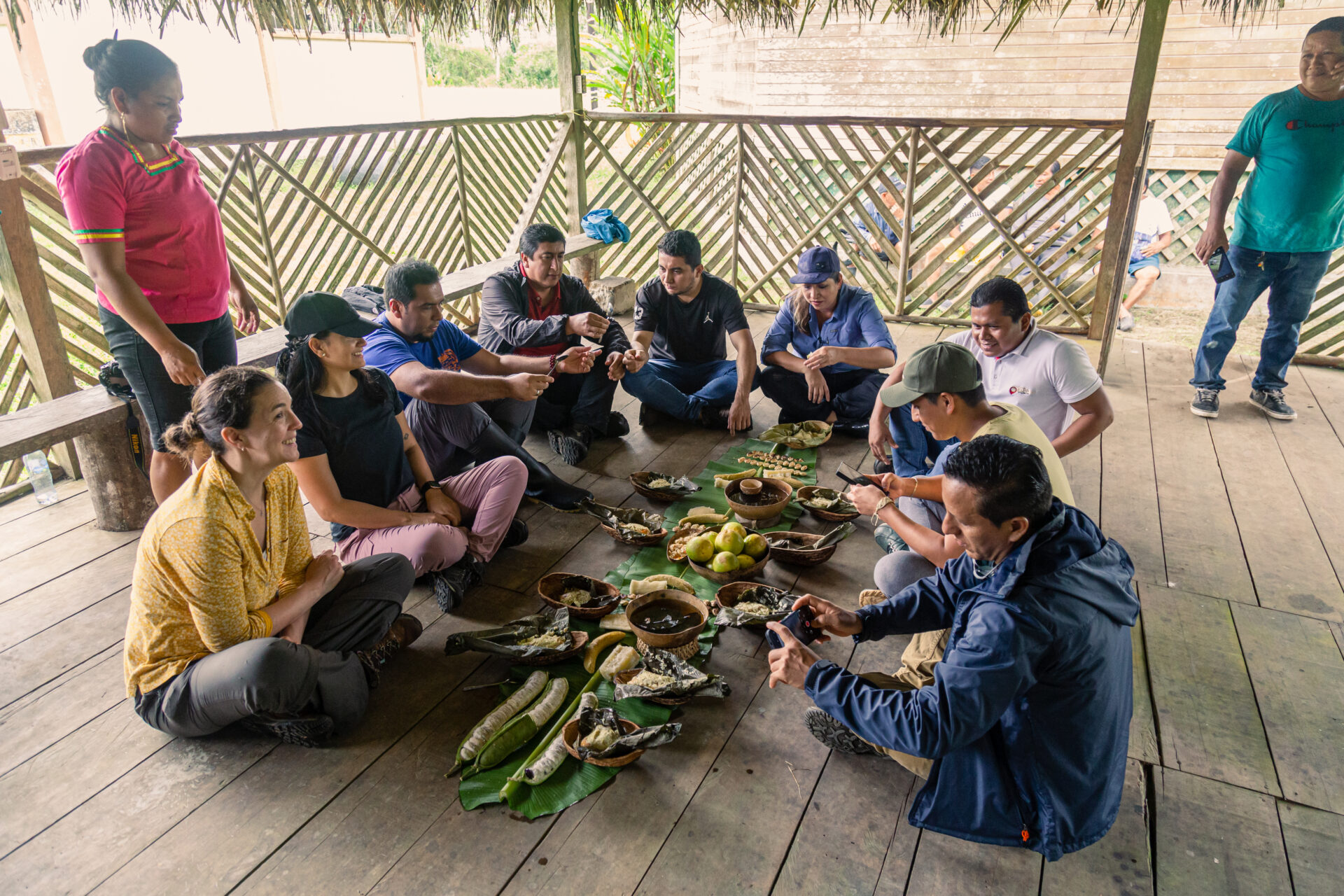
From time to time, it is necessary for WLT to provide food and drink to staff, governors, programme partners, supporters and other stakeholders attending WLT meetings or events. This catering policy is applicable to all such occasions and aims to establish WLT’s stance regarding food sustainability and to influence other stakeholders own catering decisions.
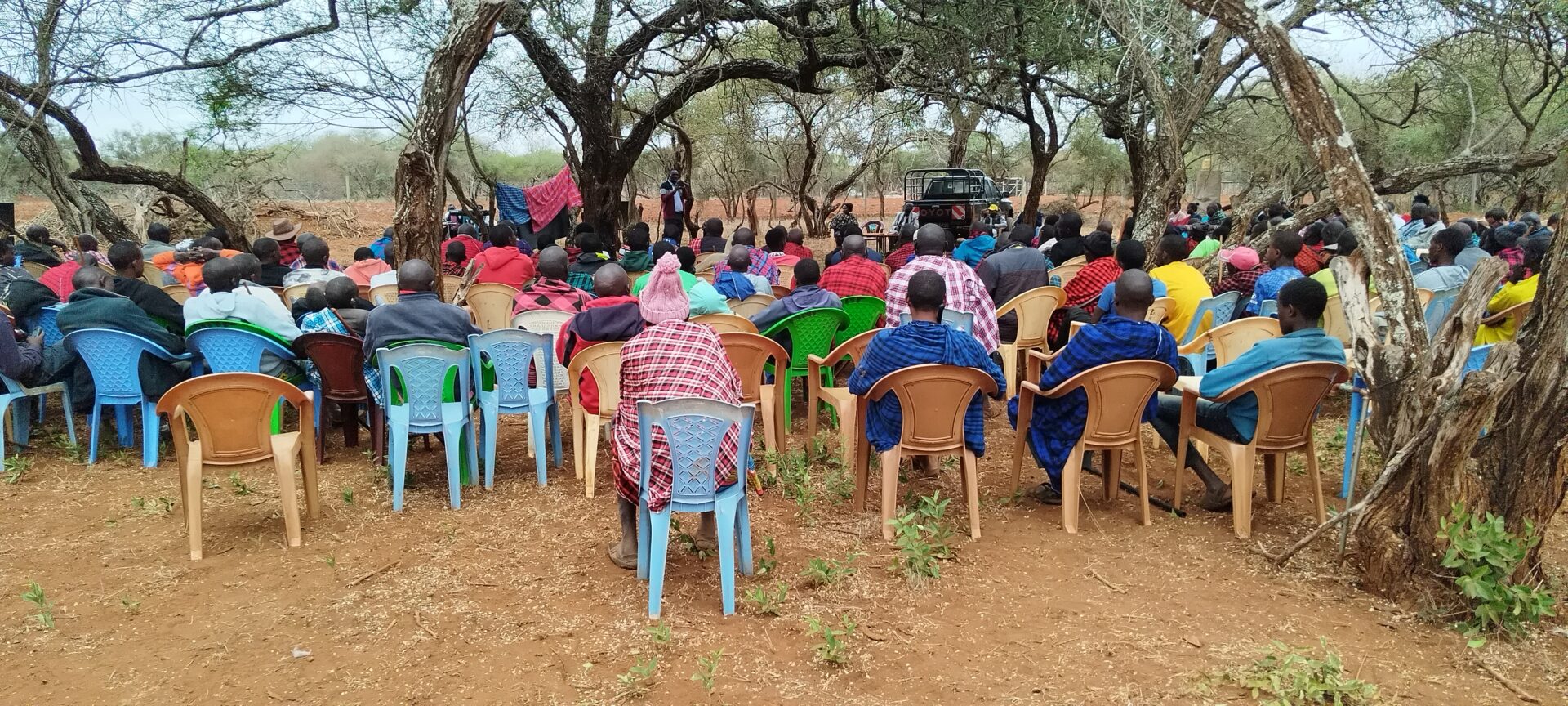
Community meeting, Kenya. Credit: ©BLF
We recognise the 30×30 principles, but believe these can only be adopted and delivered if we endorse an approach that is participatory, inclusive, and which recognises local and indigenous power structures and elevates local and indigenous knowledge.
Our approach must also work towards multi-species justice; enhance and commit to equitable benefit sharing and ensure that our actions move beyond a ‘do no harm’ approach which is outdated. Moreover, no decision about people will be taken without people. This involves participatory planning processes.
It is also important to note that colonialism is having ongoing effects worldwide, particularly in areas we work as WLT. Recognising this is the first step to taking action to change things.
Since producing this statement, WLT has signed up to the United Nations “Core Human Rights Principles for Private Conservation Organizations and Funders” which were launched at the end of 2024. WLT is aligned to these principles and in ensuring that partners and projects we support follow these same standards.

World Land Trust recognises that artificial intelligence presents both opportunities and environmental costs. The energy and resources required to develop and operate AI systems mean their use must be considered carefully and responsibly, in line with our mission to protect the natural world.
We use AI selectively to support our work, for example to improve efficiency in communications and administration. AI is not a substitute for human expertise, judgement or accountability, and all AI‑assisted outputs are reviewed by our staff to ensure accuracy, integrity and alignment with our values. We do not develop our own AI models or use AI in ways that could compromise the privacy or trust of our supporters.
Our approach is guided by transparency, data protection and ethical practice. This extends to our recruitment processes, where we recognise that AI can be a helpful tool for candidates in ensuring that their applications cover the key role requirements. We will not penalise reasonable use of AI to support applications, but applications must reflect the candidate’s own skills and experiences and not be wholly AI‑generated. AI must not be used by applicants during interviews or assessment activities.
We take a human‑centred approach at all times. We do not use AI to automatically shortlist or select candidates, and all hiring decisions are made by people. We also do not use applicants’ personal information to train AI systems.
We believe AI should be used thoughtfully as a tool that supports people, not replaces them, and always in a way that reflects our commitment to fairness, accountability and the protection of nature.