
Least Concern
In accordance with IUCN criteria, a species is considered to be Least Concern if it does not qualify for Critically Endangered, Endangered, Vulnerable or Near Threatened. Widespread and abundant taxa are included in this category.
Species data
Class
Magnoliopsida
Order
Sapindales
Family
Anacardiaceae
Scientific Name
Anacardium excelsum
Reserve locations
Colombia
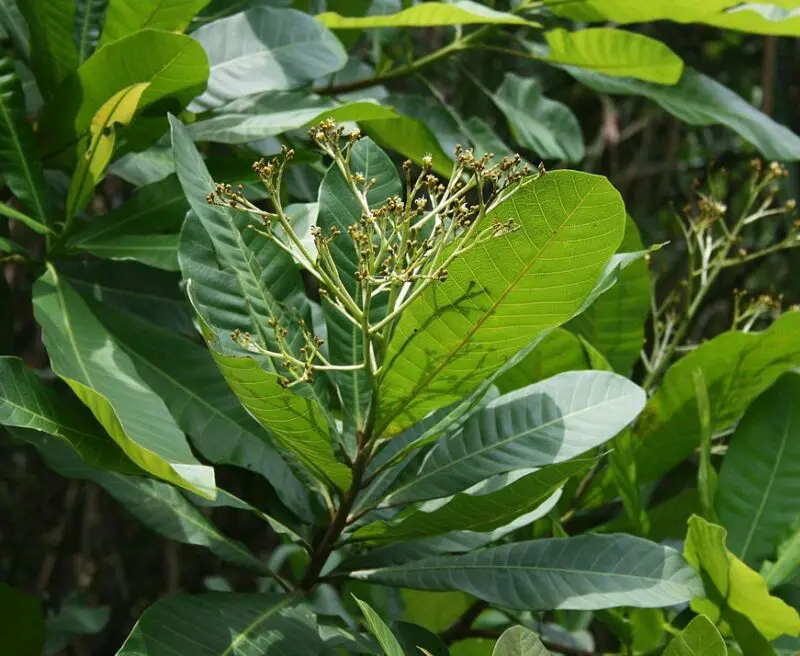
Closely related to the domesticated cashew (Anacardium occidentale), Wild Cashews are a mid-sized tree that grows up to 30 meters, and bear cashew nuts (which are, form a botanical point of view seeds), the same as Domestic Cashews as well as cashew “apples”. These fruits are an important food source for bats, monkeys and parrots but are toxic to humans unless prepared thoroughly. The wood was often used for making canoes.
Main image: Anacardium excelsum ©Franz Xaver. License CC 3.0
Climate and Range
Wild Cashews are found throughout Central and northern South America, from Honduras to Ecuador. They are a pioneer species so can grow in areas of forest that are slightly degraded.
Threats and Conservation
As many of the seeds are taken for both human and animal consumption, not all reach the ground to propagate. Many that do will not germinate as there is limited viability of seeds. This makes it difficult for the population to recover from deforestation and harvesting for timber. Despite this, Wild Cashew is a good pioneer species and is popular among reforestation efforts. They are a popularly cultivated exotic plant for gardeners.