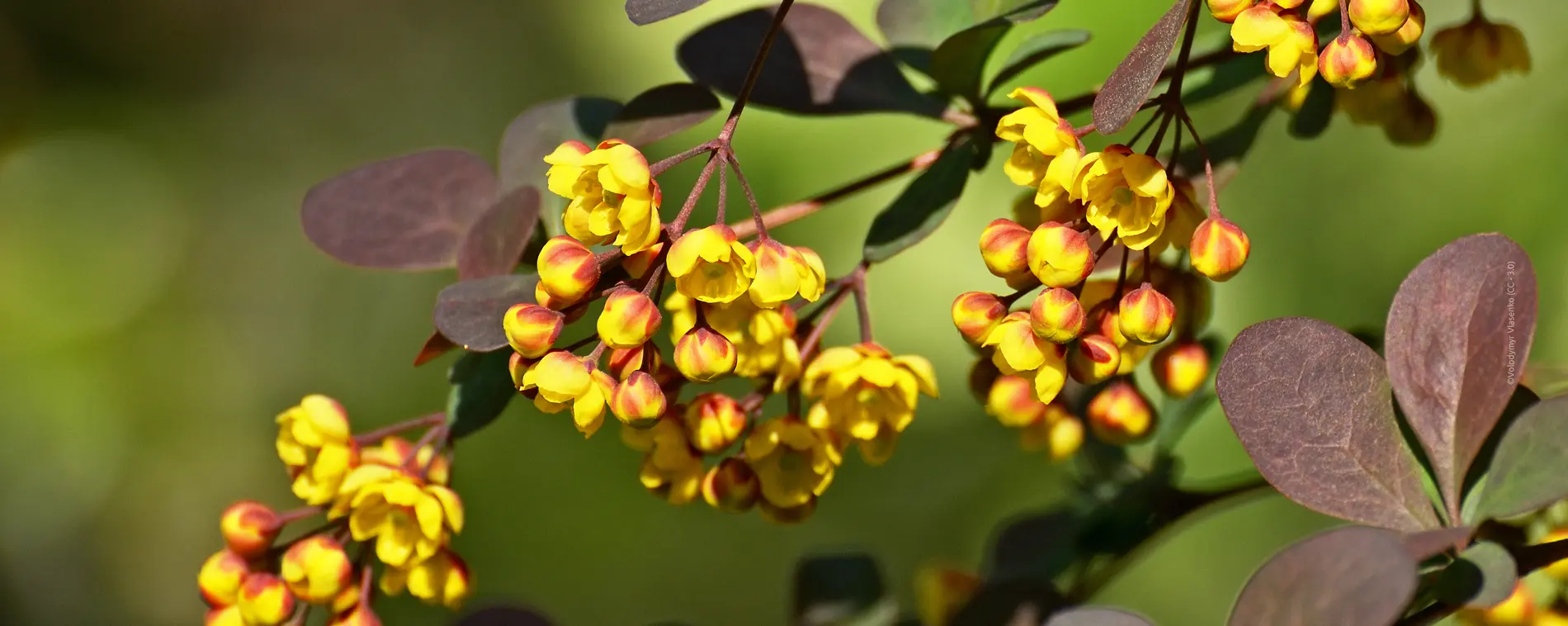
Also known as European Barberry or simply barberry, Berberis vulgaris is a deciduous shrub which produces a berry that is an important food source for many small birds. In Europe, the berries have been traditionally used as an ingredient for making jam. Its young leaves are also edible.

Least Concern
In accordance with IUCN criteria, a species is considered to be Least Concern if it does not qualify for Critically Endangered, Endangered, Vulnerable or Near Threatened. Widespread and abundant taxa are included in this category.
Species data
Class
Magnoliopsida
Order
Ranunculales
Family
Berberidaceae
Scientific Name
Berberis vulgaris
Reserve locations
Armenia
Behaviour
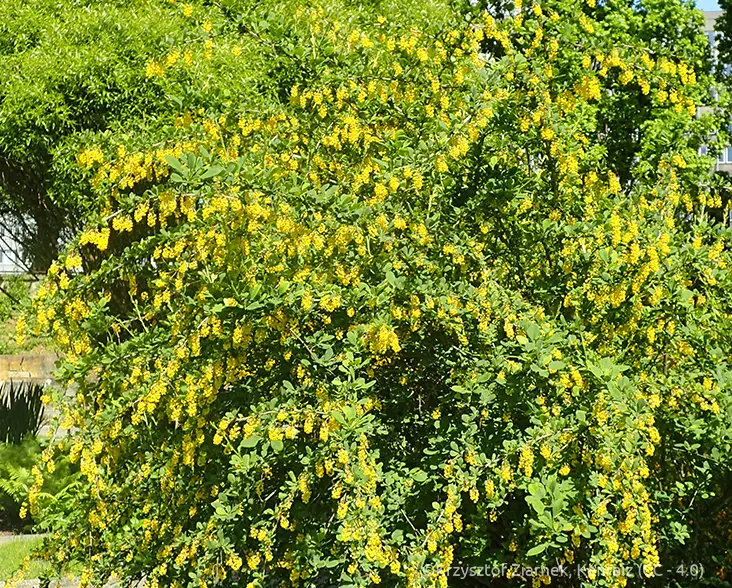
Growing up to 3 metres high, the plant’s leaves are small and oval, growing in clusters of between 2 and 5. The leaves have serrated margins and range between 2 and 5 centimetres long and between 1 and 2 centimetres broad. The shrub produces yellow flowers in late spring which later produce vivid red oblong berries. These ripen in late summer or autumn.

Habitat and Range
The plant grows in alluvial forests, deciduous mixed and coniferous woodland and forests, hedgerows, and cliffs. It has a preference for limestone and has also been recorded growing on waste ground.
With a primarily European distribution, Berberis vulgaris is mostly native to central and southern Europe. It also extends into the Caucasus and Turkey.
The plant has also been recorded as having been cultivated as early as the medieval times and was later planted as a hedgerow. However, this activity ceased in many places when it became known that it is a host of the rust fungus Puccinia graminis which affected wheat crops.