
Near Threatened
In accordance with IUCN criteria, a species is considered to be Near Threatened if it does not qualify for Critically Endangered, Endangered or Vulnerable now, but is close to qualifying for or is likely to qualify for a threatened category in the near future.
Species data
Class
Aves
Order
Piciformes
Family
Ramphastidae
Scientific Name
Ramphastos sulfuratus
Reserve locations
Belize
Description
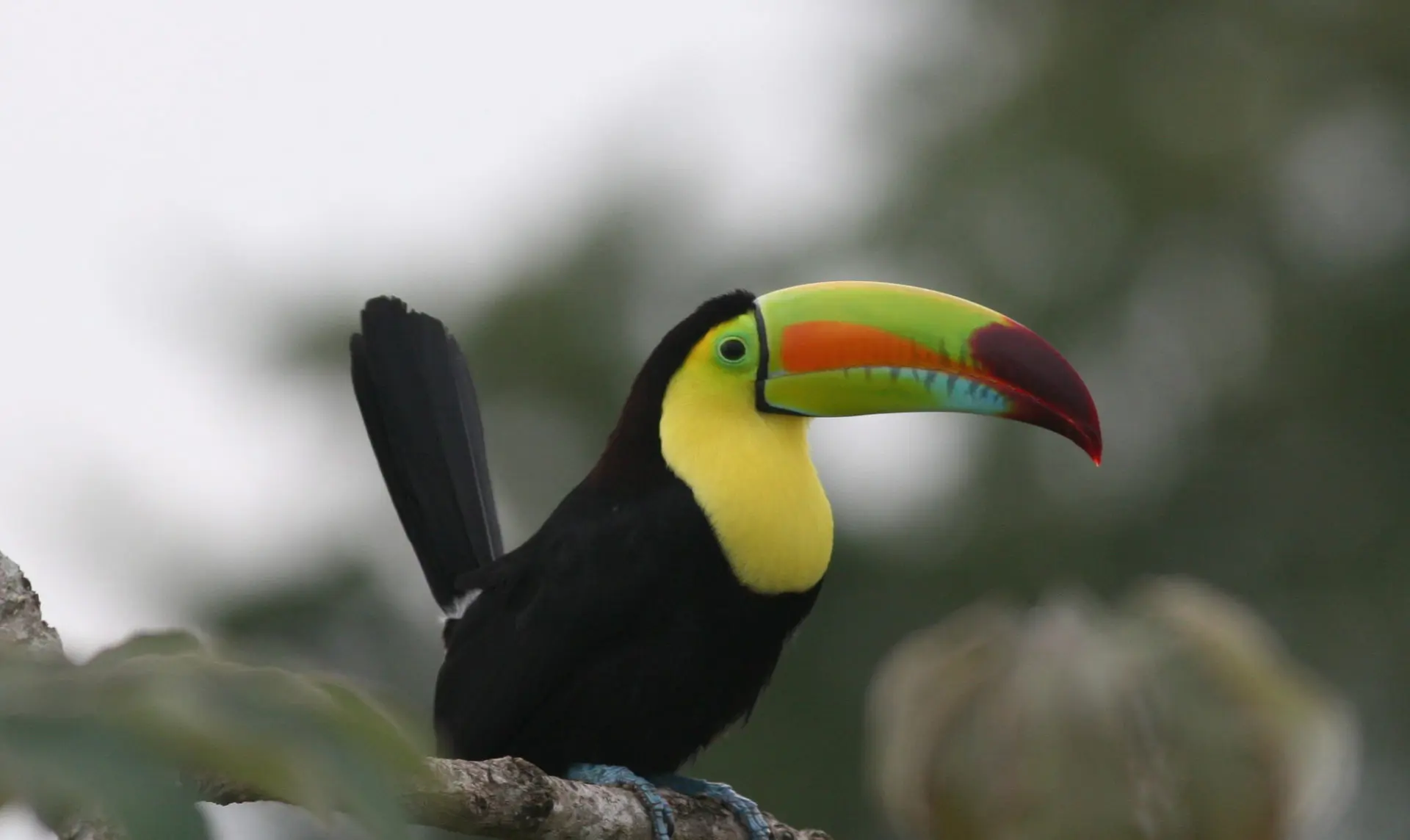
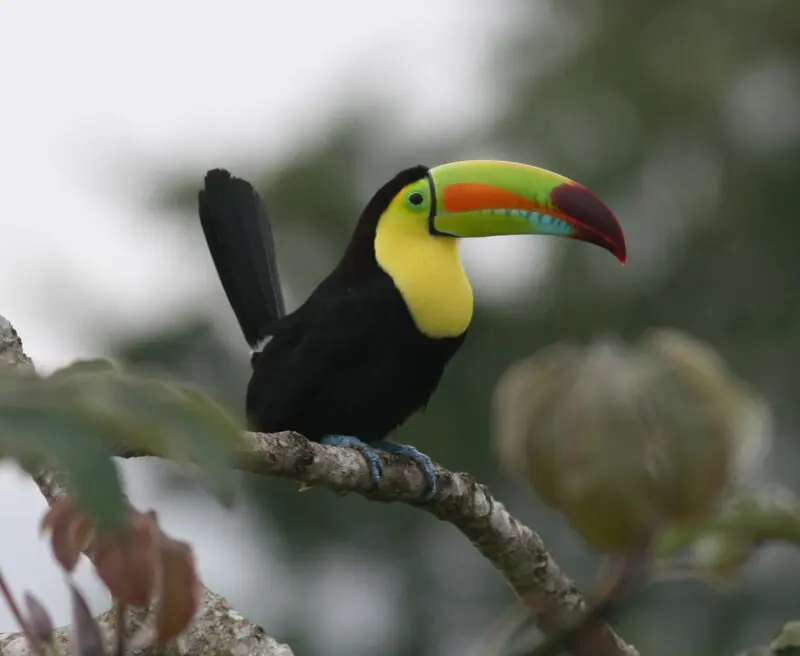
The large, colourful bill of the Keel-Billed Toucan is distinctive, predominantly green with a red tip, orange sides and the occasional splash of blue markings. Their bills can be 12 – 15cm long, which accounts for around a third of the total average length of 42 – 55cm. They have mainly black plumage, a yellow neck and chest with red feathers at the tip of their tail. Their zygodactyl feet help them perch on forest trees and are used for holding food.
Behaviour
Like most species in the toucan family, Keel-Billed Toucans are social birds that live in small flocks, sharing nests in the holes of trees.
Although feeding mainly on fruit, they will also take insects, eggs, nestling birds, and small lizards. Their bill is adapted to their diet and toucans will dissect their fruit and then toss it back to swallow it whole.
Habitat
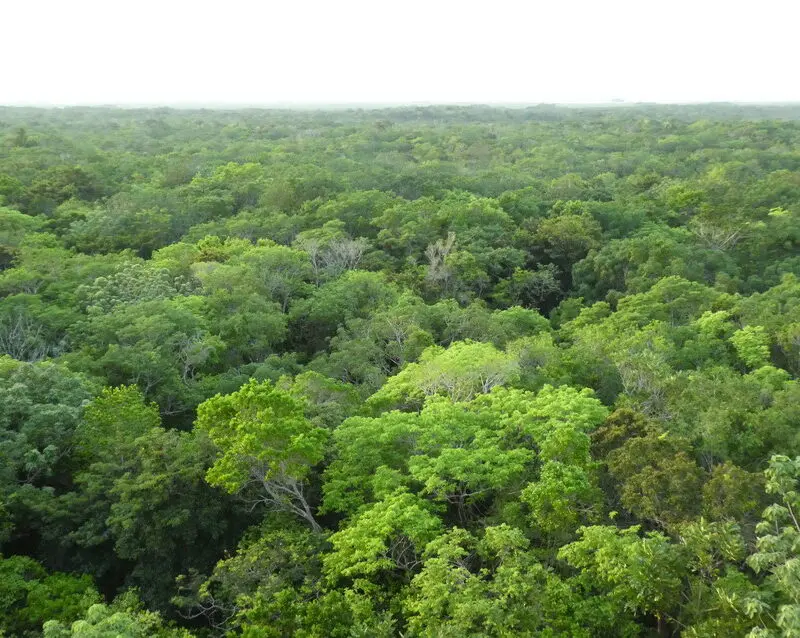
Keel-Billed Toucans live in tropical rainforests from South Mexico, down to the northern countries in South America, including Belize where they are protected by Programme for Belize, WLT’s partner in this region. The Keel-billed Toucan is the national bird of Belize.
Threats and Conservation
Although listed as a species of Least Concern by IUCN, numbers of Keel-Billed Toucan are known to be declining. Hunted for meat and their beaks, and captured for the illegal pet trade has had a significant impact on their numbers in the wild. Forest degradation, illegal logging and the effects of climate change have contributed to a general trend of falling populations across all toucan sub species.