
Vulnerable
In accordance with IUCN criteria, a species is considered to be Vulnerable if it is facing a high risk of extinction in the wild.
Species data
Class
Aves
Order
Bucerotiformes
Family
Bucerotidae
Scientific Name
Buceros bicornis
Reserve locations
India
Description
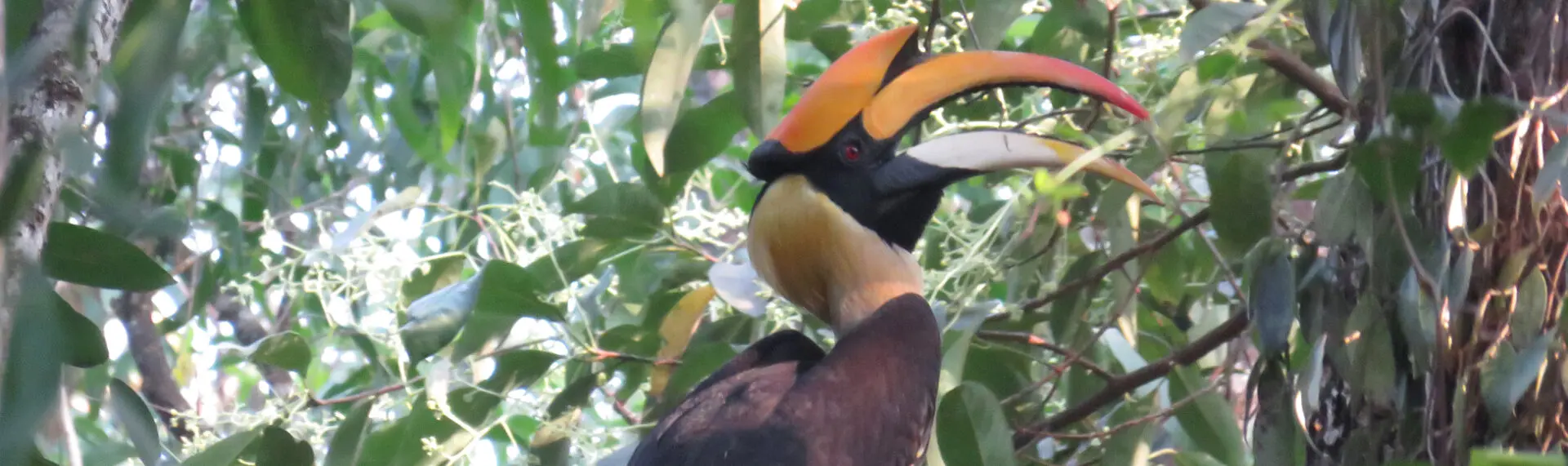
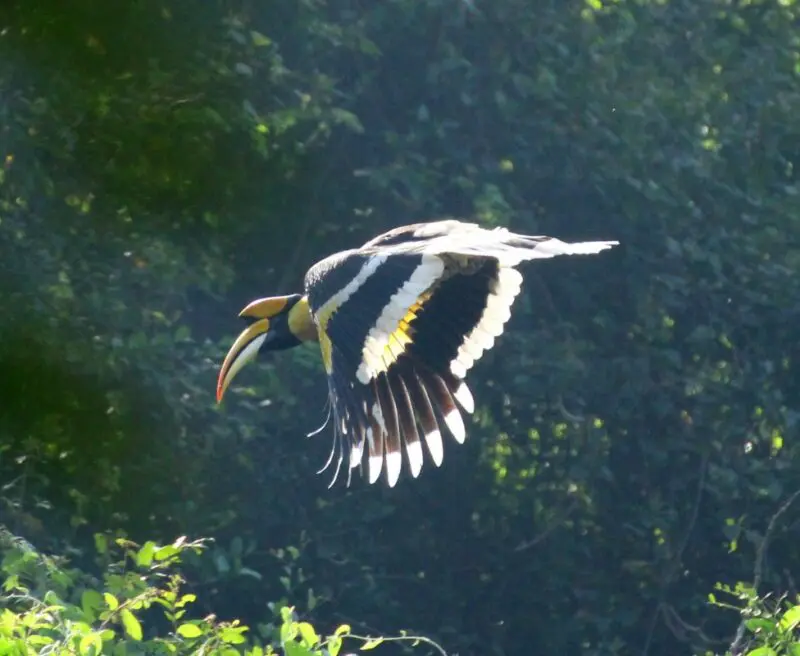
The Great Hornbill, also known as the Concave-casqued Hornbill, Great Indian Hornbill or Great Pied Hornbill, is one of the largest members of the hornbill family. It is found in the Indian subcontinent and south-east Asia. Its impressive size and colour have made it an important talisman in many tribal cultures and rituals. Great Hornbills have lived for up to 50 years in captivity. Predominantly frugivorous, figs making up a large portion of their diet.
They are known as the ‘farmers of the forest’ due to the role they play in dispersing the seeds of numerous fruit trees. The carry the seeds of the fruit they eat in their droppings, thereby transporting the seeds elsewhere and helping the forest regenerate. They will also prey on small mammals, reptiles and birds. Males and females are similar except that the irises of the male are red, while those of the female are red, and males have slightly larger bills and casques.

Habitat
Great Hornbills are arboreal and depend on tall, dense old growth (unlogged) forests in hilly regions. Trees that extend beyond the height of the canopy are preferred for nesting and the tree must have a natural cavity large enough to hold the female and her chicks. The same nesting site is used year after year if possible. They require large stretches of forest, unlike many of the smaller hornbills. While Great Hornbills occur in Indian, Nepal, south-east Asia and Sumatra numbers are declining and their distribution is fragmented.
Threats and Conservation
While the Great Hornbill occurs in several protected areas, it is generally declining in numbers. The biggest threat is habitat destruction and particularly the removal of the old growth trees that they require for nesting. Their large size makes them easy targets for hunters who value them for their meat, feathers and casque, which is used for ornamental purposes in tribal cultures. They are listed on CITES Appendix I which restricts trade of the species.