
Critically Endangered
In accordance with IUCN criteria, a species is considered to be Critically Endangered if it is facing an extremely high risk of extinction in the wild.
Species data
Class
Aves
Order
Psittaciformes
Family
Psittacidae
Scientific Name
Ara ambiguus
Reserve locations
Ecuador
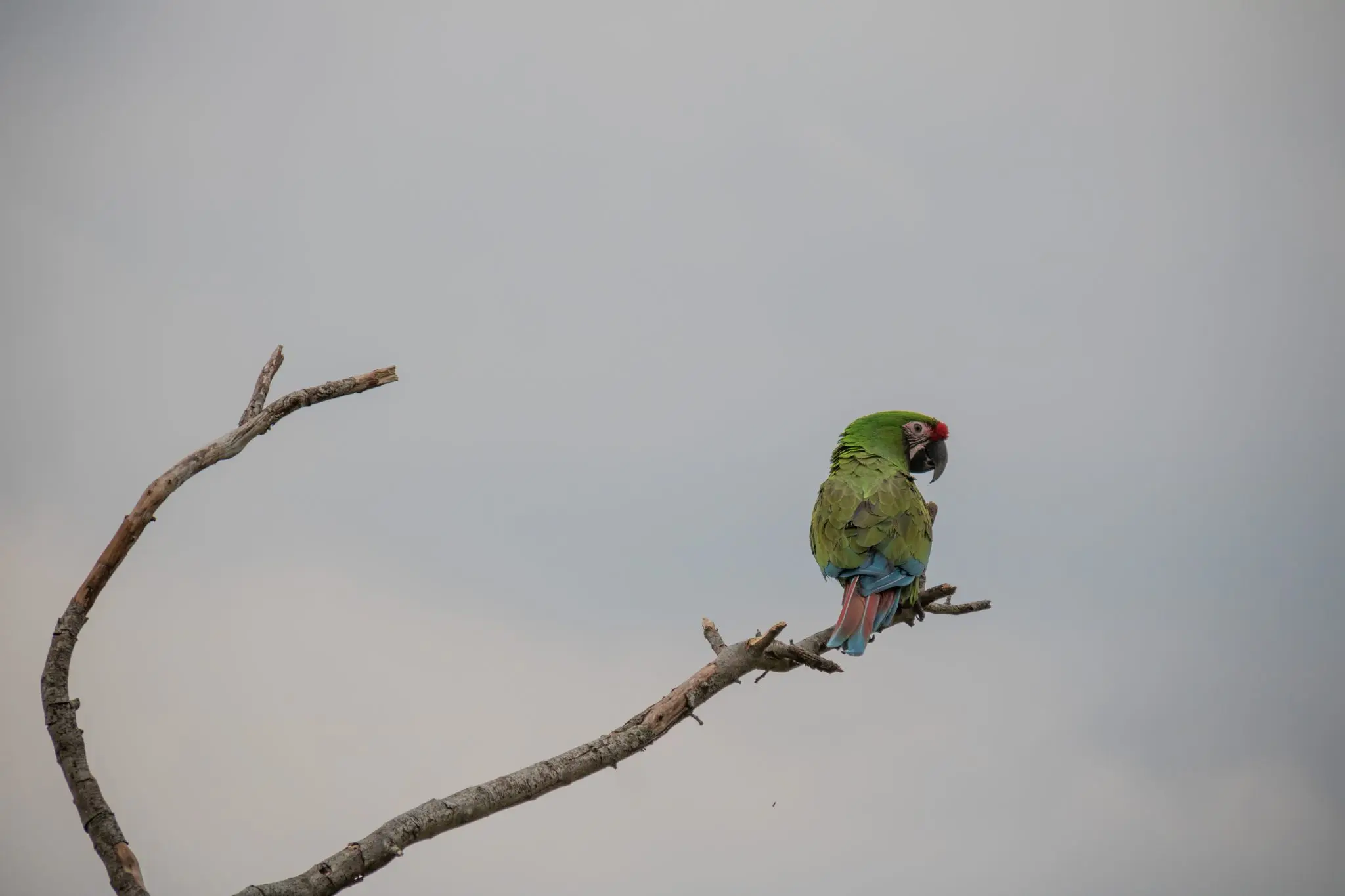
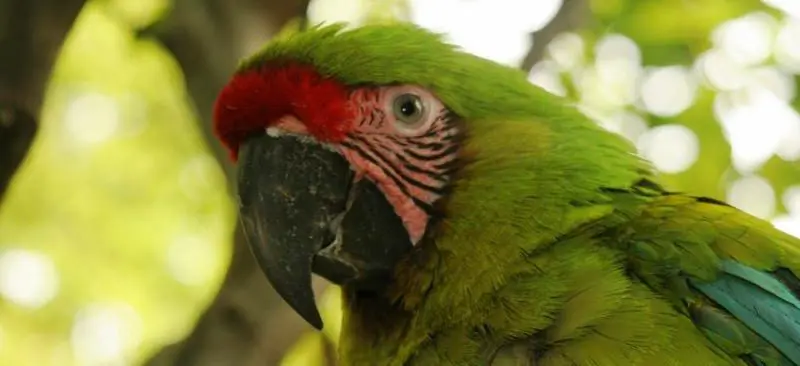
Great Green Macaws are, as their name suggests, almost entirely green. They are very large parrots, at 85-90cm long, with blue on their lower back, rump and upper tail feathers, as well as on the tip of their tail. They have a distinctive red band across the top of their bill and lines of red feathers along bare facial skin.
There are two separate subspecies of Great Green Macaw. One inhabits Central America and northern Colombia and the other, A. a. guayaquilensis, has a small range in Ecuador and possibly south-western Colombia.
Behaviour
Great Green Macaws live in family groups of around five or six individuals, which patrol small home ranges. They move though the forest looking for fruiting trees where they can feed, but will also fly over open areas. Great Green Macaws usually breed in August, when they will lay up to three eggs in tree hollows,
Habitat
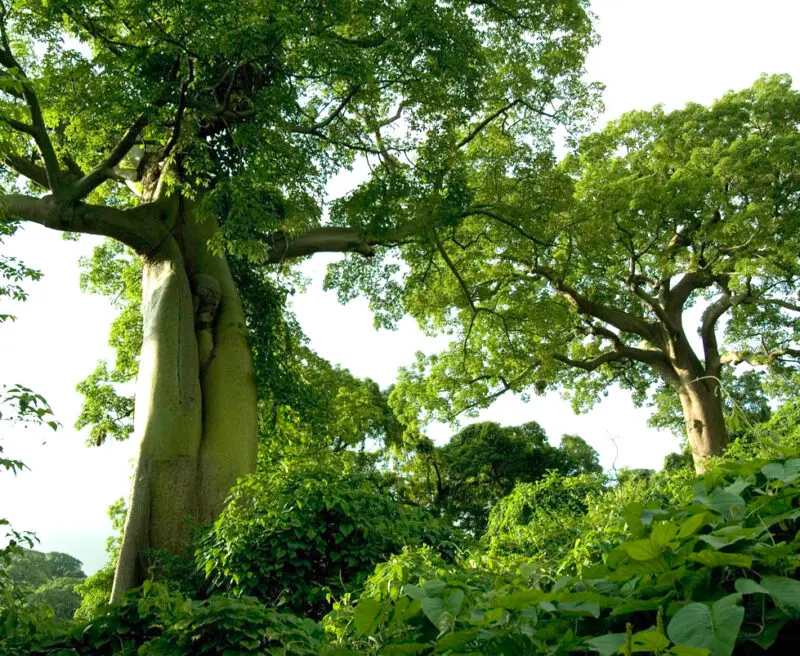
Great Green Macaws live in humid lowland deciduous forests and forest edges, where they rely on mountain almond trees both as a source of food and also as nesting sites. Great Green Macaws lay up to three eggs in tree hollows, usually in August.
Threats and Conservation
As stated above, there are two separate subspecies of Great Green Macaw. Best estimates suggest the total Great Green Macaw population is less than 2,500 individuals, and alarmingly, the latest figures for A. a. guayaquilensis suggest just 30-40 individuals in Ecuador.
World Land Trust supports two reserve protecting key range area these very fragile populations. In the Rio Canandé Reserve in north-western Ecuador, artificial bird nests have been placed in ‘’Guayacán” trees to encourage further breeding. In the dry tropical forests of Cerro Blanco Woodland Reserve, studies on nest and feeding behaviour have taken place, and WLT partner ProBosque is working closely with local communities to help protect this subspecies.
The pet trade is a major problem for Great Green Macaws with their attractive and distinctive markings. Sadly, they are often either killed for their feathers or seen as an agricultural pest and shot by farmers. They are also at risk from extensive habitat destruction.