
Least Concern
In accordance with IUCN criteria, a species is considered to be Least Concern if it does not qualify for Critically Endangered, Endangered, Vulnerable or Near Threatened. Widespread and abundant taxa are included in this category.
Species data
Class
Aves
Order
Passeriformes
Family
Tyrannidae
Scientific Name
Fork-tailed Tody-tyrant
Reserve locations
Brazil
Description
The Fork-tailed Tody-tyrant measures at around 11 cm long, with a very distinctive head pattern and tail. Its head is cinnamon-brown, while the body is olive-green above with a white stomach and brown-edged wings. Though its most distinctive feature is its long, forked tail with a white tip. Males have a slightly deeper fork than females.
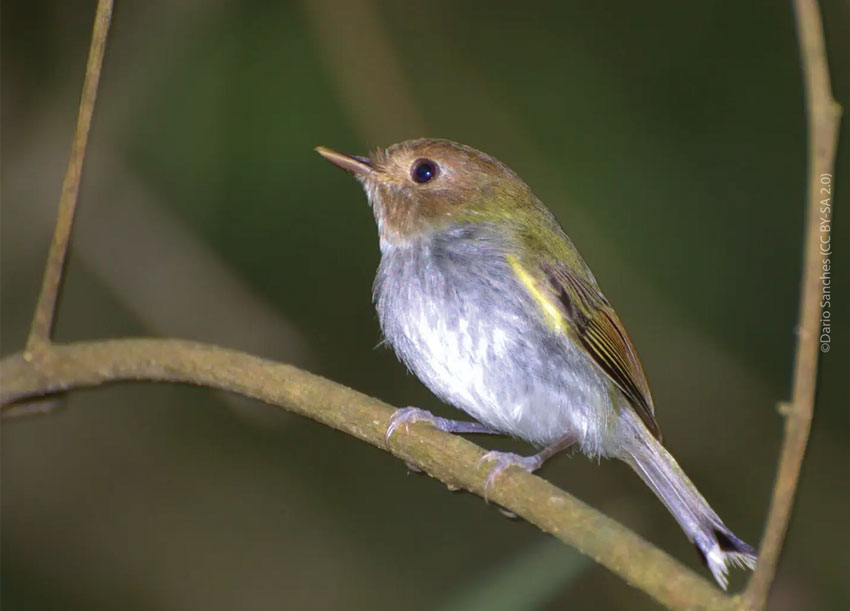
Fork-tailed Tody-tyrant perched on a branch, Brazil. Credit: © Dario Sanches (CC BY-SA 2.0)
Behaviour
The Fork-tailed Tody-tyrant is insectivorous and mostly hunts singly or in pairs in the lower and middle storeys of the forest for small caterpillars and katydids. It often catches its prey using short upward sallies from a perch, grabbing insects from bamboo leaves.
Not much is known about its breeding behaviours, but nests are typically small and well-concealed in dense vegetation. Its song is described as a series of fast and high-pitched notes, with inconspicuous displays and soft vocalizations to help conceal the species from predators.
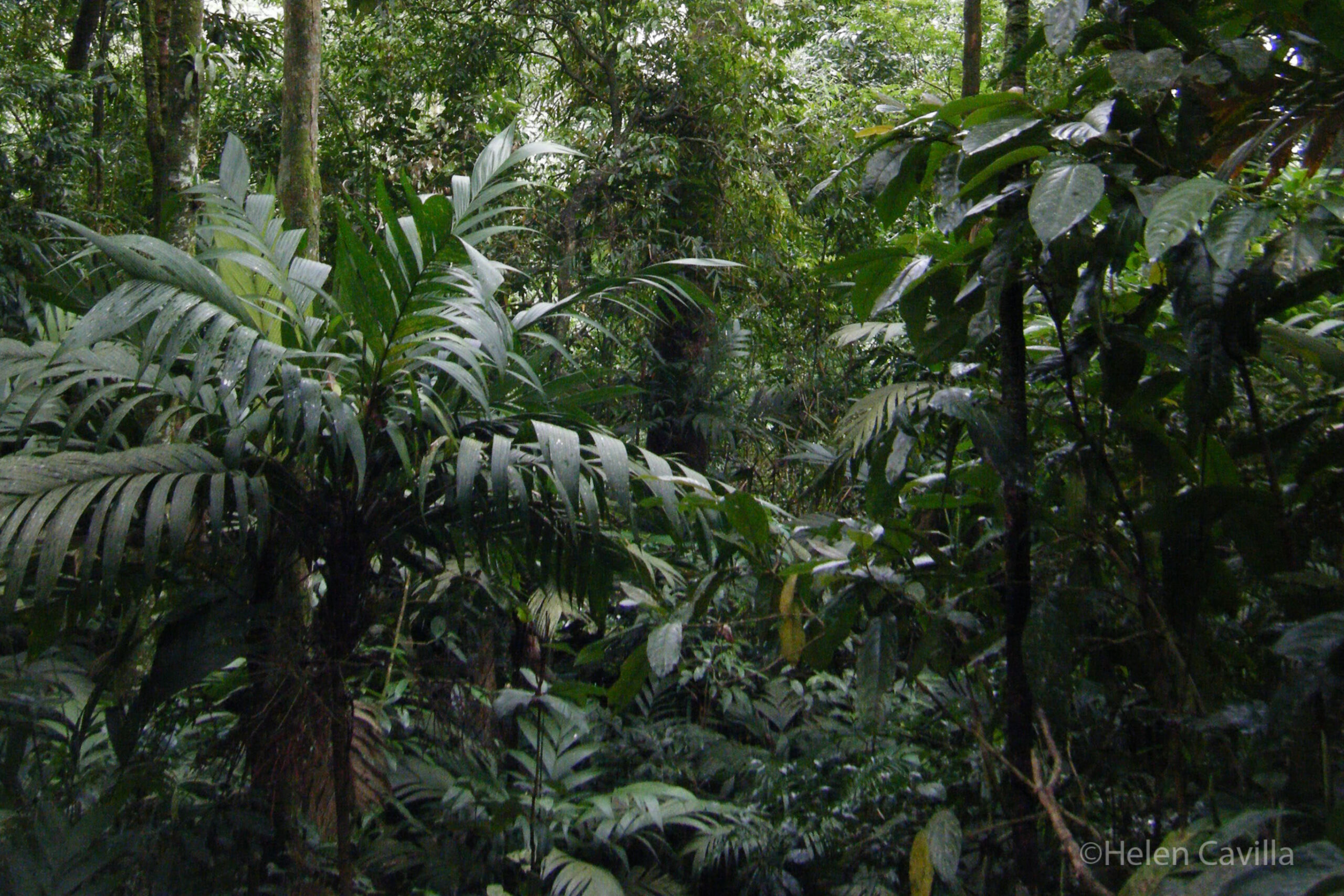
A view of dense understory, REGUA. Credit: ©Helen Cavilla.
Habitat
This species is endemic to Brazil, found in the undergrowth of humid forest borders and second growth, especially where there are dense thickets of bamboo and vine-tangles. It can persist in degraded forest and often occurs in fairly open places with only scattered trees.
Threats and Conservation
Current threats to the Fork-tailed Tody-tyrant’s habitat may include expansion of agriculture, mining, urbanisation, industrialisation, highway construction and livestock farming. However, given that this species has a large range and occurs in forest edge and secondary vegetation, forest loss is unlikely to be having a significant impact at this stage. For these reasons the Fork-tailed Tody-tyrant is evaluated as Least Concern on the IUCN Red List.