
Least Concern
In accordance with IUCN criteria, a species is considered to be Least Concern if it does not qualify for Critically Endangered, Endangered, Vulnerable or Near Threatened. Widespread and abundant taxa are included in this category.
Species data
Class
Mammalia
Order
Primates
Family
Callitrichidae
Scientific Name
Common Marmoset
Reserve locations
Brazil
Description
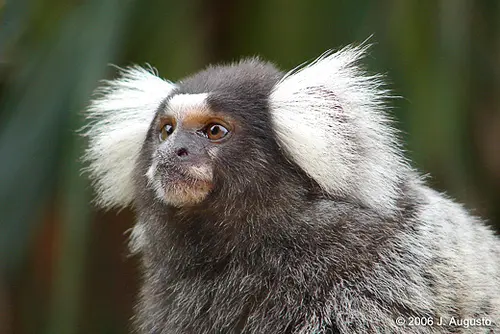
Marmosets are small New World monkeys with an adult body length of 14-19cm (not including their long tail) and an average adult body mass of 300-500g. The Common Marmoset is also known as the White-tufted-ear Marmoset or Cotton-eared Marmoset; it has a white blaze on the forehead and white ear tufts.
Behaviour
Gums and saps are an important food source for all marmosets. They use their lower incisors to create holes in gum-producing trees, producing a flow of gum from which they feed. They also feed on fruits, flowers, nectar and small animal prey (including frogs, snails, lizards, spiders and insects). Common Marmosets live in stable groups with an average size of 8-10 individuals. Each group usually contains only one breeding pair: the highest ranking male and female.

Habitat
The Common Marmoset is native to the scrub forest and drier Atlantic forest of north eastern Brazil, but has been introduced into many areas outside of its natural range.
Threats and Conservation
Common Marmosets are relatively widely distributed and are very adaptable. Populations that have been introduced into areas outside of its natural range may compete with and displace other (native) marmosets. Removal or sterilisation of Common Marmosets may be considered a necessary management strategy in these areas.