
Least Concern
In accordance with IUCN criteria, a species is considered to be Least Concern if it does not qualify for Critically Endangered, Endangered, Vulnerable or Near Threatened. Widespread and abundant taxa are included in this category.
Species data
Class
Aves
Order
Caprimulgiformes
Family
Trochilidae
Scientific Name
Atthis heloisa
Reserve locations
Mexico
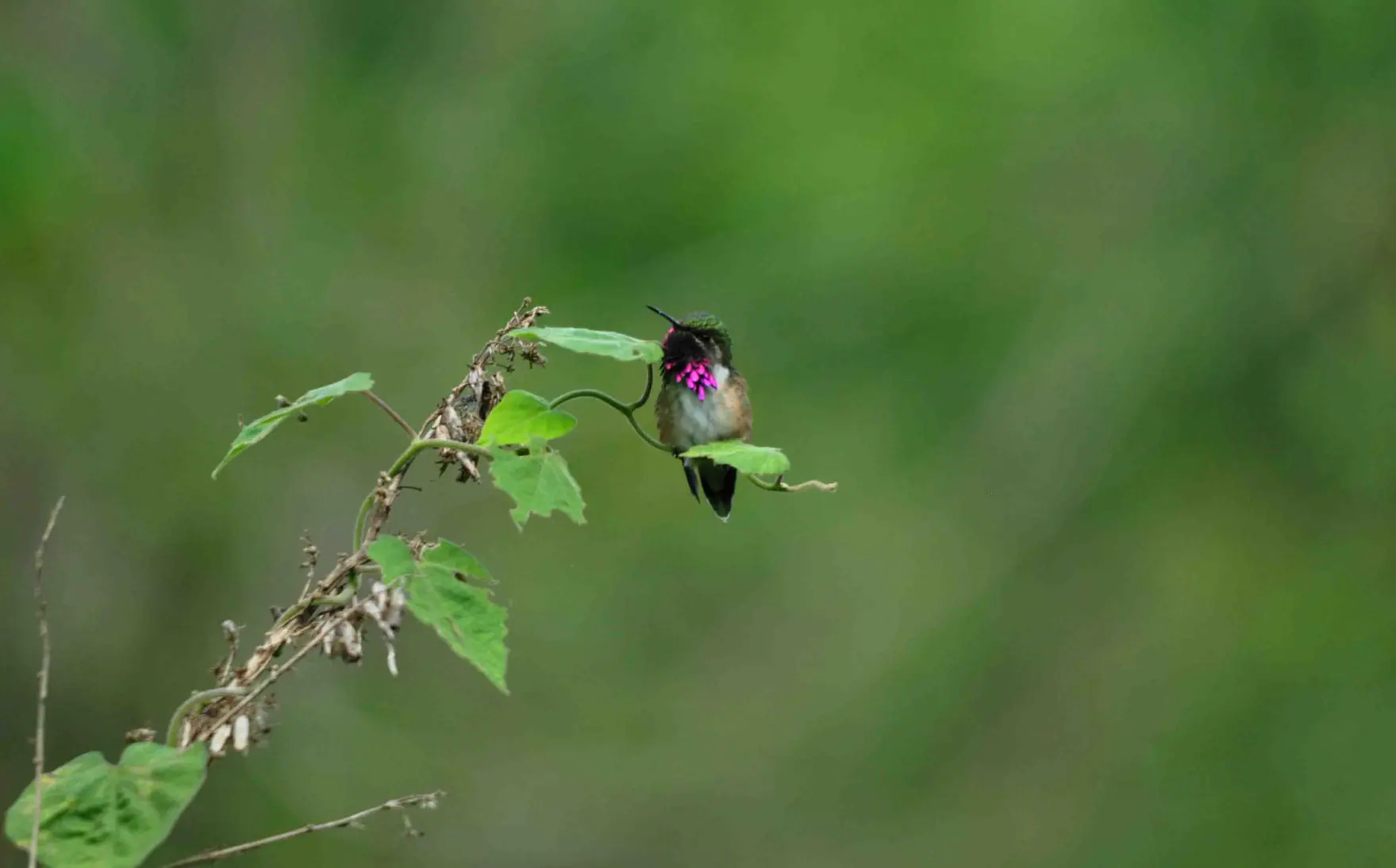
At 7cm, the Bumblebee Hummingbird is one of the smallest known bird species. It gets its name not only from its tiny size but also from the familiar buzz that its wings make, and the way that it mimics the erratic flight of a bee to distract predators, and confuse larger species of hummingbird.
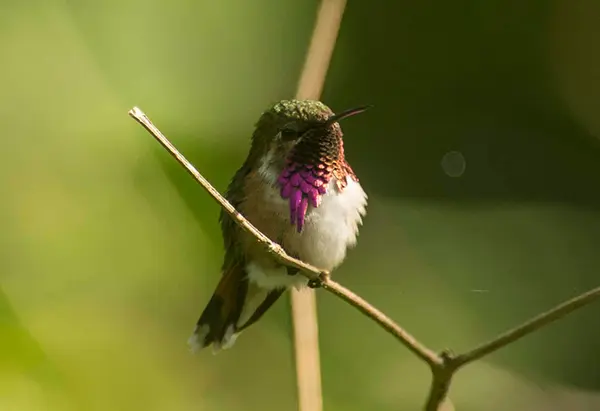
In both sexes, the upper parts are metallic bronze green, with a white breast and chest. However, the males have a magenta chin and throat with flared feathers, while females have a duller spotted white throat. They have dark eyes, short rounded tails and their black bill is short by hummingbird standards.
Behaviour
As with all hummingbirds, the Bumblebee Hummingbird is usually solitary and aggressively territorial, though a male will neighbour with the territories of several females. They prefer to feed horizontally with tail cocked on low to mid-height flowers but are also found feeding on taller plants. They will display subordination to other species of hummingbird, although their bee-like disguise usually enables them slip passed unnoticed.
Habitat
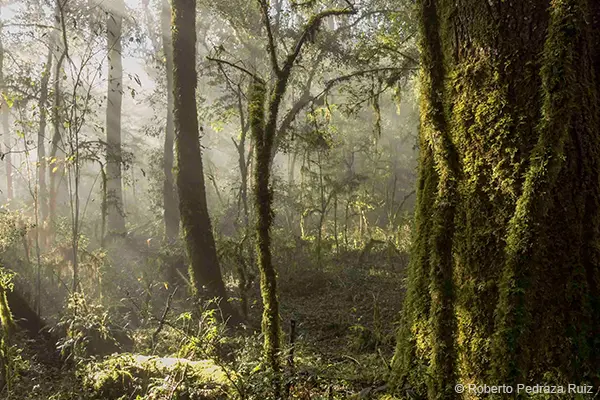
The habitat of the Bumblebee Hummingbird is the humid forests of Mexico.
Threats and Conservation
Although the Bumblebee Hummingbird is listed by IUCN as Least Concern with a stable population, its distribution in some regions is cause for concern. Throughout Mexico, it is vulnerable due to the constant threats to the forests where it lives.
World Land Trust (WLT) works with Grupo Ecologico Sierra Gorda (GESG) to bring as much of Sierra Gorda Biosphere Reserve into protection as possible, with a number of reserves within the area already supported by WLT. This brings protection to this tiny bird. However, much of Sierra Gorda remains privately owned, and consequently the threats of slash and burn forest clearance, timber extraction, cattle farming and inefficient agricultural practices are ever present.