

Critically Endangered
In accordance with IUCN criteria, a species is considered to be Critically Endangered if it is facing an extremely high risk of extinction in the wild.
Species data
Class
Aves
Order
Psittaciformes
Family
Psittacidae
Scientific Name
Ara glaucogularis
Reserve locations
Bolivia
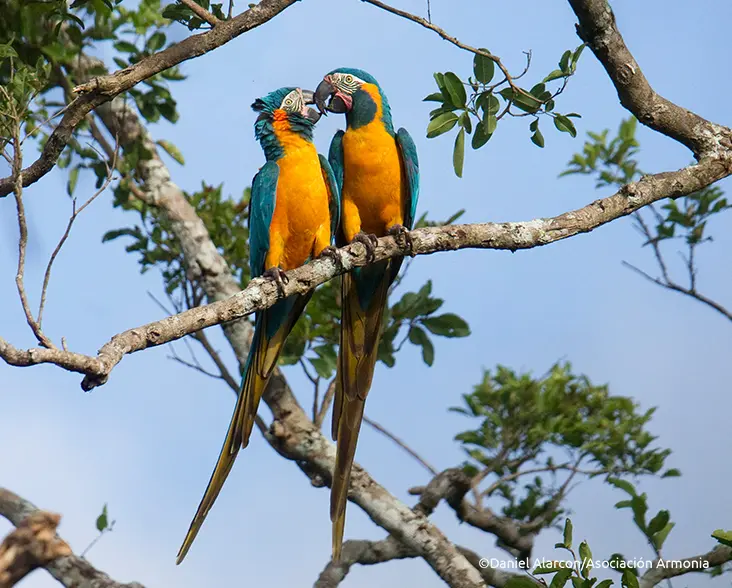
The Blue-throated Macaw is a large parrot (85 centimetres). Plumage on its upper parts and long tail is turquoise. Its under parts are bright yellow. It has blue cheeks and throat patch (males have a darker blue throat patch), yellow eyes and a dark bill, surrounded by a bare patch of skin. When alarmed the Blue-throated Macaw produces a loud, raucous call.
Behaviour
The breeding season is from November to March. The birds make their nests in the cavities of large trees. They feed on a variety of nuts, seeds and palm fruits.
Habitat
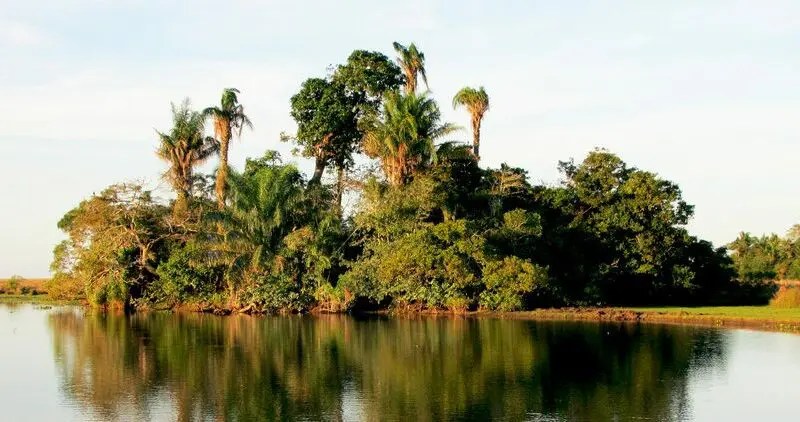
Blue-throated Macaws have a very restricted range and are endemic to Bolivia, predominantly the north of the country. The Blue-throated Macaw inhabits a mixture of palm groves, savanna and occasionally gallery forest. They are most commonly associated with the forest islands of Bolivia’s Beni savanna, where they feed on the fruit of the Motacu Palm (Attalea phalerata).
Threats and Conservation
One of the greatest threats facing the Blue-throated Macaw is the demand from collectors and the illegal pet trade. The species was thought to be extinct until rediscovery in 1992. Population size is estimated to number 400-450 individuals in the wild.
Surviving populations are very fragmented and suffer from loss of habitat from established land management practices. The Blue-throated Macaw is protected by law in Bolivia and was declared a National Heritage species in 2015.