
Least Concern
In accordance with IUCN criteria, a species is considered to be Least Concern if it does not qualify for Critically Endangered, Endangered, Vulnerable or Near Threatened. Widespread and abundant taxa are included in this category.
Species data
Class
Aves
Order
Cathartiformes
Family
Cathartidae
Scientific Name
Sarcoramphus papa
Reserve locations
Belize
Description
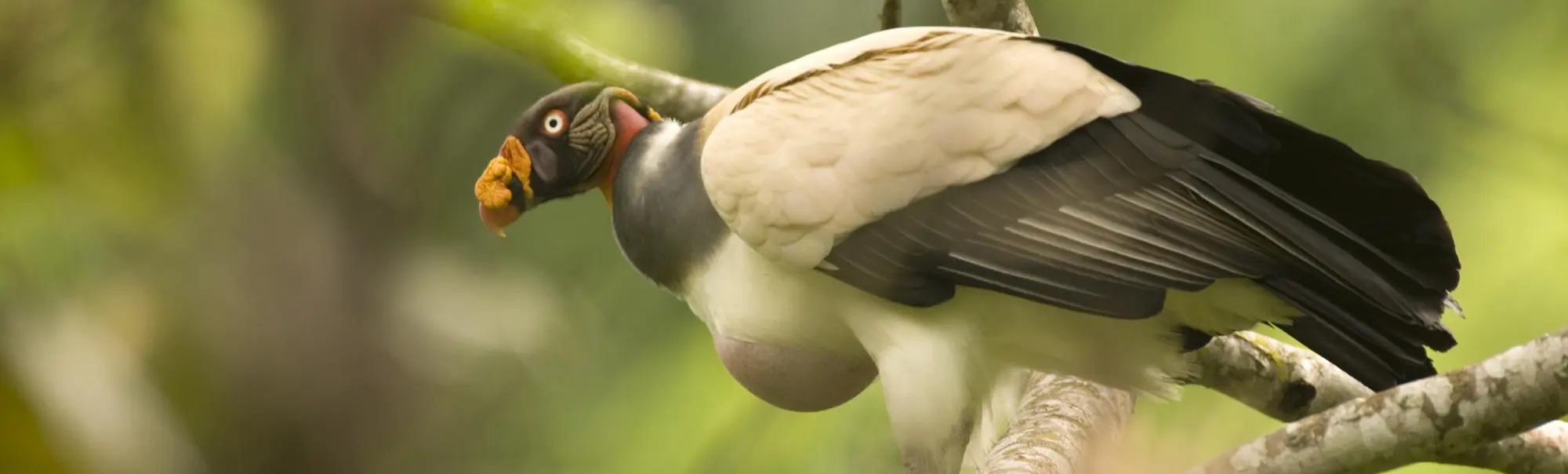
The King Vulture is one of the New World vultures, closely related to Condors. It ranges from southern Mexico to southern Argentina and is the largest and most colourful of the four species of vulture found in Belize. Males and females are identical and nearly the same size with a height of 32 inches and a wingspan of 4 feet.
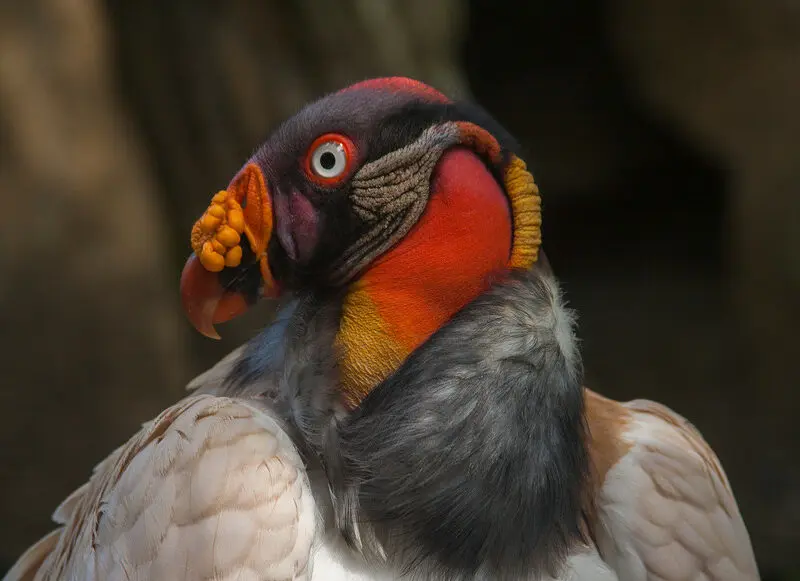
King vulture chicks are brown, not developing the white body and black tail feathers until a year old. The face is flushed with yellow, rose, and orange and has a distinctive orange and red wattle.
Behaviour
King vultures are carrion feeders, finding carcasses by watching other vultures. Their thick, strong bill and long, thick claws are well adapted for tearing and holding meat. The bare head and neck enables the birds to reach far into carcasses without damaging their feathers.
Habitat
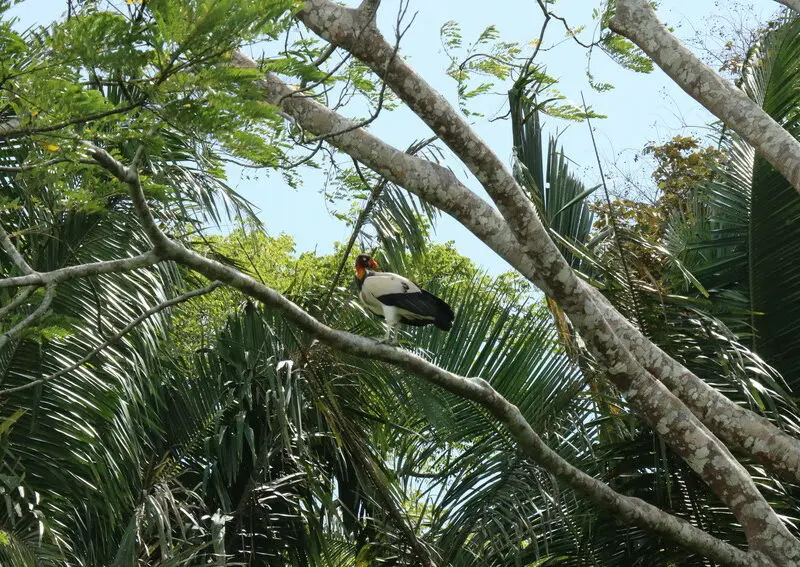
King vultures inhabit tropical lowland forests and nest near to the ground in stumps or downed logs.
Threats and Conservation
Although King Vultures are not endangered their populations do seem to be in decline. This is due to habitat destruction and the capture of live birds to be sold to zoological gardens around the world.