Species data
Class
Liliopsida
Order
Asparagales
Family
Asparagaceae
Scientific Name
Agave muxii
Reserve locations
Mexico
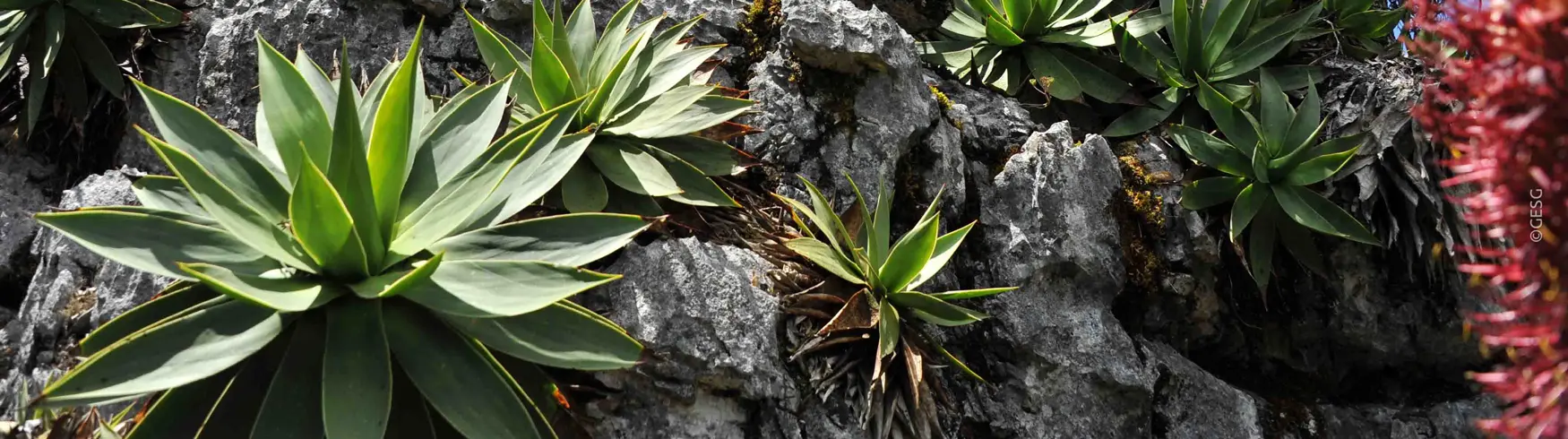
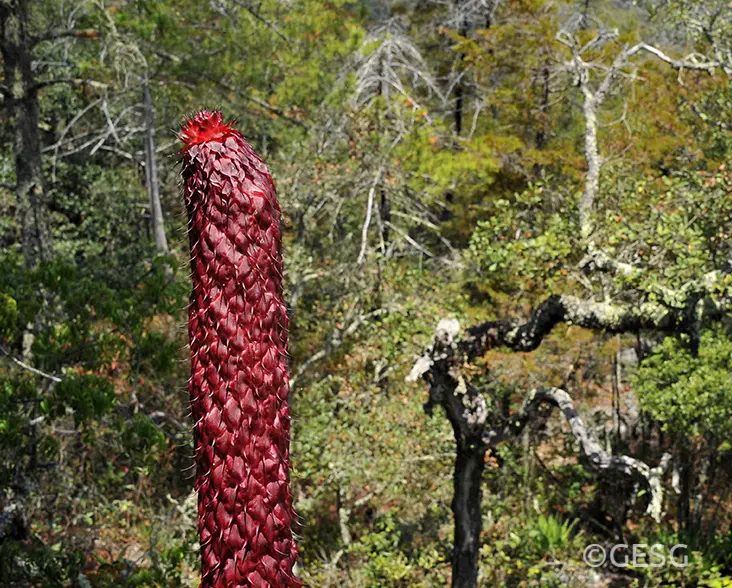
Discovered by botanist Dr. Sergio Zamudio in 2020 in Mexico’s Sierra Gorda Biosphere Reserve, Agave Muxii is unique from other species within its sub-genus due to its unusual and unique flower structure. It has a robust inflorescence which is densely covered with purple bracts which extend from the plant’s base to its apex. Its flowers, stamens, and anthers are also coloured purple.
The name given to the plant refers to Muxi, god of rain in the Teenek or Huasteca culture. According to the cultural tradition of Querétaro (the location of its discovery), Muxi helps maintain the balance of wildlife and played an important role in the origin of corn.
Behaviour
The flowering period of the plant begins in May and lasts until July, and its mature fruits can be found between August and September.
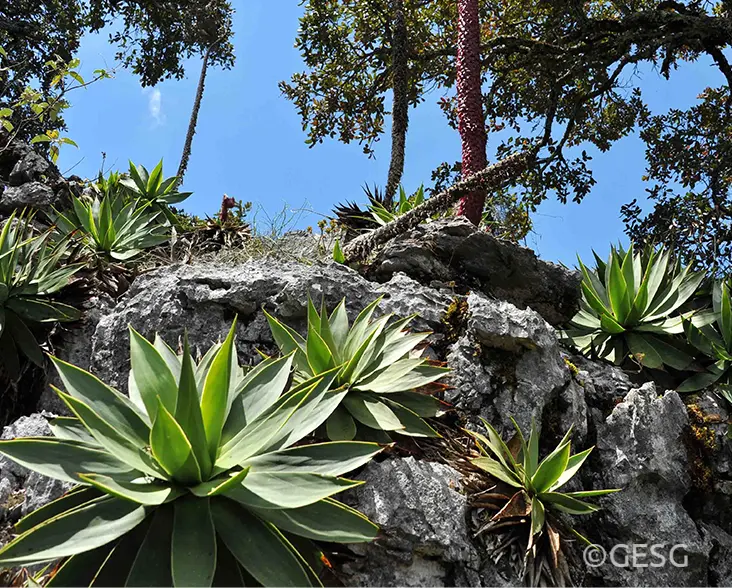
Habitat and Range
Agave Muxii grows in a seasonally dry tropical biome and is known only from the municipality of Landa in the state of Querétaro, which is in the southern portion of the Sierra Madre Oriental and lies within the Sierra Gorda Biosphere Reserve. It establishes itself on thin and stony soils, on slopes of karstic limestone rock with pronounced slopes at altitudes of between 2600 to 2900 metres above sea level. Agave Muxii grows solitarily and has a restricted distribution and is considered to be a micro-endemic species.