Mission
Instituto Marcos Daniel (IMD) was established as a private non-profit organisation in 2004 to carry out scientific research and biodiversity conservation, and to communicate and encourage a sustainable society in Brazil. IMD’s vital nature conservation work in the region is based on approaches from Conservation Medicine and the One World – One Health concept, and shape IMD’s between human, animal, and environmental health as interconnected. This approach is transdisciplinary and relates to IMD’s mission in pursuing a healthy environment to all living beings, by promoting the conservation of biodiversity and ecosystem protection.
History
IMD has grown to become one of the most prominent non-governmental organisations in the Espírito Santo state of Brazil and has ongoing partnerships with Rainforest Trust, American Bird Conservancy, SAVE Brasil and Parque das Aves, and the Conservation Planning Specialist Group (CPSG) of the International Union for the Conservation of Nature.
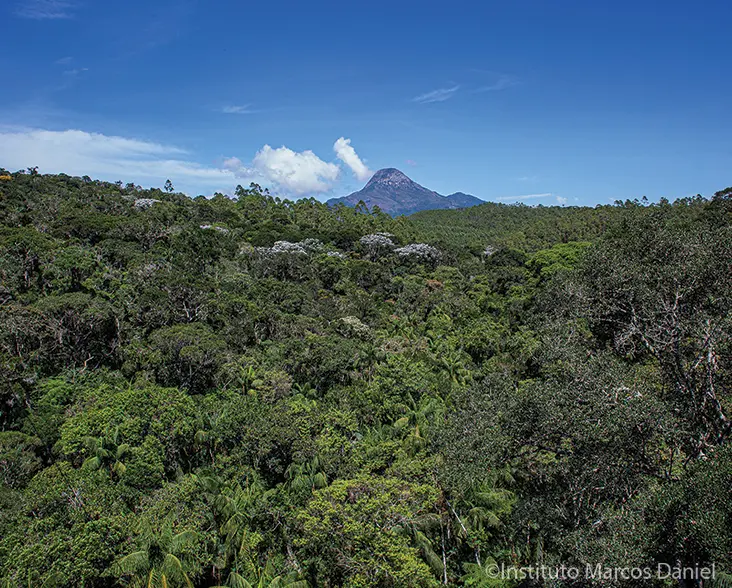
It has focused its efforts on addressing conservation issues in the Atlantic Forest biome. This region is faced with an alarming rate of deforestation and is Brazil’s most threatened biome, having lost 80% or more of its original primary vegetation.
IMD engages the public with conservation issues through communication and environmental education initiatives and is at the forefront of establishing reserves in high ecological value areas in the Atlantic Forest. Its various projects focus on researching and tackling the threats facing species such as tapirs, caimans, bromeliads, sea turtles, and multiple bird species.
Partnership with WLT
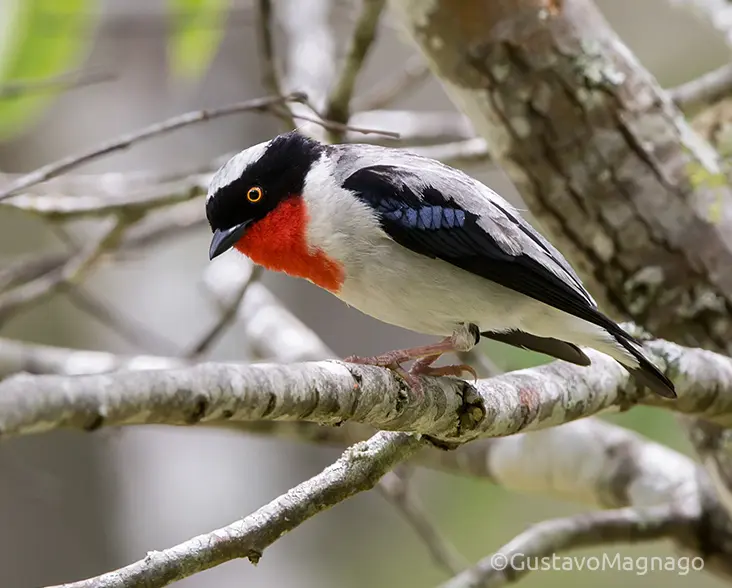
WLT’s partnership with IMD began in 2023, with support for its project to expand the Kaetés Reserve in collaboration with fellow IMD supporters Rainforest Trust and American Bird Conservancy. This project aims to provide additional protection to one of only two known populations of Cherry-throated Tanager, a Critically Endangered bird with an estimated population of fewer than 25 individuals. The reserve expansion will also benefit the Buffy-headed Marmoset (a Critically Endangered monkey), the endemic and Critically Endangered Caetés Catfish, as well as many other threatened species.
Other activities
• Project Caiman is an IMD initiative in partnership with Arcelor Mittal Tubarão dedicated to the research and conservation of the Broad-snouted Caiman, a symbolic species of the Atlantic Forest.
• The Vem Passarinhar Capixaba project is an initiative led by IMD to promote environmental education and citizen science through birdwatching in the State of Espírito Santo. It forms part of a national movement, which emerged at the Instituto Butantan’s Bird Observatory in 2014.
• Pro-Tapir – In 2011, IMD began its tapir conservation project with a mission to develop a conservation plan for the species in the Espiríto Santo State’s Atlantic Forest region. Since 2018, this successful initiative led to it becoming an independent NGO, Pro-Tapir Institute.
• Project Bromelías – This project is focused on the conservation of bromeliads throughout the Atlantic Forest. Bromeliads are important to the ecosystem due to their ability to accumulate rainwater between their leaves, providing a micro-environment for many animals. Through this project, IMD engaged students and rural residents to promote sustainable management practices toward the conservation of bromeliads and other organisms that rely on them.
• Chelonia mydas Project – Since its foundation, IMD started researching sea turtle health through an ecological approach. Espirito Santo State homes the second largest rookery of loggerhead turtles and the largest of leatherback turtles in the south Atlantic. These species suffer from issues relating to certain human activities, particularly water pollution and IMD is focused in identifying and clarify how this affects sea turtle health in Brazil.