Our latest appeal, Madagascar: A Forest for the Future, will support the Missouri Botanical Garden’s Madagascar Programme (MBG-Madagascar) to secure a key hotspot for threatened plants and irreplaceable floral diversity not found anywhere else in the world. Madagascar is home to an estimated 14,000 vascular plant species, which are the bedrock upon which all other life in Madagascar rests. Some are not only unique to the island, but to a 1,500-hectare patch of dense evergreen forest known as Ankarabolava-Agnakatrika. Due to the incredible 88 million years that Madagascar has been geologically isolated, this forest bustles with rare vegetation and spectacular and unique botanical life. Much of Madagascar’s biodiversity inhabits humid forests but most of this vegetation has now been lost. Over recent decades, the existing forest has suffered from a 1% loss each year. By donating to WLT’s A Forest for the Future appeal, you can support MBG-Madagascar to take action to restore the biodiverse landscape in and around Ankarabolava-Agnakatrika – the last remaining forest in the Vangaindrano District. You can join the struggle to secure a future for some of humanity’s rarest plant heritage. Let’s take a dive into the vegetal world of this project site to see just a few of the species that make Madagascar one of the most botanically rich places on our planet. A hibiscus new to science
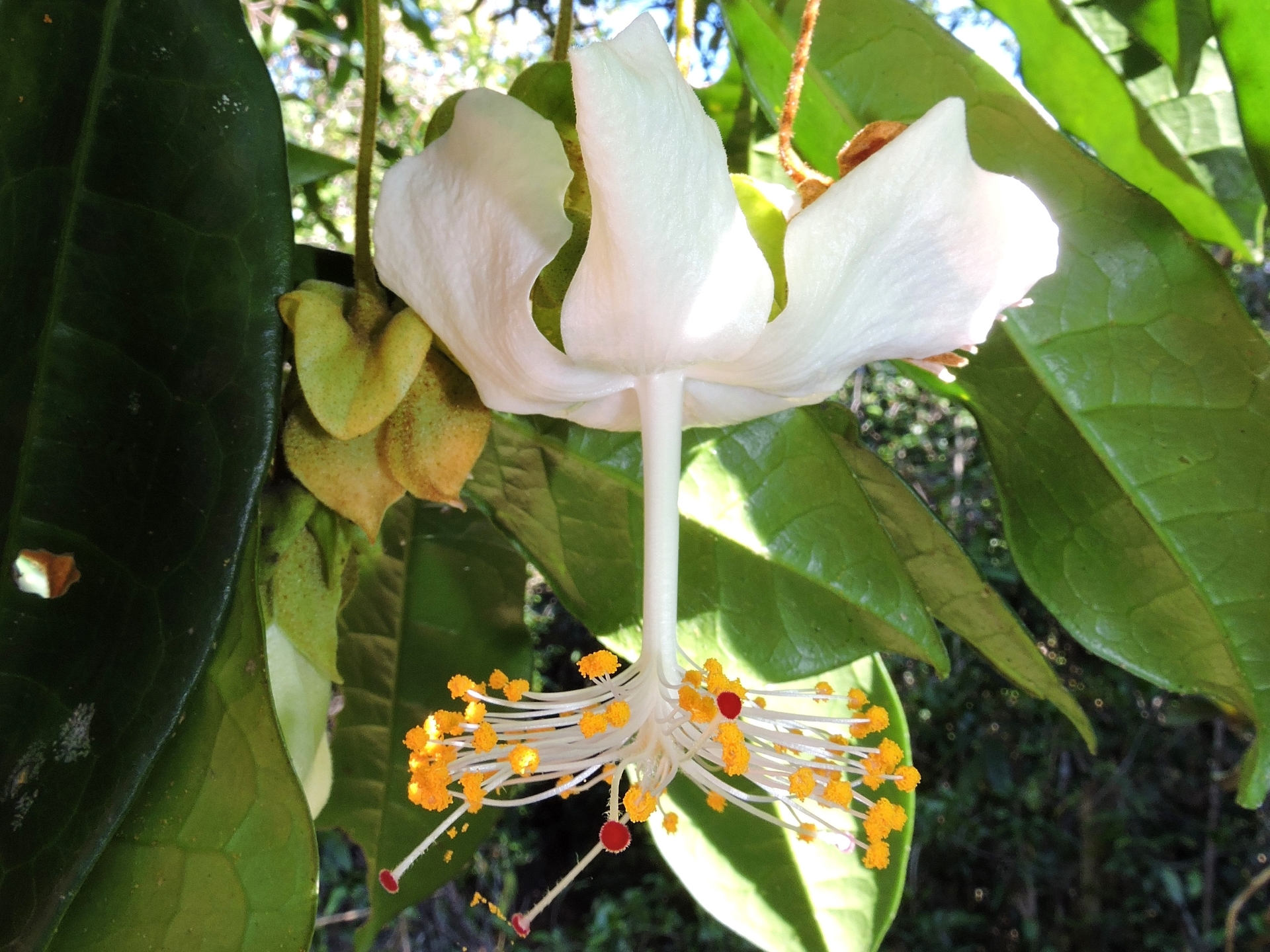
Hibiscus vohipahensis, a species of tree known only from the Ankarabolava-Agnakatrika forests. Credit: MBG-Madagascar
Madagascar has more plant species discovered on an annual basis than any other country. In the forest of Ankarabolava-Agnakatrika, MBG-Madagascar has found a number of locally endemic species that scientists have never seen, described, or recorded before. This Hibiscus vohipahensis is a case in point; relatively new to scientific records and currently known only from the Ankarabolava-Agnakatrika forests. It shows off a stunning flower display, with large, pure-white petals which stand out from the deep greens of the other foliage covering the landscape. It has an intriguing structure that suggests it has adapted to pollination by large moths. Its status is highly dependent on the health and integrity of the forest. The extension of the Ankarabolava-Agnakatrika protected area is therefore of tantamount importance for the survival of this newly described hibiscus species. A tiny pink toucan, or a plant?
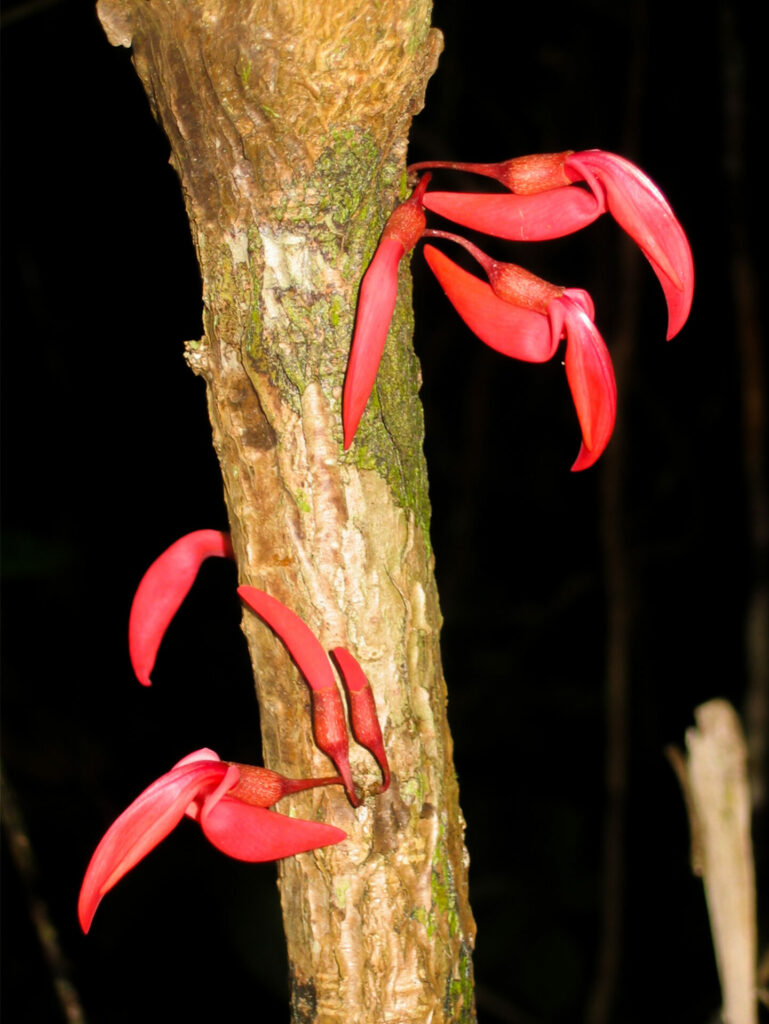
Sylvichadsia grandidieri, Endangered. Credit: Chris Birkinshaw.
This Sylvichadsia grandidieri brings flair to the kingdom of plants living in this forest. The unique flowers of this small tree emerge directly from the trunk and look remarkably like a flock of tiny pink toucans. A relative of the chickpea, this curious plant is so rare that it is found only in the Ankarabolava-Agnakatrika forest and one other protected area on the island and is designated as Endangered by the IUCN. While the term ‘endangered species’ often conjures images of animals, rather than plants, MBG-Madagascar is on a mission to make plants like this one just as important as the lemurs and fossa in the race to stop extinction in Madagascar. Unnamed but already on the brink
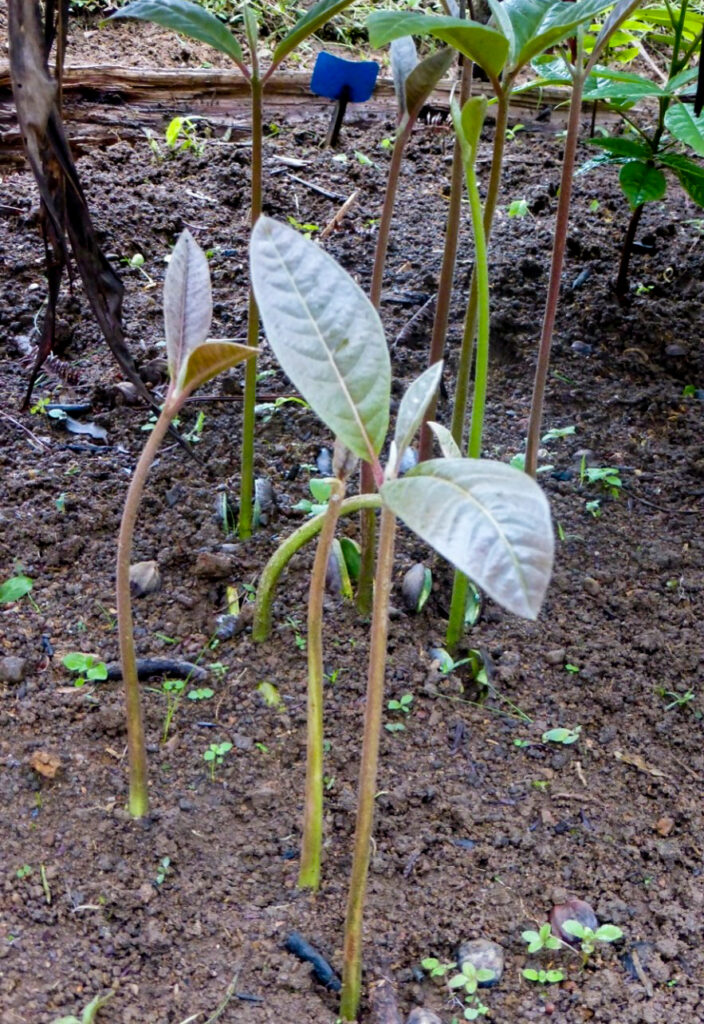
Seedlings of a newly discovered tree species. Credit: MBG-Madagascar
Just last year, MBG-Madagascar botanists made a herbarium specimen from a gargantuan tree found in the Ankarabolava-Agnakatrika forests that experts have now confirmed is new to science. This spectacular giant of a plant is yet to have a scientific name. Exciting as this encounter was, only six trees of this species remain which is a serious concern. Fortunately, thanks to the tireless efforts of MBG-Madagascar, seeds have already been collected and propagated and it won’t be long before the young seedlings are planted out as part of the project’s restoration work. This is good news for the local resident Critically Endangered White-collared Lemur as it feasts on the large fleshy fruits of this tree species. The star of the show
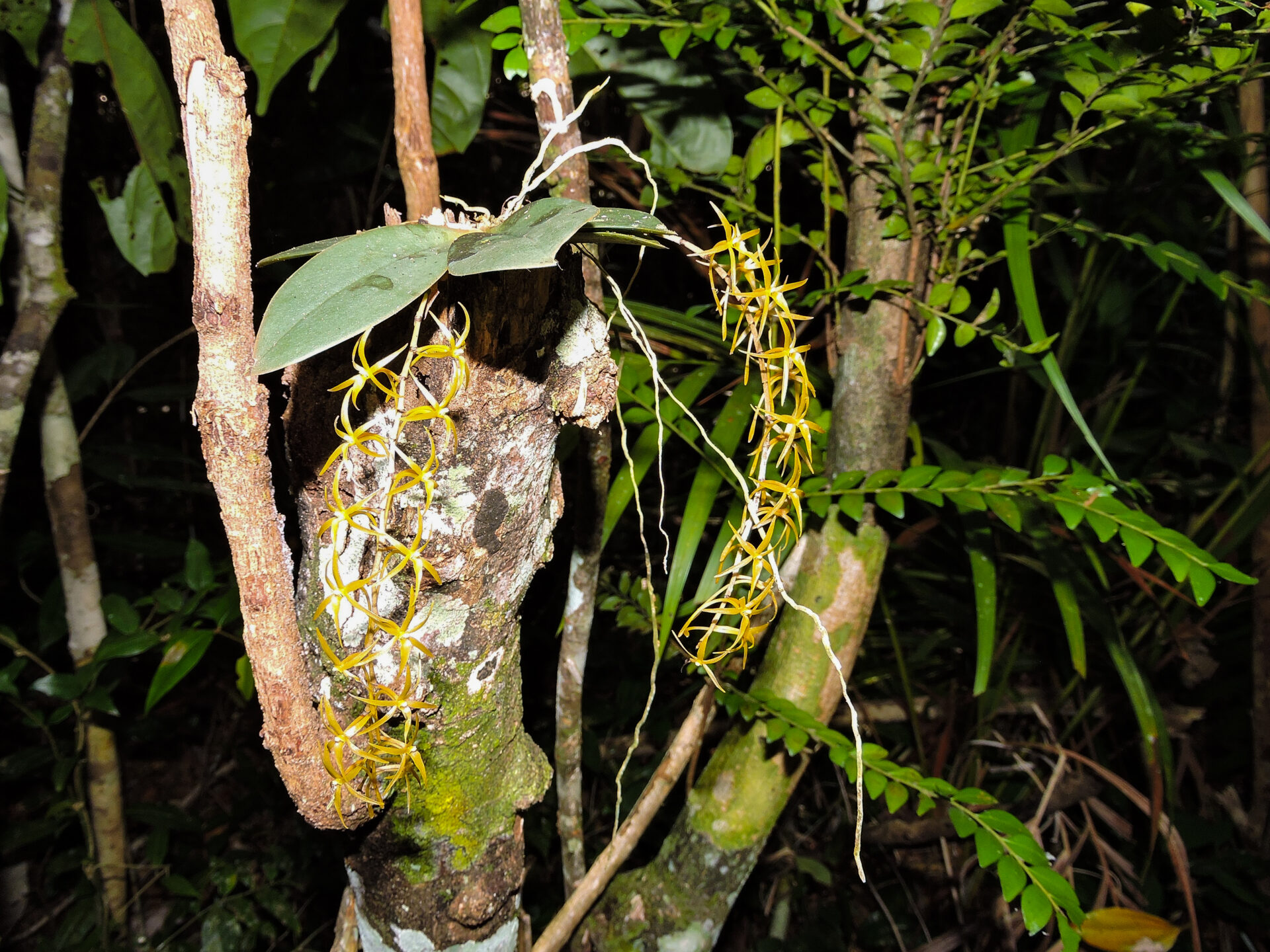
Aerangis seegeri, a Vulnerable orchid species found in Ankarabolava-Agnakatrika. Credit: Fidy Ratovoson.
A whistle-stop tour of the flora of the Ankarabolava-Agnakatrika forests wouldn’t be complete without including one of the 928 spectacular orchid species known from Madagascar. Aerangis seegeri is classed as Vulnerable and is an orchid species notable for its chain of exquisite, cascading, star-shaped flowers and their apricot- and bronze-coloured petals. This showy little number climbs on the branches of moss-coated trees that hang low in the forest. It is an epiphyte, which means that it grows on other plant’s surfaces but is not parasitic, so it doesn’t cause any harm to its host tree. It derives its moisture from warm air blown in from the Indian Ocean, as well as water sources such as rain, which isn’t in short supply given that the forest has an average of 219 wet days per year. A palm tree on the edge
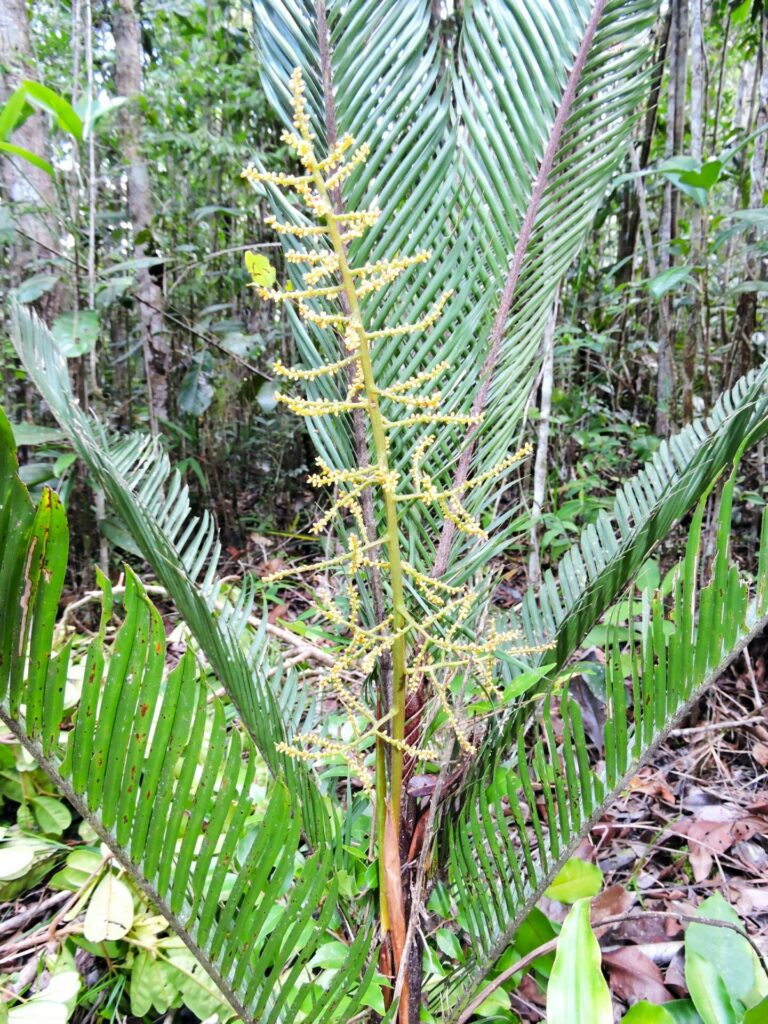
Dypsis elegans, a Critically Endangered species of palm. Credit: Fidy Ratovoson.