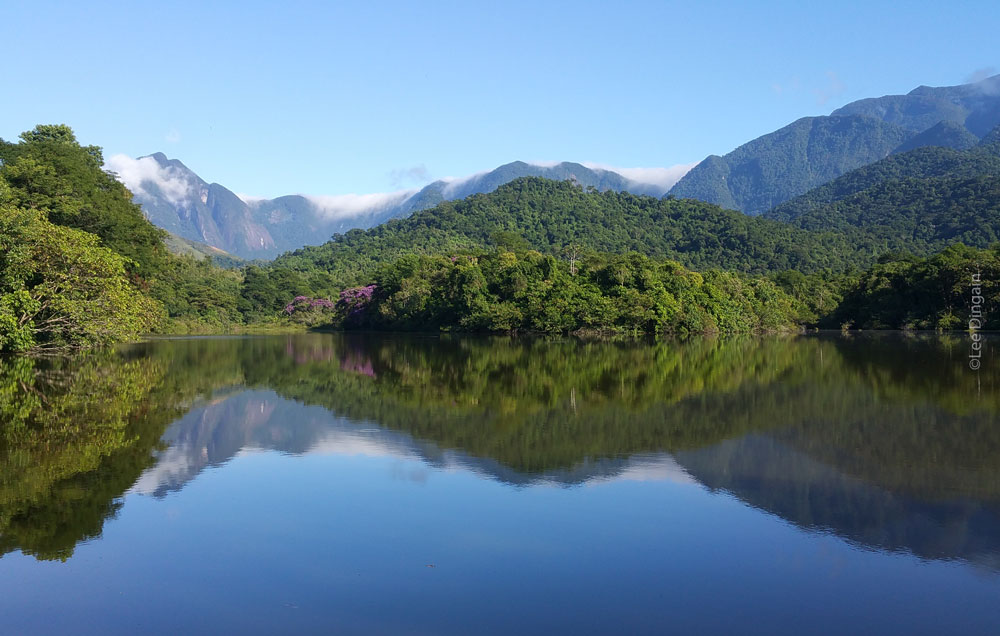
Covering a third of Earth’s land surface, forests are not only the most biodiverse terrestrial ecosystems, but also perform ecosystem functions essential for all life. Integral to the global water cycle, forests also provide “ecosystem services” that quietly benefit human wellbeing and quality of life. With forested watersheds and wetlands providing three-quarters of the world’s accessible fresh water, forests are indispensable for water security.
A threatened water source
Receiving more rainfall than any other ecosystem, tropical rainforests are particularly important to regional and local water supplies, and are frequently taken for granted. In South America’s Atlantic Forest, 135 million people, including the populations of Brazil’s two largest cities and countless rural communities, rely on water supplied by forested watersheds for drinking, agriculture, industry, and energy production.
Situated just north-east of Rio de Janeiro, the Guapiaçu and Macacu rivers and forests of the 1,263 km2 Guapi-Macacu watershed provide the largest and cleanest supply of freshwater to the 2.5 million people living on the eastern side of Guanabara Bay. However, population growth, urbanisation, intensive agriculture, and unsustainable land use now threaten this water source. With much of the Guapi-Macacu watershed deforested, forest protection and restoration have been identified as key to securing this water supply, especially as the climate becomes warmer and more unpredictable.
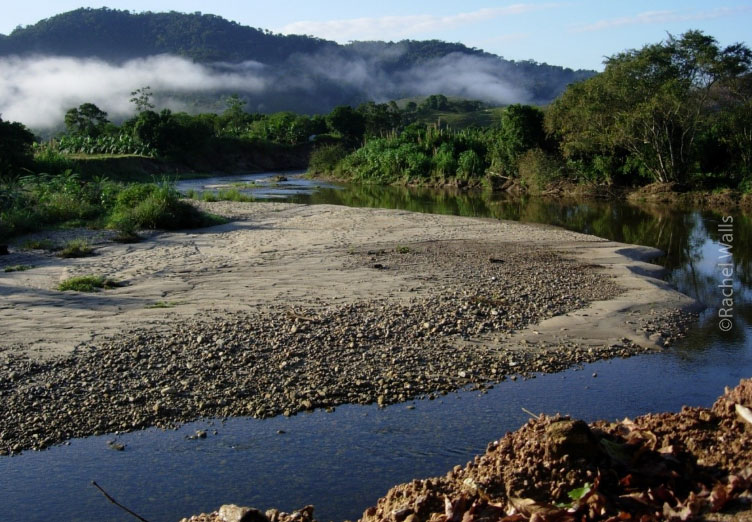
The Guapiaçu watershed at REGUA, part of the larger Guapi-Macacu watershed and source of the largest and cleanest water supply to 2.5 million people. Credit: ©Rachel Walls
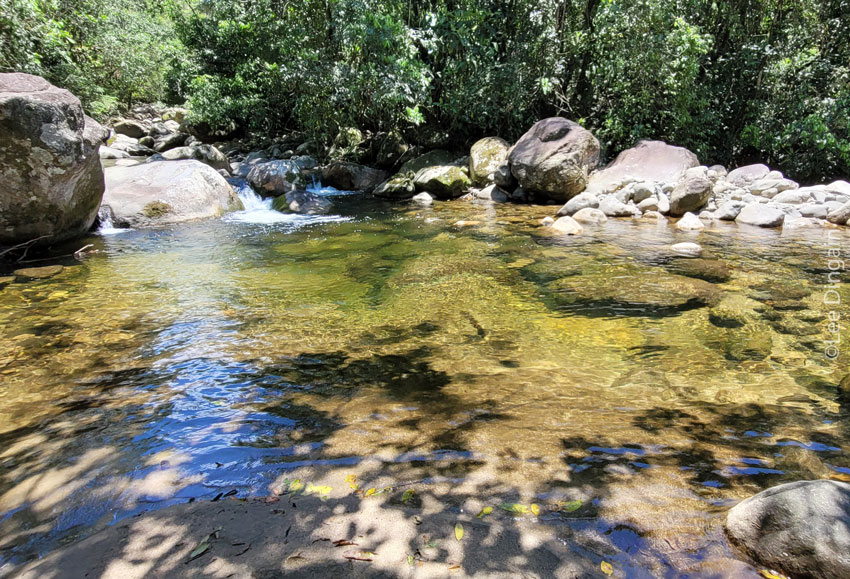
A tributary of the upper Guapiaçu river at REGUA—clear and free of sedimentation and other contaminants. Credit: ©Lee Dingain
Nature’s water recyclers
Acting as living reservoirs, forests store vast amounts of water and regulate water flow to sustain water supplies even during dry periods while minimising soil erosion. While some rainfall is intercepted by the canopy and evaporates, most reaches the ground and is stored as groundwater. By creating channels in the soil—macropores—tree roots improve the structure of typically impermeable tropical clay soils, massively increasing water infiltration, while decomposing leaves, branches, and other organic matter in the soil produce a humus that acts like a sponge, soaking up several times its own weight in water, slowing the rate of throughflow—the movement of rainwater through soil into watercourses.
Forests are also key to replenishing water stores and maintaining water quality. Essential for photosynthesis and obtaining nutrients, up to 99% of the water absorbed by tree roots is pumped through the plant and evaporates from the leaves. This process, known as transpiration, filters impurities, salts, pesticides and other pollutants, and releases clean water vapour into the atmosphere. This condenses around airborne fungal spores, pollen, and other microscopic particles to form rain clouds that generate up to three-quarters of the watershed’s rainfall. By constantly recycling rainwater and generating more rainfall, forests keep water levels topped up.
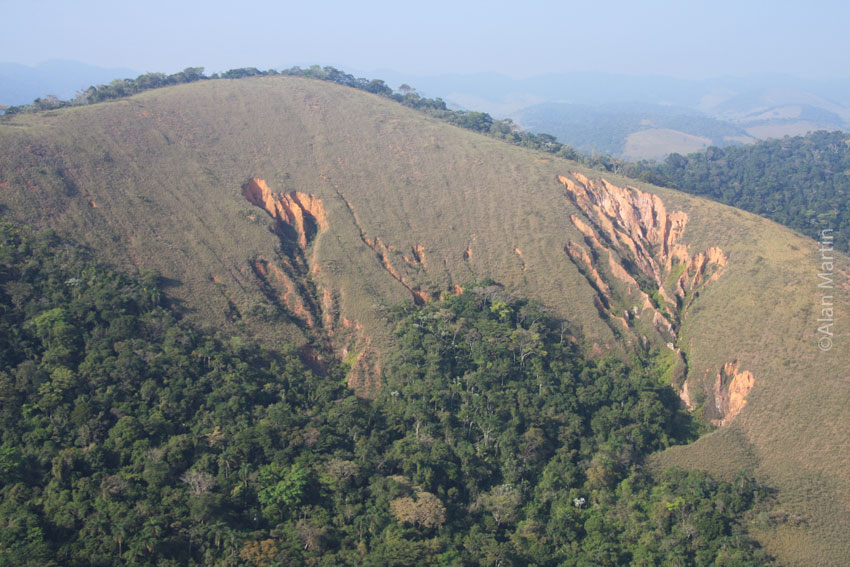
Erosion on deforested slopes in the Guapiaçu watershed. Without tree roots to bind the soil and a forest canopy to intercept rainfall, soil is rapidly eroded. Credit: ©Alan Martin
Protecting the upper Guapiaçu watershed
The Atlantic Forest is one of the world’s most depleted forests, with just 11-16% of its original forest cover remaining, mostly as small, isolated fragments. Although relatively well forested, most of the remaining forest in the Guapi-Macacu watershed is on steep mountain slopes, with the lowlands mostly deforested, and the flooded swamp forests once here drained to make way for agriculture and pasture. But thanks in part to the work carried out by Guapiaçu Ecological Reserve, or REGUA, over the past 25 years, 60% of the upper Guapiaçu watershed remains forested.
Reforestation and results
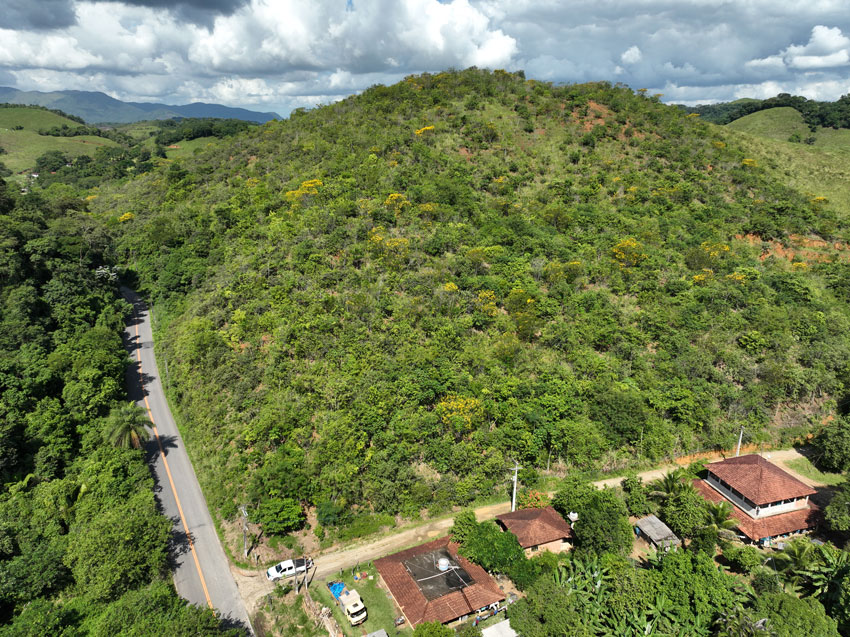
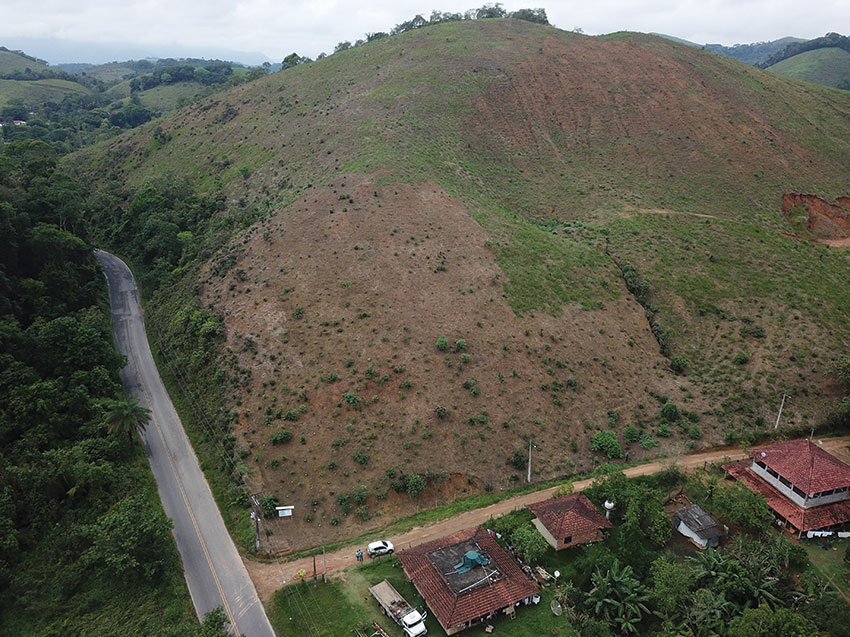
Image comparison: (drag the green circle to compare) Reforestation carried out in the Guapiaçu watershed by REGUA – these photos were taken just four years apart. Credit: ©Thomas Locke
Wetlands
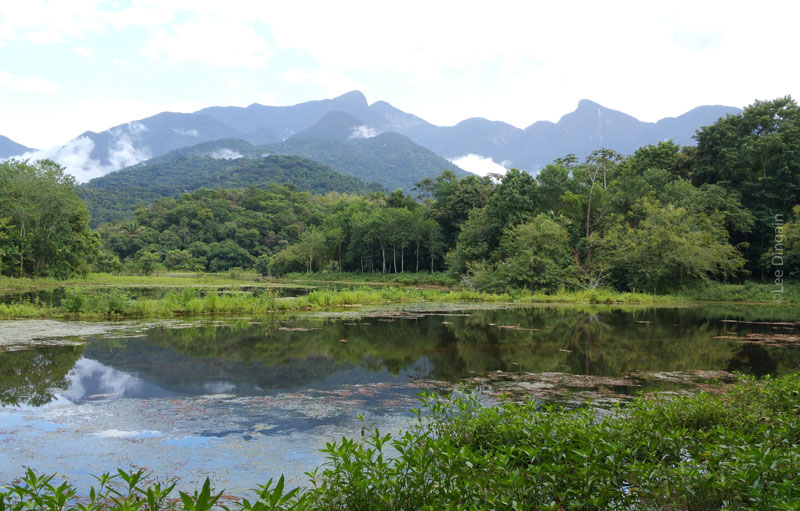
To reestablish some of the swamp forest that once existed in some of the lowlands on the reserve, REGUA restored a 17.5-hectare wetland consisting of lakes, channels, reedbeds, and stands of flood-tolerant Tabebuia cassinoides trees. By slowing the flow of water, the wetland filters sediment and nutrients, improving the quality of water entering the Guapiaçu River and replenishing groundwater levels, helping to secure the region’s vital water supply.
Despite legal protection and increasing recognition of its importance to the local water supplies, Brazil’s Atlantic Forest remains threatened. Encroaching urbanisation in the upper Guapiaçu watershed is chipping away at the forest, and changing land use is polluting its waterways. To protect the forest and, in turn, safeguard the quantity and quality of the region’s freshwater, land purchase is key. By buying both forested and deforested land, REGUA can not only protect more forest but also increase forest cover in the upper Guapiaçu watershed.

 Help us raise £197,260 for our partner Reserva Ecológica de Guapiaçu (REGUA) to save 180 ha (444 acres) of vitally important land in Brazil’s Guapiaçu valley and protect the wildlife of the Guapiaçu watershed.
A generous private donor has provided funds which will match donations up to £197,260. This means gifts to the appeal will be doubled in value, and a £25 donation from you could be matched to make a £50 contribution overall. By donating, your support will go twice as far towards our fundraising target.