Journey through the Mata Atlântica with Dan Bradbury, Director of Brand and Communications at World Land Trust.
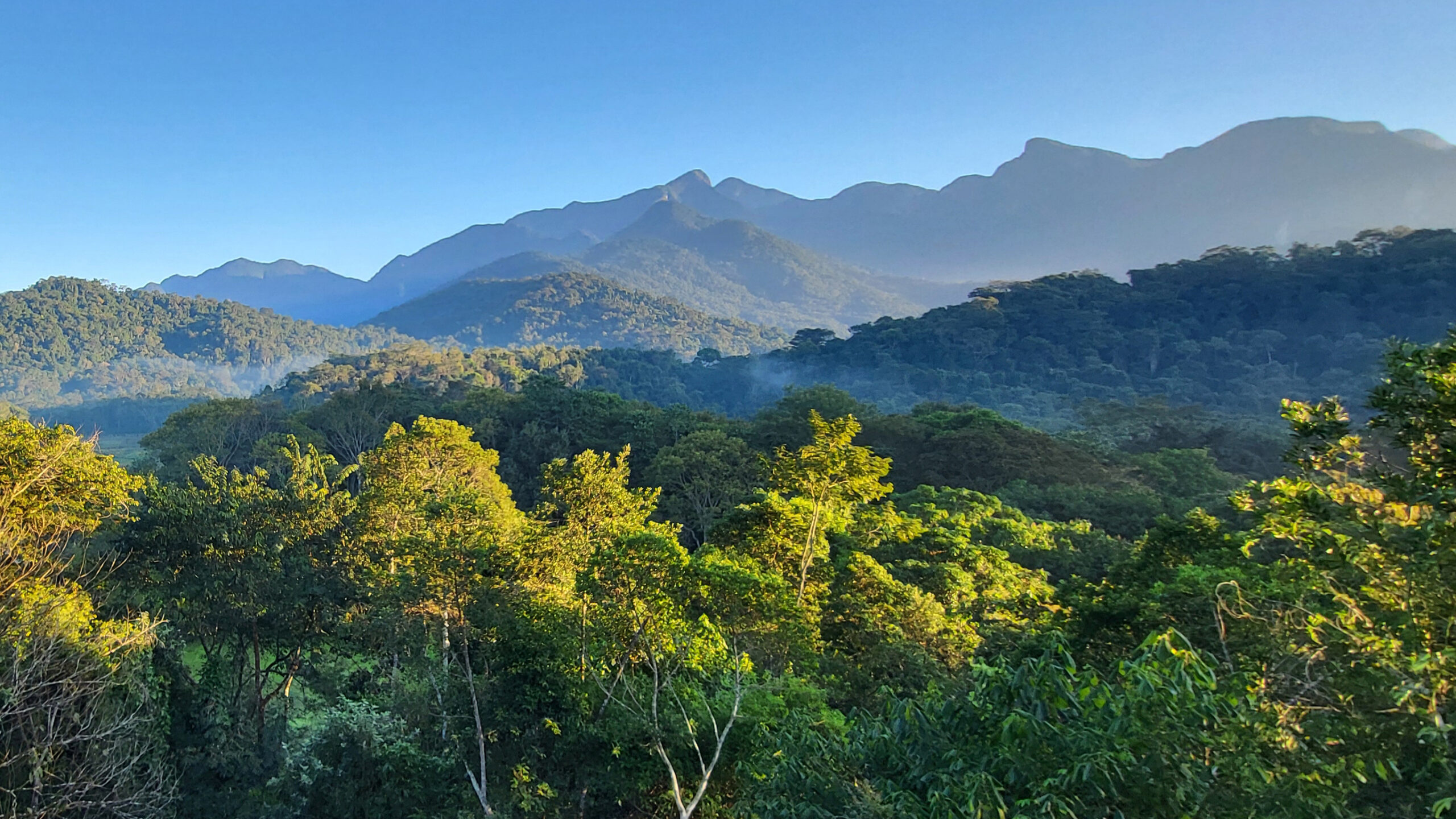
In July 2025 I had the chance to visit Reserva Ecológica de Guapiaçu, or REGUA, a place I had heard so much about during my time at World Land Trust (WLT) but never experienced in person. Spread across more than 15,000 ha (37,000 acres) of Brazil’s Atlantic Forest, REGUA is where restoration meets resilience, where water, wildlife, and people are held together by a vision determined not to lose what remains.
REGUA is working with purpose: protecting the Guapiaçu watershed, defending one of the world’s most threatened ecosystems, and proving what patient, thoughtful conservation can achieve. But at the heart of my visit lies the Hermes plot, a single area of forest whose protection is essential in this recovering landscape.
Wildlife, Seen and Heard
REGUA’s biodiversity is dazzling; in a single week I recorded more than 160 bird species. We encountered a number of Lowland Tapir (Tapirus terrestris), part of a careful reintroduction programme, Capybara (Hydrochoerus hydrochaeris) sunning themselves along with Broad-snouted Caiman (Caiman latirostris), which turn the water into a dark mirror. In the forest, we also saw a Brown-throated Three-toed Sloth (Bradypus variegatus) tucked into its quiet geometry of sleep.
Then, at night, the forest comes to life again with a new collection of noises, calls, whispers, and threads, each sound a line that tells you the system is working. Three species of owl called on one night from the layered darkness: the Tropical Screech Owl (Megascops choliba), the Tawny-browed Owl (Pulsatrix koeniswaldiana), and the Ferruginous Pygmy Owl (Glaucidium brasilianum).
But one moment lingers particularly clearly for me. In a shaded clearing, a male White-bearded Manakin (Manacus manacus), gave a performance of flicks, snaps, and whirrs, an avian dance full of bravado and precision, like those that I have only ever seen in documentaries. This small bird’s dance was aimed at females in the area, but its hard work very much impressed me too.
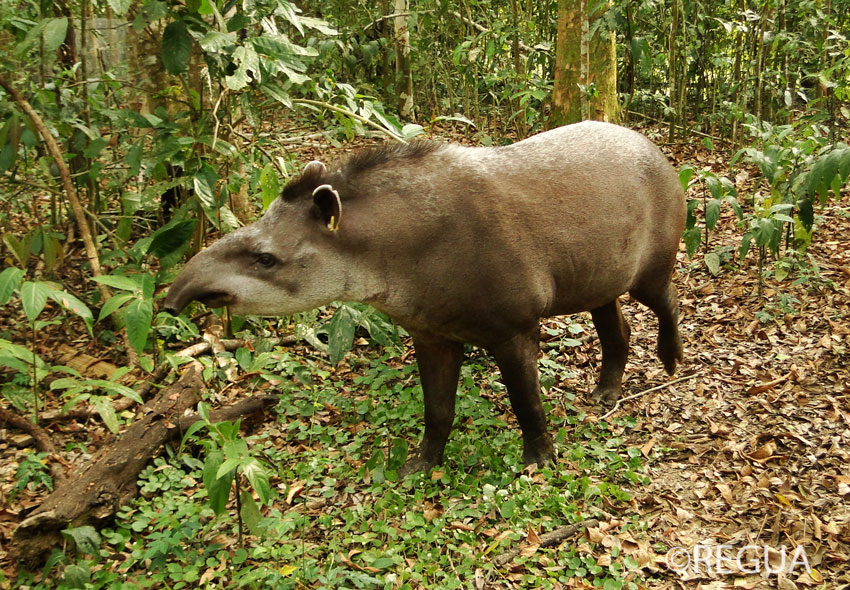 An introduced Lowland Tapir at REGUA. ©REGUA.
 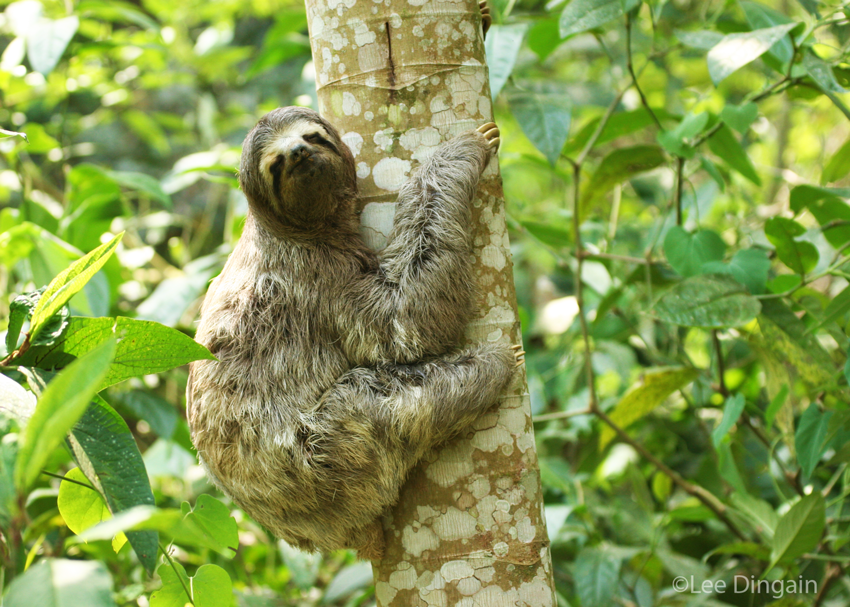 Brown-throated Sloth at REGUA. ©Lee Dingain.
 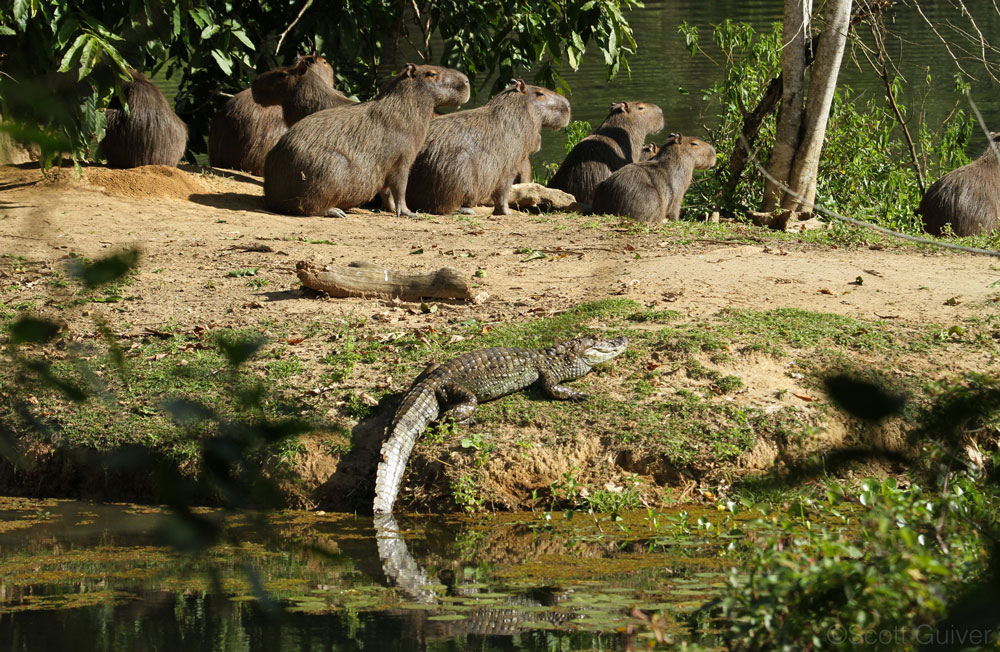 Capybara and Broad-snouted Caiman at REGUA. ©Scott Guiver.
 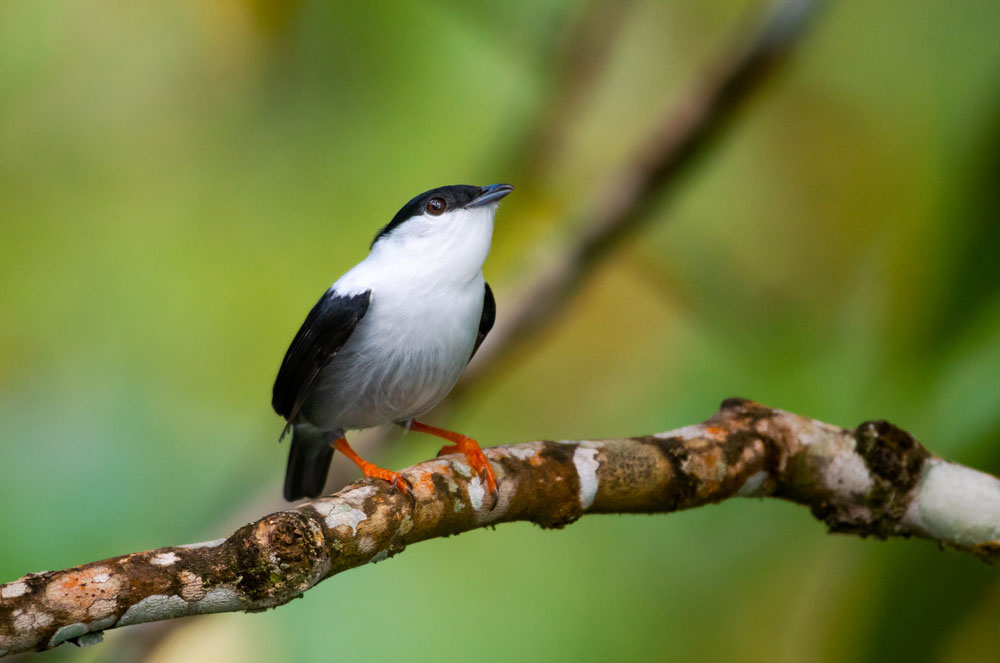 A male White-bearded Manakin. ©Shutterstock/Chelsea Sampson.
 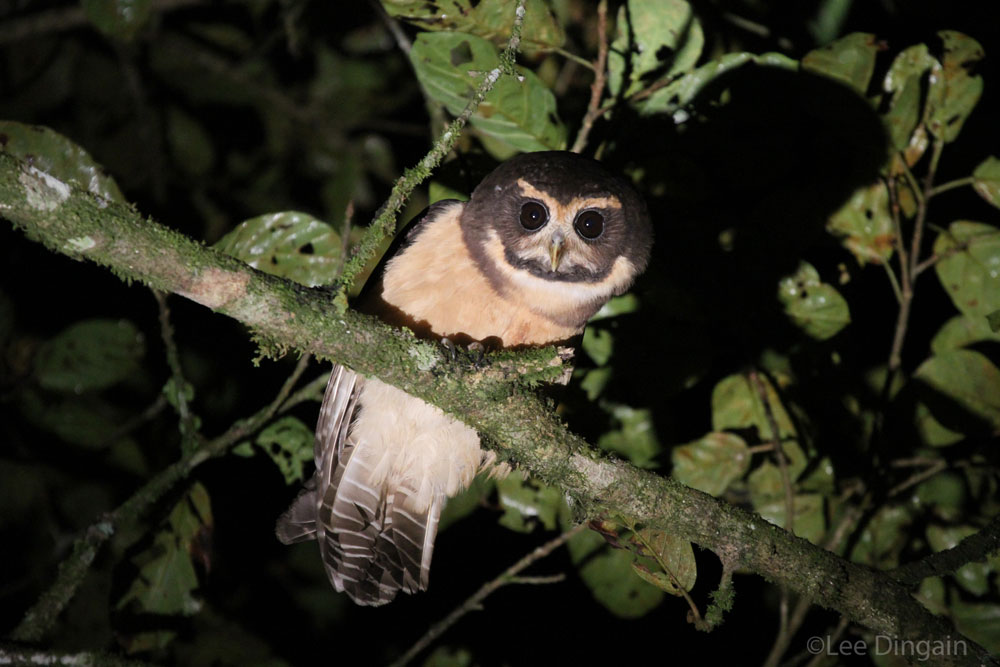 A Tawny-browed Owl at REGUA. ©Lee Dingain.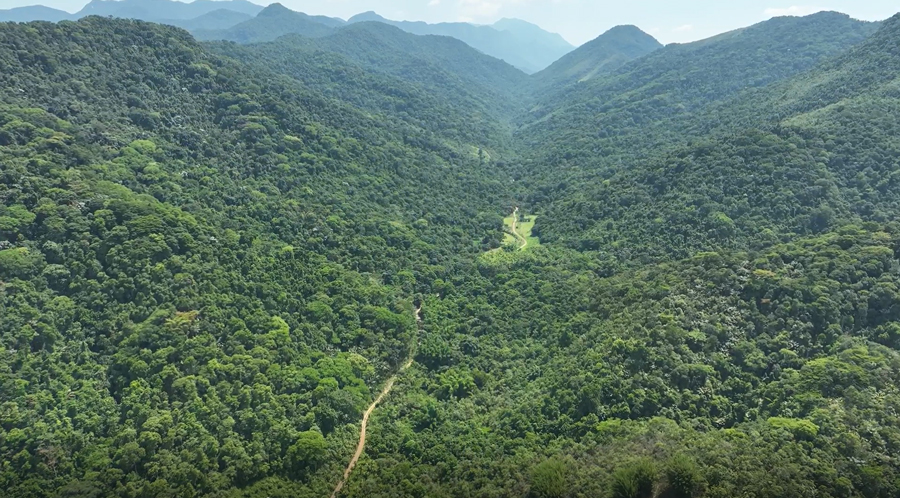
The Hermes Plot: A Valley at the Crossroads
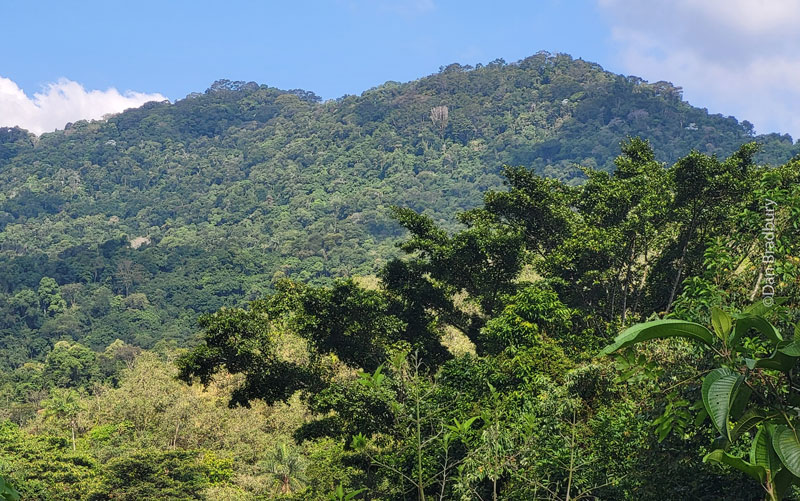
I visited the Hermes plot which is the focus of our Spring Appeal – Connecting Brazil’s Atlantic Forest – and it is where the stakes of this work come sharply into view. The property covers 180 ha (444 acres), and it is owned by one family who have cared for it for half a century. The land straddles a narrow valley and is wrapped on both sides by other plots owned by REGUA.
A small stream begins higher up on land already owned by REGUA and runs through the Hermes plot into the basin of the Guapiaçu watershed. To stand there and hear that water is to understand the heart of this project. Protect the valley and you protect the flow. Safeguard the forest and you safeguard the source.
Reaching the plot tells a story of a landscape on a knife edge. The track at first is a hard packed gravel access road up into the property, and utilities, including electricity, extend only partway. As you climb you pass a couple of large, well-developed weekend homes, evidence of Rio de Janeiro’s wealth just a drive away. Carry on and the houses become more traditional. The road begins to break down. Tyres clatter over large rocks and stones, then you leave the vehicle behind and follow a trail on foot, but it’s clear it wouldn’t take much to expand access by improving the road and pulling utilities deeper into the valley.
Then you pass the last property, and you are greeted by the person who lives there along with their dogs, a small act of warmth that says something about community and care. Finally, the trail opens and you step into quiet. The stream speaks low in the greenery. The slopes rise steeply above you, a broken green amphitheatre. Birds call from every direction. The immediate feeling is that this is a special place. The second feeling is that it is vulnerable.
Why does it matter
All of this is why the Hermes plot matters so much. It is a keystone on the eastern side of the watershed. It connects existing protected areas on both sides, making it far more practical for rangers to patrol and for scientists to monitor the abundance of wildlife already using the corridor. It also helps alleviate the single greatest risk to the valley’s future, which is the development pressure creeping uphill from below. Upgraded roads into unprotected areas, together with extended utilities, create an easy path for second homes and piecemeal construction that would snap the spine of this area.
I was fortunate to meet members of the family who own the Hermes plot. The land has been in their family for fifty years. We spoke about why REGUA wants to purchase it. We spoke about water, about wildlife, about the responsibility of holding a place that is part of something larger than itself. It was clear they wanted to do right by their family and by the area. The idea that the forest would stand, in their name, forever, seemed to touch something profound: the wish to pass on a legacy.
Why Now
There is a way to save this valley. REGUA has shown again and again how targeted land purchase, followed by strong management and restoration where needed, locks in a future that developers cannot take away. The Hermes plot is ready. The owners are willing to sell. The conservation benefits are as clear as the water running through the centre of it. Leave it unprotected and it will almost certainly be developed and lost. But protect it and it becomes a permanent piece of living infrastructure for the watershed and a safe passage for wildlife that needs connected forest to survive.
What Your Support Makes Possible
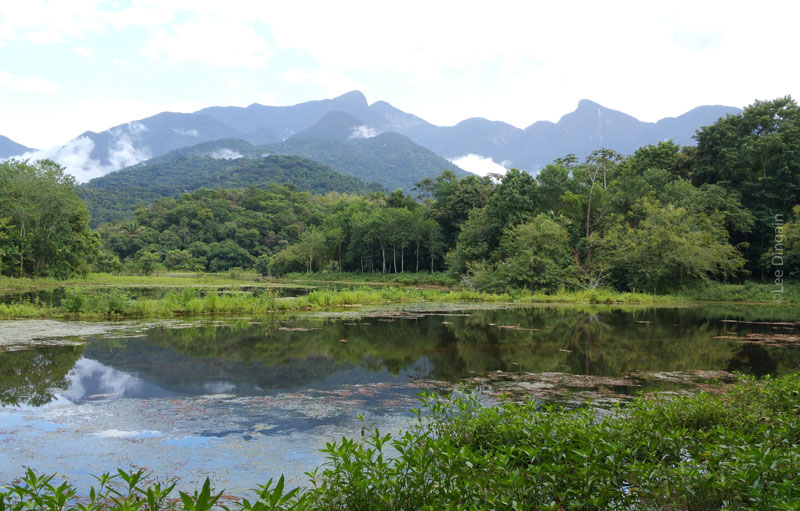
If you have donated to WLT in the past, you have already helped make REGUA what it is today. Nicholas Locke, REGUA’s President, spoke with deep gratitude about our long partnership. I could see exactly what he meant. The wetlands alive with birdsong. The corridors reconnected. The tapirs stepping softly in a place that had once forgotten how to hold such weight. This is what long-term collaboration does. It builds. It heals. It lasts.
The Hermes plot is our next essential step. With your gift to our Spring Appeal, we can help REGUA purchase and protect this 180-hectare plot, secure the waters that run through it, keep the corridor intact for rangers and wildlife, and stop development at the point where it would cause the most damage. In time, the stream will keep running, the forest will keep growing, and the birds will keep calling. And you will have helped make that possible.

 Help us raise £197,260 for our partner Reserva Ecológica de Guapiaçu (REGUA) to save 180 ha (444 acres) of vitally important land in Brazil’s Guapiaçu valley and protect the wildlife of the Guapiaçu watershed.
A generous private donor has provided funds which will match donations up to £197,260. This means gifts to the appeal will be doubled in value, and a £25 donation from you could be matched to make a £50 contribution overall. By donating, your support will go twice as far towards our fundraising target.