Educational Materials

Ignite curiosity and empower the next generation of conservationists with World Land Trust’s educational materials.

Created to support Key Stages 1 and 2, these resources open a window into the wonders of the natural world – from the species that depend on fragile habitats to the environmental challenges shaping our planet today. Rooted in WLT’s global conservation work, the materials help pupils explore wildlife, ecosystems and human impact through engaging activities, videos and fact‑filled content that make real‑world conservation meaningful in the classroom.

Whether you’re guiding a lesson on food chains, diving into the mysteries of rainforest biodiversity or inspiring students to protect the places they love, these materials offer an uplifting, accessible and action‑driven way to bring conservation to life.
Habitats

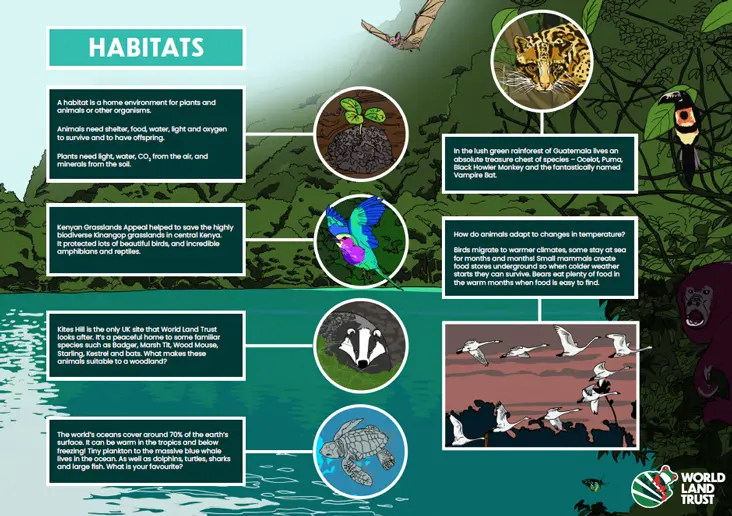
Explore the diverse places where plants and animals make their homes with this engaging habitats resource from World Land Trust. Inside, learners discover how different environments provide the essentials for survival, compare species from woodlands, oceans and rainforests, and investigate how living things adapt to the conditions around them. The pack also offers creative, hands‑on activities that bring each habitat to life and inspire a deeper appreciation for the natural world
Click to view

All Living Things

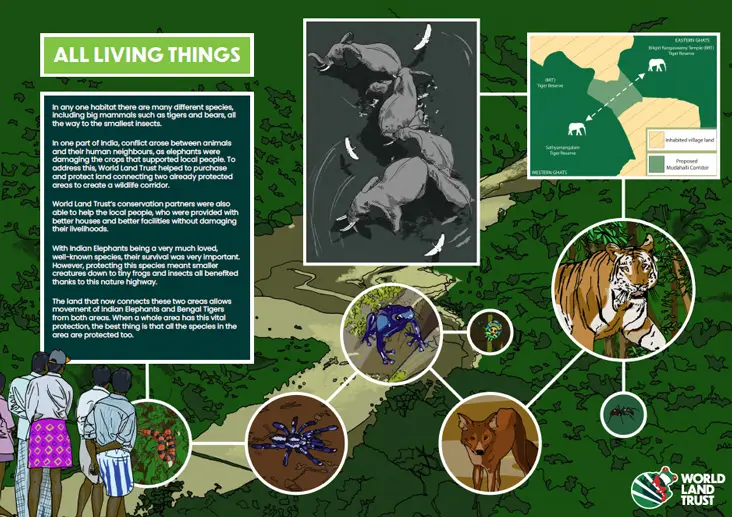
Discover how plants, animals and even the smallest insects interact within their environments in this engaging resource from World Land Trust. Learners explore real examples of wildlife, uncover how species depend on one another and investigate the importance of protecting habitats where biodiversity thrives.
Click to view

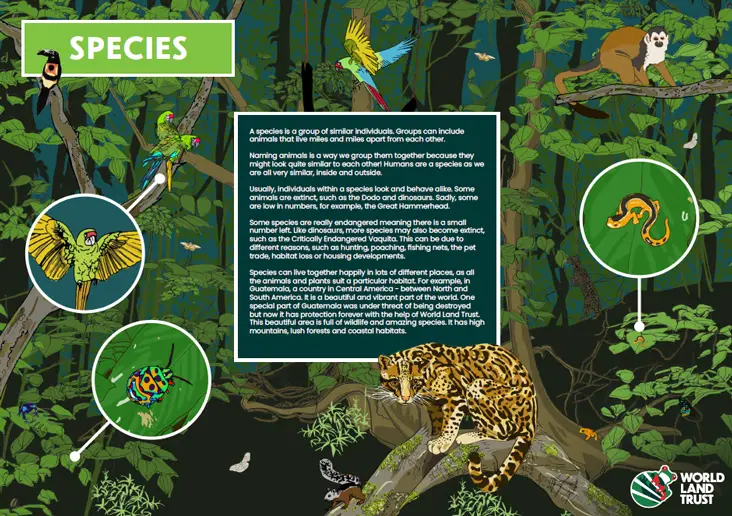
Species

This resource introduces learners to the incredible variety of species that share our planet, from well‑known mammals to lesser‑known endangered wildlife. It explains what defines a species, why some are at risk and how conservation protects the rich diversity of life on Earth.
Click to view

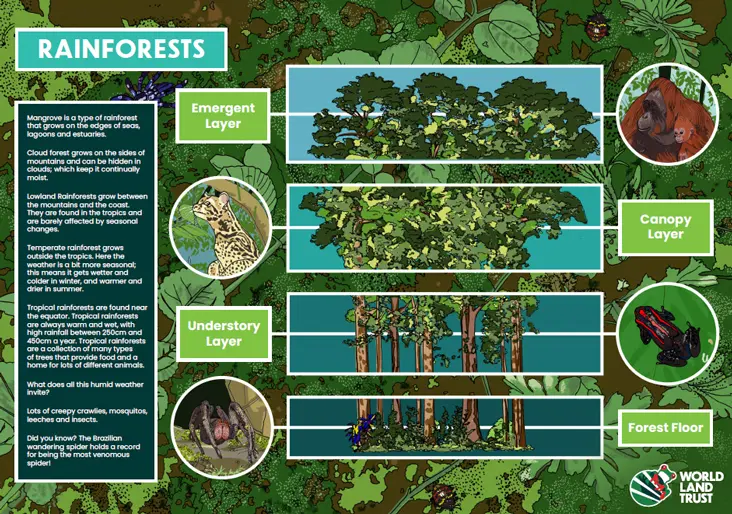
Rainforests

Take a journey through the world’s rainforests, from cloud forests to tropical lowlands, and discover why these lush ecosystems are vital for wildlife, people and the climate. This resource explores rainforest layers, biodiversity, threats such as deforestation and the importance of protecting these extraordinary habitats.
Click to view

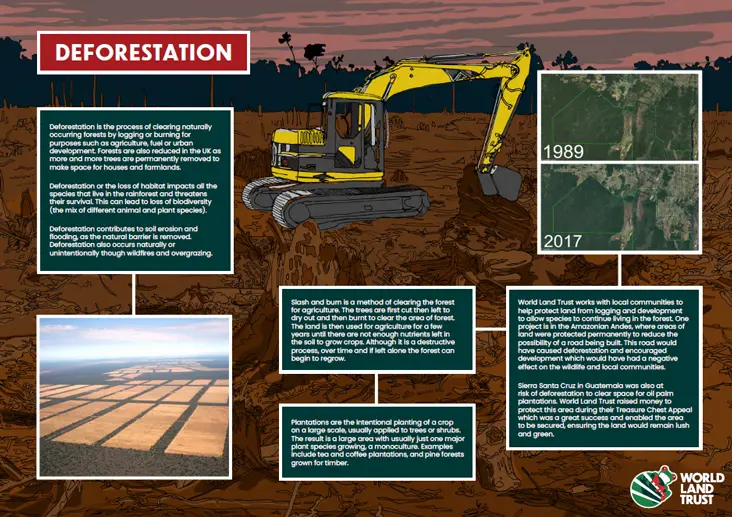
Deforestation

This resource sheds light on what deforestation is, why it happens and how it affects species, soils, climate and communities. Learners uncover real conservation stories where World Land Trust has protected threatened landscapes and explore sustainable solutions to reduce forest loss.
Click to view

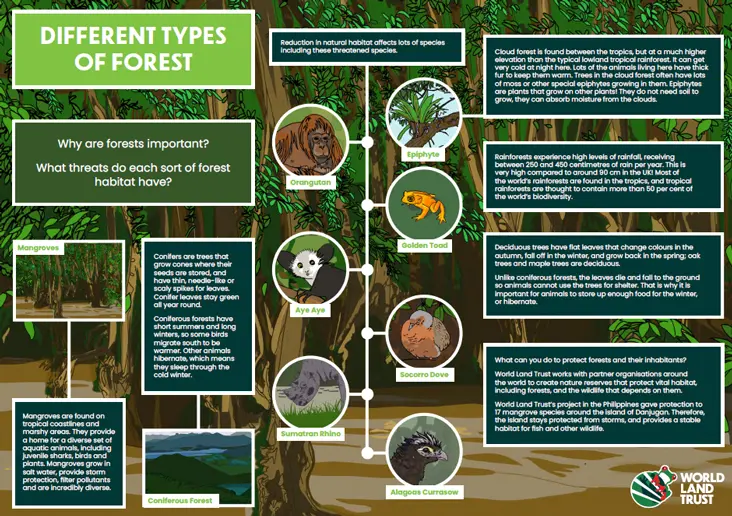
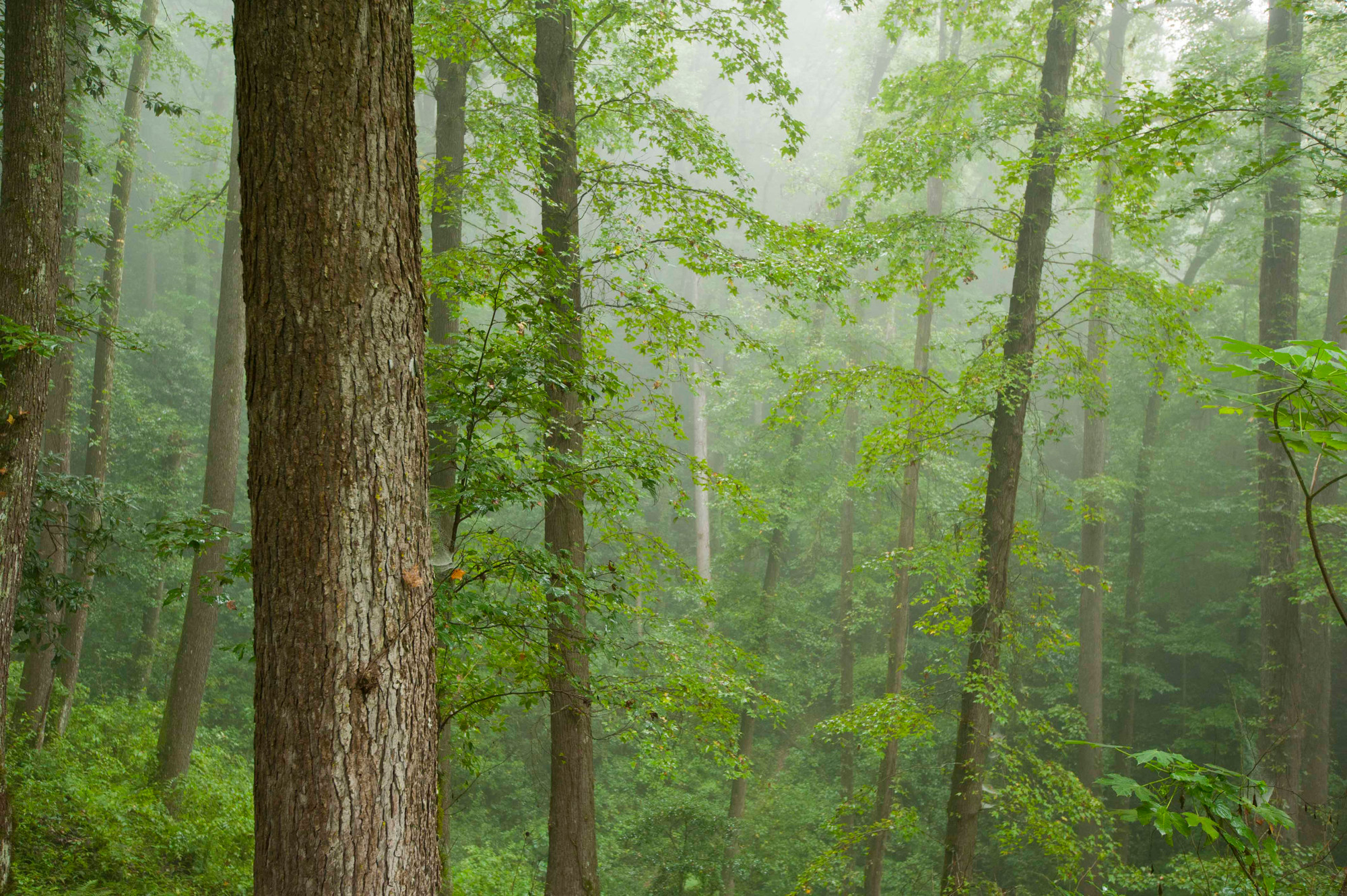
Different types of forest

From cloud forests to mangroves, deciduous woodlands to tropical rainforests, this resource introduces learners to the many kinds of forests found around the world. They’ll discover what makes each forest unique, why forests matter and how conservation protects the species that depend on them.
Click to view

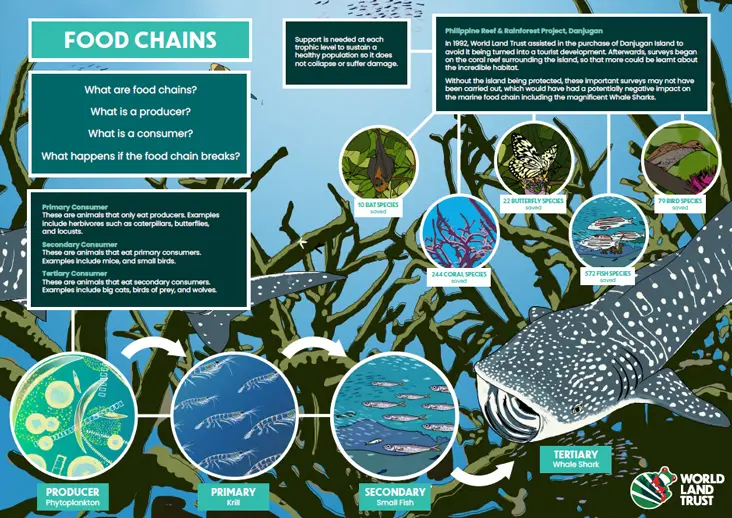
Food Chains

This resource unpacks how energy moves through ecosystems by exploring food chains in action — from phytoplankton to whale sharks. Using examples from protected habitats, learners discover the roles of producers, consumers and predators, and why each link matters.
Click to view

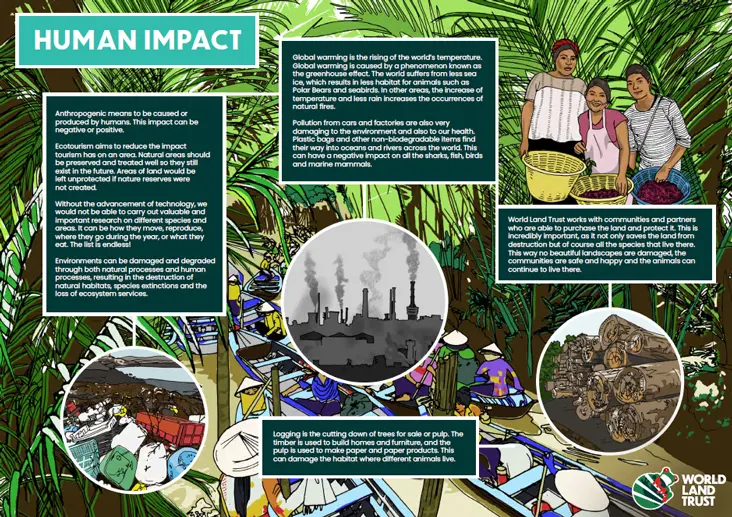
Human impact

Explore how human activities shape the natural world, from pollution and climate change to habitat destruction, and discover practical ways people can lessen their impact. This resource highlights real conservation efforts where land has been protected for wildlife and communities alike
Click to view

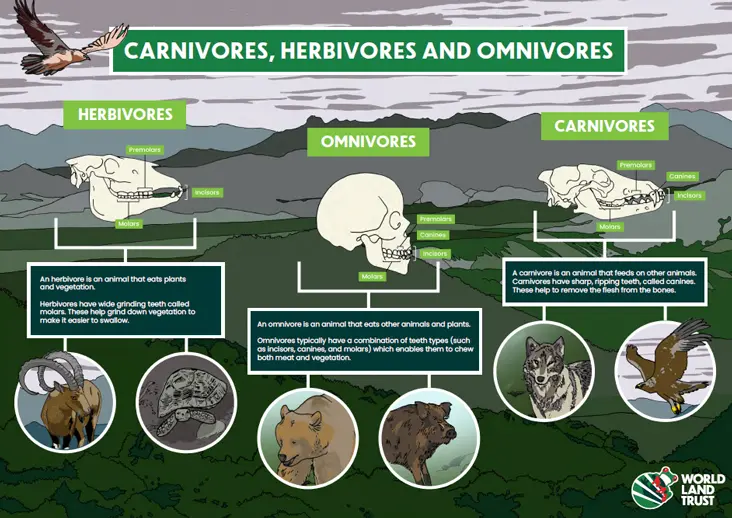
Herbivores & Carnivores

This resource helps learners understand how different animals feed and survive, exploring the characteristics of herbivores, carnivores and omnivores. Through engaging examples, they discover how diet relates to anatomy, habitats and the wider food web.
Click to view
Ed-Res-Patrons

World Land Trust Patrons

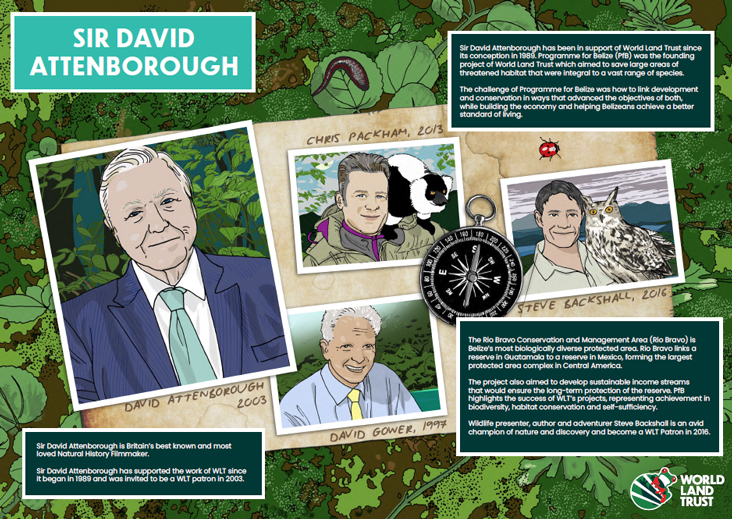
Celebrate the inspiring figures who champion conservation, including Sir David Attenborough and Steve Backshall. This resource introduces learners to their achievements, their connection with World Land Trust and the role of people who dedicate their lives to protecting the natural world.
Click to view