

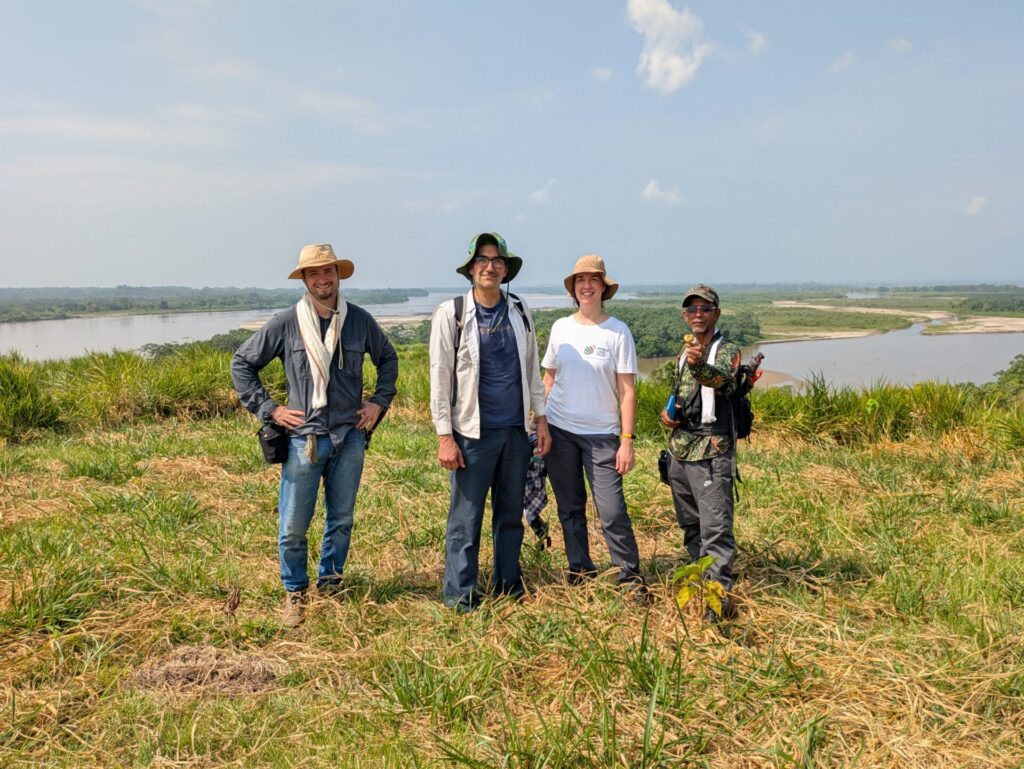
Earlier this year, WLT Carbon Manager Mary McEvoy joined Fundación Biodiversa Colombia’s (FBC) General Director Fernando Arbeláez and his team at the El Silencio Reserve ahead of our autumn appeal. Here, Mary experienced some incredible encounters that even those who have been with FBC since the beginning 20 years ago had never seen before.
Fernando mentioned that your recent visit to El Silencio and the surrounding forests was exceptional for wildlife sightings. Can you tell us about the experience?
Mary: It really was extraordinary. Fernando and Julio (FBC’s Environmental Regional Leader, Julio Cruz) kept joking that I was some kind of lucky charm because every time we went out, we saw something rare or unusual. I’ve travelled a lot, and honestly, it was probably the most wildlife I’ve ever seen in one place.
We were there at a good time of year, the dry season in early February, so everything was a bit more accessible. Even entering the Ciénega was easier than they’re used to. They kept saying, “Mary, it’s never this easy.”

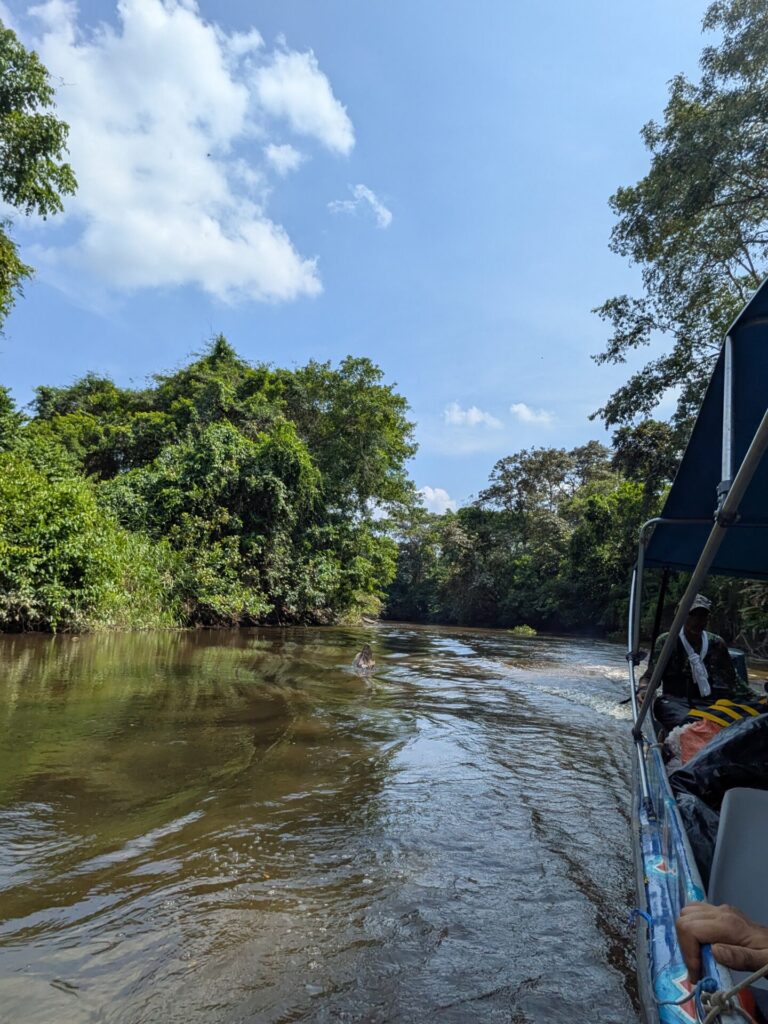
Mary and the FBC team travelled by boat along the ever-changing channels of the wetland, where the trees float on islands that move with the current. Credit: WLT
You had an unusual encounter with three primate species together. Where was that?
Mary: That was in one of the forests just west of El Silencio. The forests are spectacular: huge primary forest trees, calmer and less chaotic than younger forest.
Almost as soon as we went in, we saw Brown Spider Monkey (Ateles hybridus). Later, following their calls, we stopped beneath a flowering tree, and everything happened at once. There was an infant spider monkey playing on a vertical liana, going up and down and checking us out, completely curious and unbothered. Higher up were more of the troop.
Then we realised there was a White-fronted Capuchin (Cebus versicolor) watching us from the understory. They never travel alone, so there were others nearby even if we couldn’t see them. And right at the top of the canopy were Red Howler Monkeys (Alouatta seniculus), just resting.
So, in one spot, without moving a step, we were watching three different species of large primates, all feeding from the same flowering tree. The spider monkeys had those pollen-covered faces you see in Santiago’s photos – they were clearly feeding on nectar. I’ve never experienced anything like that. It was one of the absolute highlights of my wildlife-watching life.

Fernando said the Antillean Manatees (Trichechus manatus manatus) were a real highlight. What happened that day?
Mary: Seeing the manatees felt incredibly special. We went out on the Ciénega specifically to look for them. You never usually see the animals themselves – what you look for is bubbles, tiny ones rising in a line where the vegetation is disturbed below the surface. But there were so many trails of bubbles that it was clear there was more than just one or two animals. It felt like evidence of a thriving population.
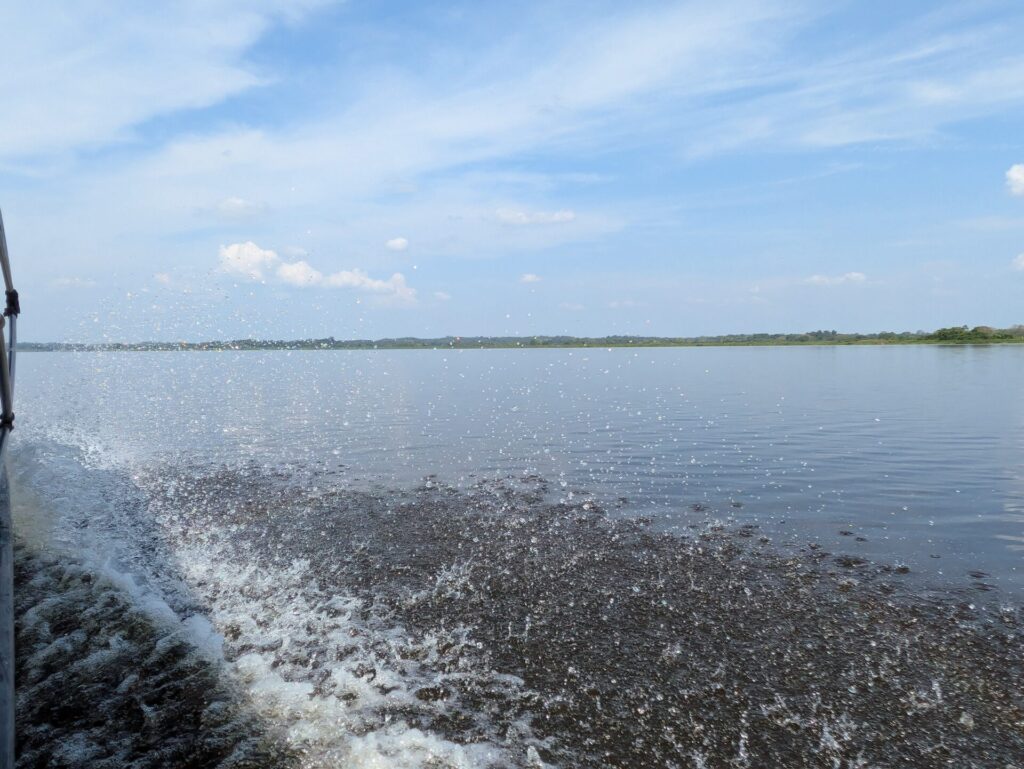
Manatees are very hard to spot and often you only know they’re there by the bubbles that surface as they swim below the water, Mary and the team were lucky enough to have a manatee swim right beside their boat as we can see from the bubbles. Credit: WLT
At one point we did get a proper sighting. A manatee surfaced right beside the boat – just a small nose taking a breath, then this huge back rolling under again. They don’t fluke their tails like whales, so it’s subtle, but the size is astonishing. Julio knows the Ciénega intimately and used a stick to tap the surface of the water to attract the manatees’ curiosity, and it clearly worked, it felt magical. Especially knowing from Natalia, the manatee researcher, that this species is usually incredibly elusive and that she mostly detects them only from vegetation trails. Hearing that afterwards made our sighting feel even more special. The setting itself was beautiful, water birds flying, fishermen working traditionally nearby. The community depends entirely on the Ciénega, so coexistence with wildlife is second nature.


By supporting our autumn appeal, you will help to expand El Silencio, protecting more forest, wetlands and wildlife before they are lost forever.